Camping and caravanning bring people closest to the situations where emergency cooking kills, because the spaces are small, the weather drives people inside and the equipment is portable.
Can you cook in a tent?
No. A tent is a small enclosed space made of flammable fabric with no ventilation designed for combustion, and cooking inside one risks both carbon monoxide poisoning and fire. Deaths occur every year. The rule taught by every camping organisation is that stoves stay outside the tent, and it has no useful exceptions.
What about the porch or vestibule?
Still inside for this purpose. A vestibule with the outer door open feels like a compromise between shelter and safety and provides nowhere near enough airflow, while surrounding the stove with fabric that can catch. If the weather is bad, cook under a separate open sided shelter, in a gazebo, or under a tarp rigged well clear of the tent with airflow on at least two sides.
- Never cook or run any burner inside a tent
- A vestibule with the door open is not adequate ventilation
- Never bring a barbecue or disposable barbecue into a tent
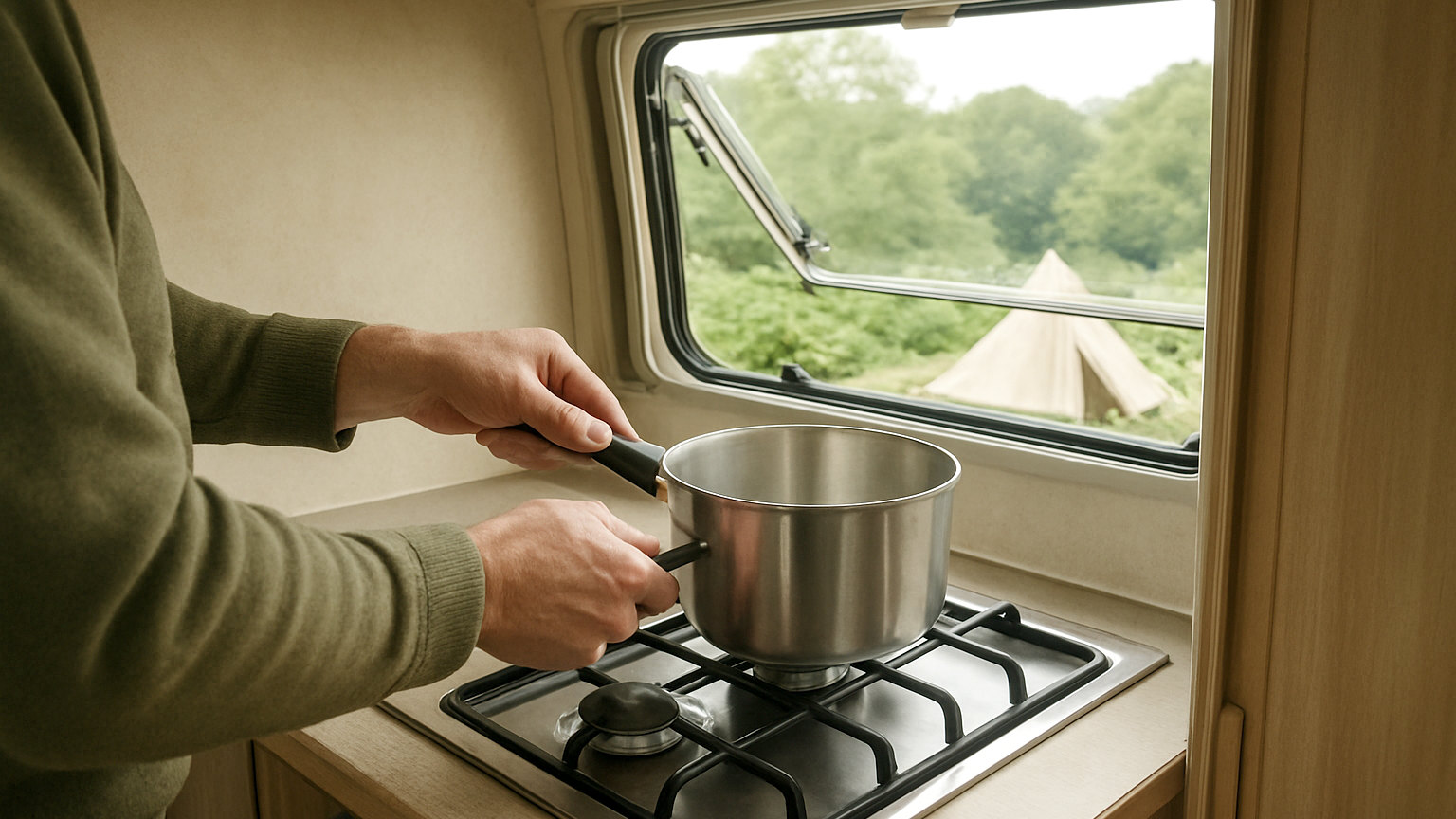
- Caravan hobs are designed appliances with fitted ventilation
- Never block the floor and roof vents in a caravan
- Carry a portable carbon monoxide alarm
Why do barbecues kill campers?
Because people bring them in to cool or for warmth. A disposable barbecue that has finished cooking looks and feels almost dead and continues producing carbon monoxide for hours. Bringing one into a tent or an awning to keep warm is the specific sequence behind a consistent stream of deaths, and it is the single most important thing anyone camping should know.
What makes a caravan hob different?
It is a designed installation. Caravan and motorhome cooking appliances are fitted with flame supervision devices, connected to a properly installed gas system, and paired with permanent low level and high level ventilation calculated for the appliance. That combination is what makes indoor cooking acceptable in a caravan and absent in a tent.
Why must the vents stay clear?
Because they are the ventilation the appliance depends on. Caravan vents are frequently blocked by owners trying to stop draughts, covered with tape, or obstructed by stored belongings, which removes the airflow that makes the fitted hob safe. Check them at the start of every trip and keep them clear regardless of how cold it is.
Should you have a carbon monoxide alarm?
Yes, and a portable one is inexpensive. Fit an audible alarm conforming to BS EN 50291 in any caravan, motorhome or boat, and carry one when camping to place in the tent, since alarms designed for travel use exist. Check the expiry date, since sensors have a limited life. Treat any activation as a reason to get everyone out immediately.
What about heating rather than cooking?
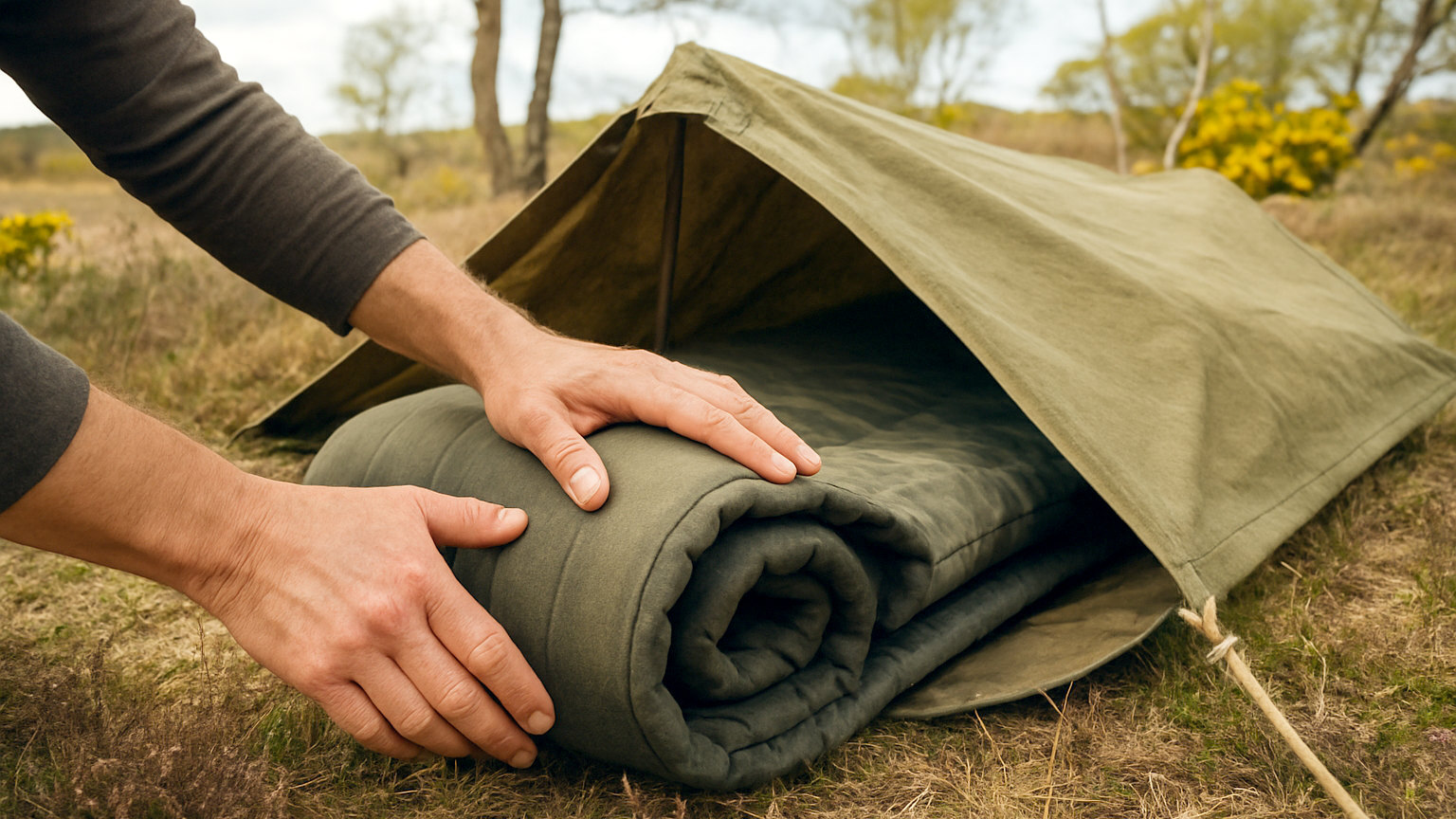
Same rules, more strictly. Portable gas heaters, paraffin heaters and barbecues used for warmth in tents and awnings are behind many of the deaths in this area. Warmth in a tent comes from insulation, a good sleeping bag, a mat with a decent rating and warm clothing, not from combustion. Caravan heating should be the fitted system with its own flue.
What is the safest arrangement?
A stove on a stable surface outside the tent, a windbreak rather than an enclosure, and food that needs minimal cooking in bad weather. Plan meals so that a wet evening means a quick boil rather than half an hour standing over a pan, which is what tempts people to move the stove inside.
What about boats?
The same principles with an added hazard, since gas is heavier than air and collects in the bilge rather than dispersing. Boat gas systems are designed with sealed lockers, drains overboard and specific ventilation for exactly this reason, and improvised cooking aboard is genuinely dangerous. Fit a carbon monoxide alarm, keep vents clear, and never use a barbecue or portable stove inside a cabin.
Stoves stay outside the tent, vestibules do not count, caravan vents stay clear, carry a carbon monoxide alarm, and never bring a barbecue under cover.