Disruptions concentrate people. Neighbours arrive, relatives are stranded, and several households end up in one kitchen. Cooking for that group as one operation rather than several is dramatically more efficient.
Why pool the cooking?
Because fuel, water and attention are all finite. Three households each boiling a small pan use roughly three times the gas of one large pan, and three times the washing up water. One person cooking for twelve frees everyone else to do other things. Pooling is the single biggest efficiency available when people come together.
What should you cook?
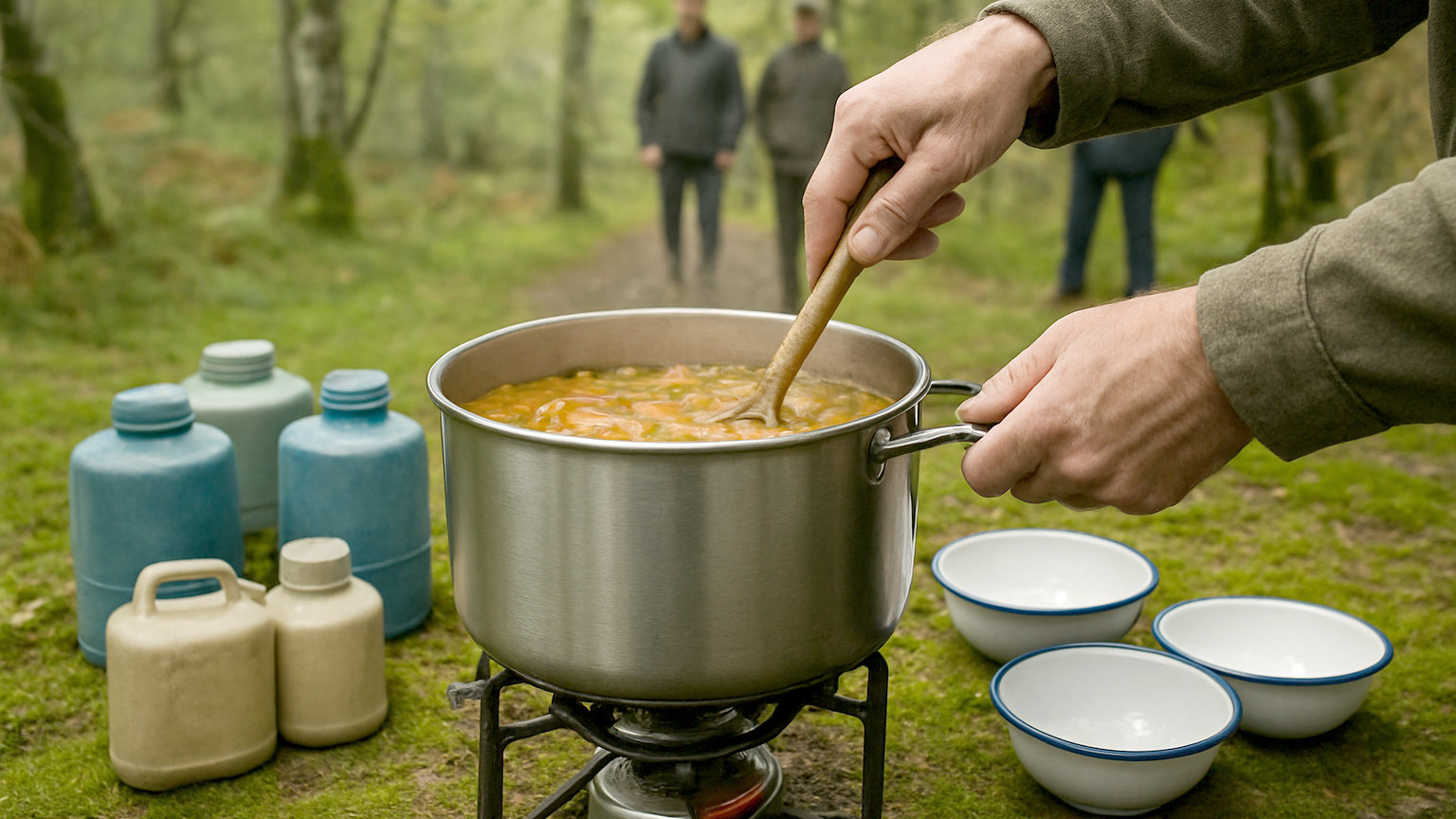
One pot dishes that scale. Stews, soups, chilli, curry, pasta with sauce, rice dishes and porridge all expand to feed a dozen as easily as four, and they stretch a small amount of protein across many people using grains and pulses. Anything requiring individual portions, frying or precise timing is the wrong choice for numbers.
- Cook one large pot rather than several small ones
- Choose dishes that stretch with rice, pasta or pulses
- Put one person in charge of the cooking
- Pool fuel, pans and ingredients openly
- Ask about allergies and dietary requirements first
- Use retained heat cooking to stretch the fuel further
How do you scale the quantities?
Around a hundred grams of dry rice or pasta per adult, or a large mug of stew each with bread. Err generously, since people eat more when cold and anxious and leftovers are useful the next day. Grains and pulses are what make a small amount of meat or tinned fish feed many, and stock cubes turn water into a base for any of it.
What about allergies and diets?
Ask before cooking rather than after. In a mixed group there will usually be at least one allergy, intolerance, religious requirement or vegetarian, and discovering it when the meal is served leaves someone unfed. Cooking a base that everyone can eat, with additions served separately, is the simplest solution. Keep the packaging so ingredients can be checked.
How do you manage hygiene for numbers?
Carefully, because a stomach bug in a group sharing limited facilities is a serious problem. Hand washing with soap before preparing and serving, one designated person handling food, thorough cooking, and not letting cooked food stand warm for hours. Anyone who is already unwell should not be cooking. This matters more with a group than with a family.
How do you serve it?
From the pot, into whatever people have. Everyone bringing their own bowl, mug and spoon removes almost all the washing up and the risk of cross contamination between households. Serve rather than letting people help themselves from a communal pot, which controls portions and reduces contact with the food.
What about the fuel?
Pool it and be open about how much there is. A group with four gas cartridges between them should know that, and should plan meals accordingly rather than discovering a shortage on day three. Cooking once a day and using retained heat for the rest extends a shared supply substantially.
Who should be in charge?
One person, agreed at the start. Group cooking without a designated cook produces either nothing or three people getting in each other way. Rotating the role daily works well and spreads the effort. Give someone else the washing up and someone else the water, so the tasks are distributed rather than falling on whoever volunteered first.
How do you handle leftovers?
Cool them quickly, keep them cold and reheat thoroughly, or accept you cannot keep them. Large quantities of cooked food cool slowly, which is the condition bacteria favour, and a power cut means no refrigeration to move them into. Dividing leftovers into shallow containers speeds cooling considerably. If there is no way to keep them below five degrees, it is safer to cook less and eat it all than to reheat something that has stood warm.
What should you cook first?
Whatever is most perishable across all the households involved. When several people pool supplies, the fridge and freezer contents of every home are on the same clock, so working through those before anyone opens a cupboard makes the combined store last considerably longer. It also produces the best eating in the first day, which helps morale when people are unsettled.
Cook one large pot, ask about diets first, put one person in charge, have everyone bring their own bowl, and pool the fuel openly.