Boiling water is the single largest demand on a stove during a disruption, since it covers drinks, cooking and making water safe. Reducing the fuel each boil takes is the most effective way to extend a limited supply.
What makes the biggest difference?
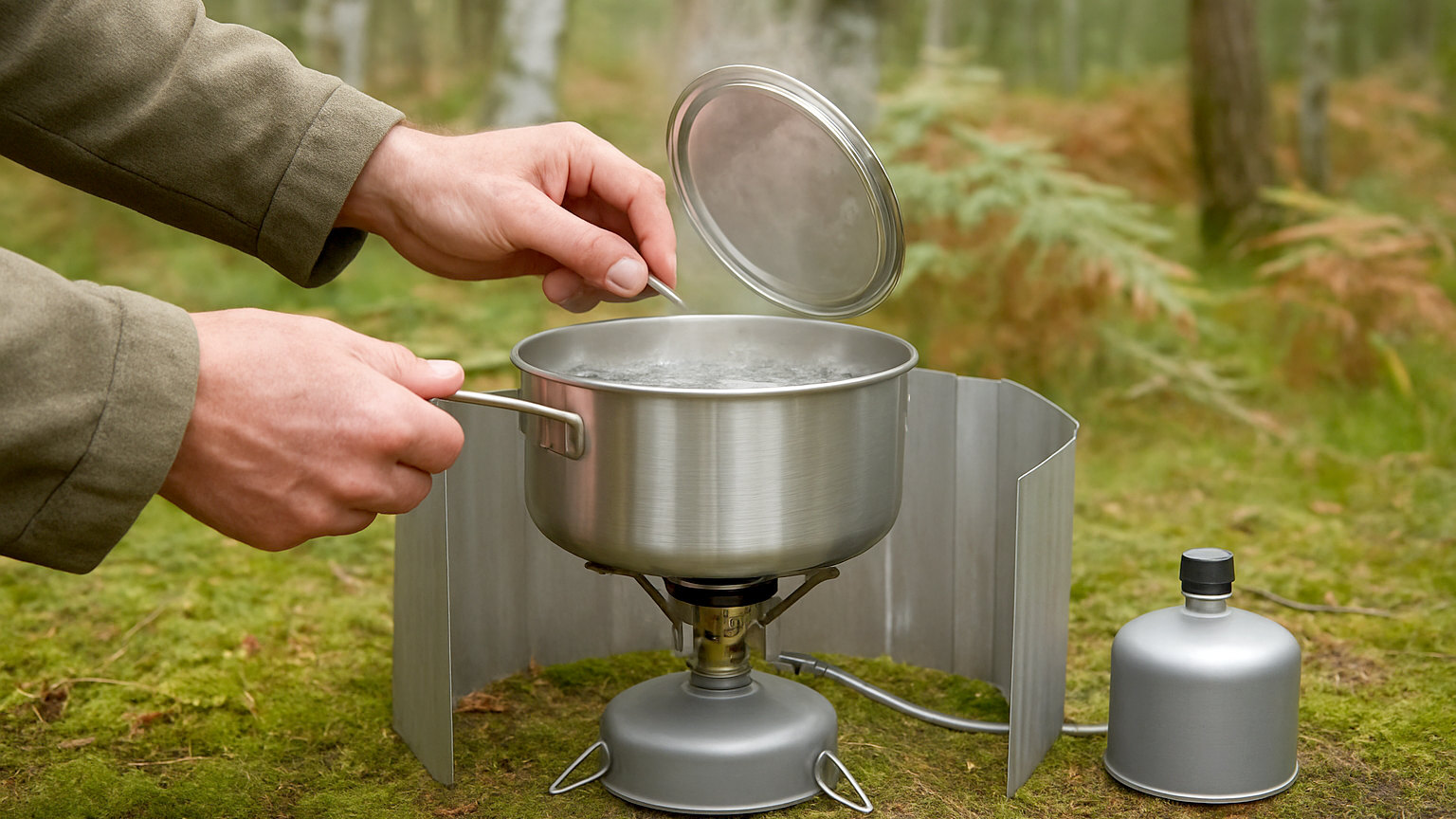
A lid. A pan without one loses an enormous amount of heat as steam and convection, and covering it typically cuts boiling time by a third or more. It costs nothing, requires no skill and is the most frequently skipped step. If you take one thing from this subject, put a lid on the pan.
How much does wind cost you?
More than most people believe. Wind strips heat from the pan and disperses the flame, and a stove in a modest breeze can use several times the fuel of the same stove in shelter. A windshield, a rock, a rucksack or a corner of a wall all help. Never enclose a gas canister within a windshield, since trapped heat can raise the pressure dangerously.
- Always use a lid, which cuts boiling time substantially
- Shelter the stove from wind, without enclosing the canister
- Measure the water rather than filling the pan
- Match the pan diameter to the burner
- Turn down as soon as it boils, or off entirely
- Start with the warmest water available
Does pan size matter?
Yes, in both directions. A pan much wider than the flame wastes heat around the edges and heats unevenly. A pan much narrower lets flame lick up the sides and escape past it. Matching the pan roughly to the burner diameter is the efficient arrangement. Wide shallow pans generally outperform tall narrow ones because more of the base is in contact with the heat.
What about heat exchanger pots?
They genuinely work. Pans with a ring of fins bonded to the base capture heat that would otherwise escape around the sides, and manufacturers claim fuel savings of around a quarter to a third, which independent testing broadly supports. They cost more and are heavier, and for anyone carrying limited fuel over a long trip they pay for themselves. For household use a lid and a windshield achieve most of the benefit for nothing.
Should you boil more than you need?
Yes, if you have somewhere to put it. Bringing a large pan to the boil once is far more efficient than three separate small boils, since each start from cold wastes fuel warming the pan itself. Boil a full pan, use what you need, and put the rest in a flask or a covered container. This matters especially during a boil water notice, where the same fuel burn produces several litres of safe water.
Do you need a rolling boil?
For safety, a brief one. Pathogens are killed well below boiling, and reaching a visible rolling boil is a safety margin rather than a strict requirement, held for one minute or three above around two thousand metres. Continuing to boil beyond that achieves nothing and wastes fuel. Turn it off as soon as it is rolling.
What about simmering?
Turn down hard as soon as boiling is reached. Food cooks at the same rate at a gentle simmer as at a violent boil, since the temperature is identical, and the extra flame simply evaporates water and burns fuel. Many people cook an entire pan of pasta at full output when a bare simmer with the lid on would use a fraction of the gas.
What else helps?
Start warm, insulate and prepare. Use the warmest water available rather than the coldest tap. Wrap the pan in a towel or a jumper once it boils to hold the heat. Have everything ready before lighting the stove so it is not burning while you find the coffee. These small habits together make a meaningful difference across a week.
Use a lid every time, shelter from wind without enclosing the canister, measure the water, boil once in bulk, and turn down the moment it boils.