
Not everyone owns a camping stove, and a power cut does not remove every option. Most households have at least one route to hot food, and knowing which one before it happens is worth a few minutes.
Will your gas hob light?
Test it and find out, because the answer varies by model. Many gas hobs have a mechanical gas valve and will light with a match when the electronic ignition has no power. Some newer hobs include a flame supervision device that requires electricity and will not allow gas through at all. Switch off the socket or the isolator the cooker uses and try lighting a ring with a match on a calm afternoon.
How do you light one safely?
Match first, then gas. Have the lit match at the burner before turning the control, so gas is not accumulating while you strike. Turn the knob to the lowest setting first. If it does not light within a few seconds, turn it off, let the gas clear for a minute and try again. Never leave gas flowing unlit, and ventilate the room before retrying.
- Test whether the hob lights with a match before you need to
- Light the match first, then turn on the gas
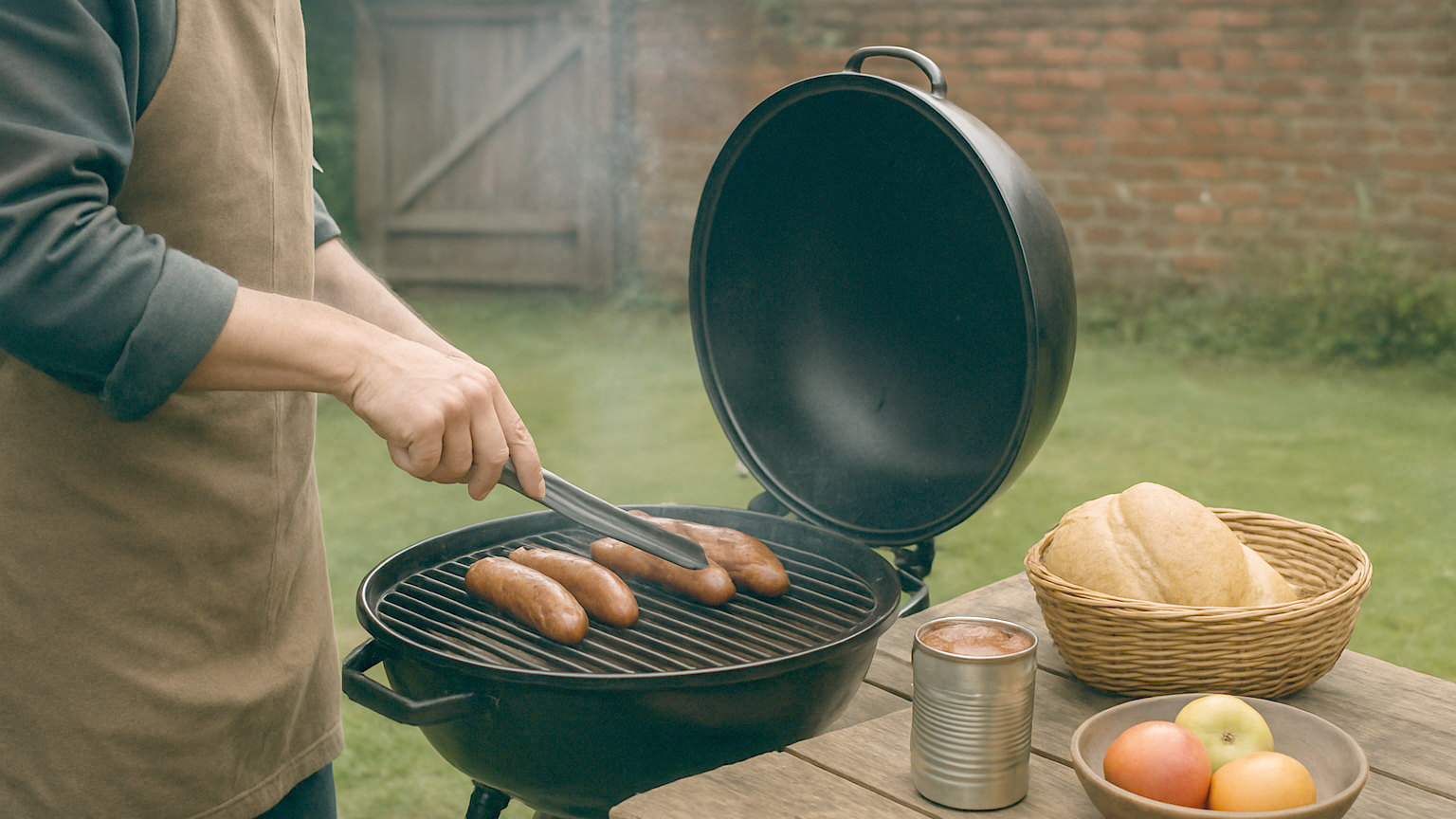
- A barbecue works, outdoors and never under cover
- A wood burning stove with a flat top will boil a kettle
- A car can charge a small device but cannot cook
- Plan food that needs no heat for the first day
Can you use the barbecue?
Outdoors, yes, and it is a perfectly good cooker. A gas barbecue is a stove with a large burner, and a charcoal one produces excellent embers. Both are designed for outdoor use and must stay there, including in rain, under an open sided shelter if needed. Never bring one into a porch, garage, conservatory, tent or shed, whatever the weather.
What about a wood burner or open fire?
If you have one, it is the best option available. A wood burning stove with a flat top will boil a kettle and cook a pan slowly, and it is heating the room at the same time. An open fire will do the same with a trivet or a grill. Both are designed appliances with proper flues, which is what distinguishes them from bringing outdoor equipment inside.
What if you have nothing at all?
Eat cold, which is entirely adequate for a day or two. Tinned fish, beans, ready to eat rice pouches, bread, cheese, peanut butter, cereal with long life milk and tinned fruit make real meals with no heat. A flask of boiling water made before the power went, or from a neighbour, covers a hot drink. This is why the no cook first day matters.
Can neighbours help?
Frequently, and people are reluctant to ask. Outages are often patchy, and a neighbouring street may have power. Someone with a gas hob, a wood burner or a camping stove will usually be glad to boil a kettle. Sharing cooking during a longer outage saves fuel for everyone and is considerably more sociable than each household struggling separately.
What about a car?
It provides warmth, charging and a radio, and not cooking. Devices sold to heat food from a twelve volt socket are slow and draw heavily on the battery. Never run an engine in a garage or enclosed space. Treat the car as a place to warm up and charge a phone rather than as a kitchen.
What should you buy afterwards?
A portable butane stove and a couple of cartridges, which cost very little and remove the question entirely next time. It is the single most useful purchase to come out of a first power cut, and most households who have been through one buy exactly that.
Test the hob now, use the barbecue outdoors only, eat cold for the first day, ask a neighbour, and buy a butane stove afterwards.


