
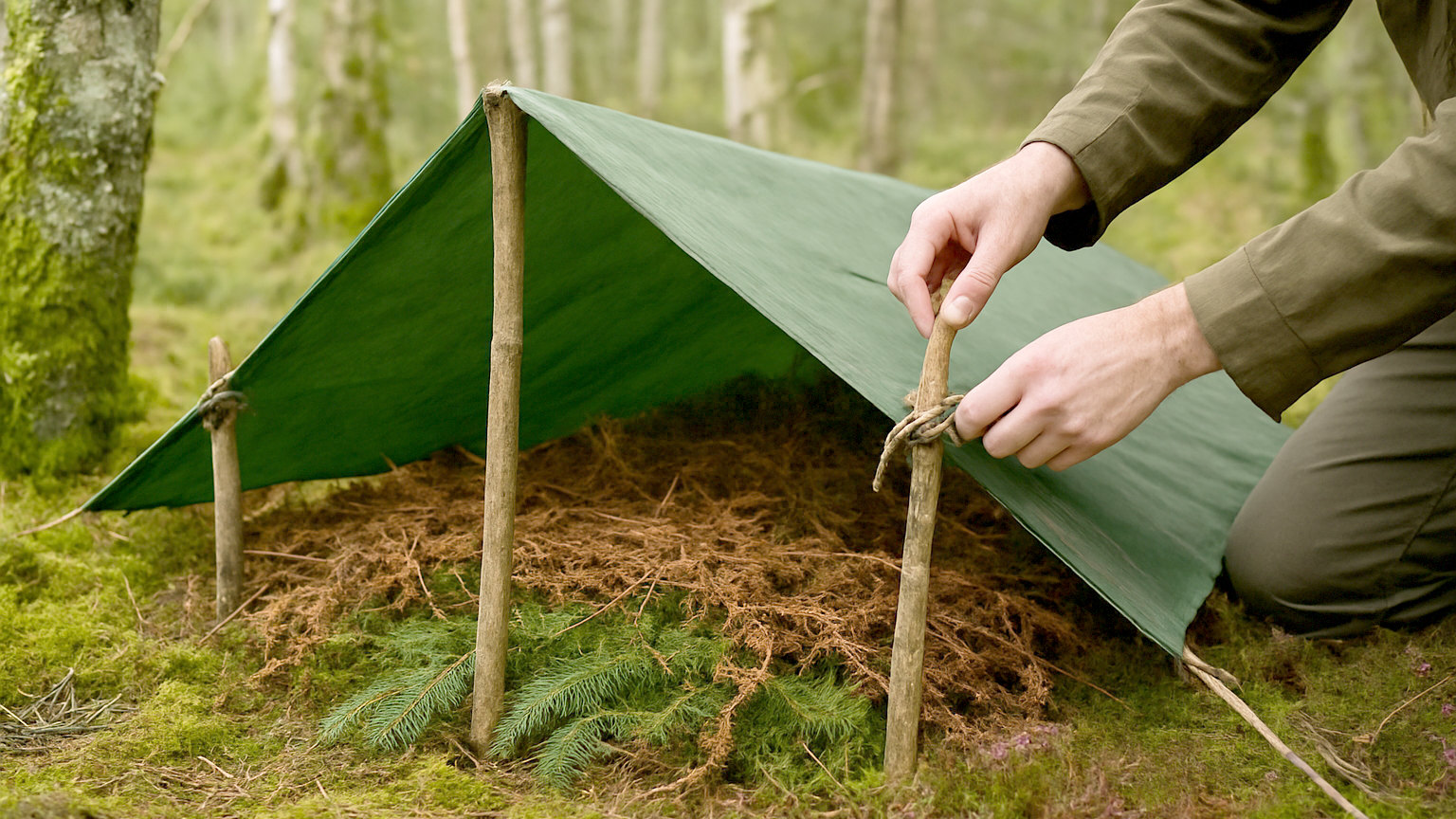
Being caught out overnight is one of the most common British outdoor situations and one of the most survivable. What determines the outcome is what you do in the last hour of daylight.
When should you commit to stopping?
Earlier than feels necessary, while you can still see. Deciding at dusk that you will be out all night, and preparing properly, produces a very different night from being overtaken by darkness mid slope and improvising by torchlight. If it looks likely, act on it rather than hoping to get down in time.
What matters most?
Insulation from the ground, then shelter from wind, then everything else. The ground conducts heat away far faster than air does, so anything between you and it makes a substantial difference: a rucksack, a foam mat, heather, bracken, a rope, spare clothing. A group shelter over the top raises the internal temperature within minutes.
- Commit while you can still see and prepare properly
- Get insulation underneath you before anything else
- Use a group shelter or survival bag immediately
- Put on every layer before you cool down
- Eat and drink, since heat production needs fuel
- Conserve phone battery and stay in one place
Where should you settle?
Out of the wind, off the wet ground, and somewhere you can be found. A hollow below a ridge, behind a wall or boulder, or in the lee of a slope. Avoid gullies and stream beds, which channel cold air and water, and avoid summits and exposed ridges entirely. Somewhere visible from above helps a search, so open ground beats dense woodland.
How do you stay warm?
Layers on before you cool, food inside you, and bodies together. Put on everything you have while you are still generating heat, since it is far harder to warm up once cold. Sit on your pack. Huddle as a group, which is dramatically more effective than sitting apart. Move periodically to generate heat, without sweating, which then chills you.
What about the phone?
Call for help first if you need it, then conserve. Battery drains fast in the cold, so keep it in an inside pocket next to your body and use flight mode between check ins. Tell someone where you are before the battery is low rather than after. A torch and a whistle both signal without using the phone.
Should you sleep?
Doze rather than sleep, and only if you are genuinely warm enough. In a group, taking turns to stay awake is sensible so someone notices if a person is deteriorating. Shivering that stops without the person warming up is a warning sign of worsening hypothermia rather than an improvement, and needs a response.
What about fire?
Rarely worth it in British upland. There is usually nothing to burn, permission is unlikely, and the effort is better spent on insulation and shelter. On the rare occasion you are in woodland with dry material and permission, a small fire helps morale considerably and should not distract from the shelter.
What do you do at first light?
Reassess before moving. Eat and drink, warm up a little, check everyone, and work out where you are in daylight, which is frequently obvious when it was impossible in the dark. Then move deliberately toward safety rather than setting off the instant it is grey. Many people who spend a night out walk off comfortably in the morning.
How cold does it actually get?
Colder than the forecast suggests, because wind chill and being stationary both matter more than air temperature. A still night at five degrees is manageable with layers, and the same temperature with a stiff wind on exposed ground while sitting motionless is not. Temperature also drops through the night and is usually lowest just before dawn, which is when people struggle most.
Commit before dark, get insulation underneath you and a shelter over you, put every layer on, huddle together, and reassess properly at first light.


