
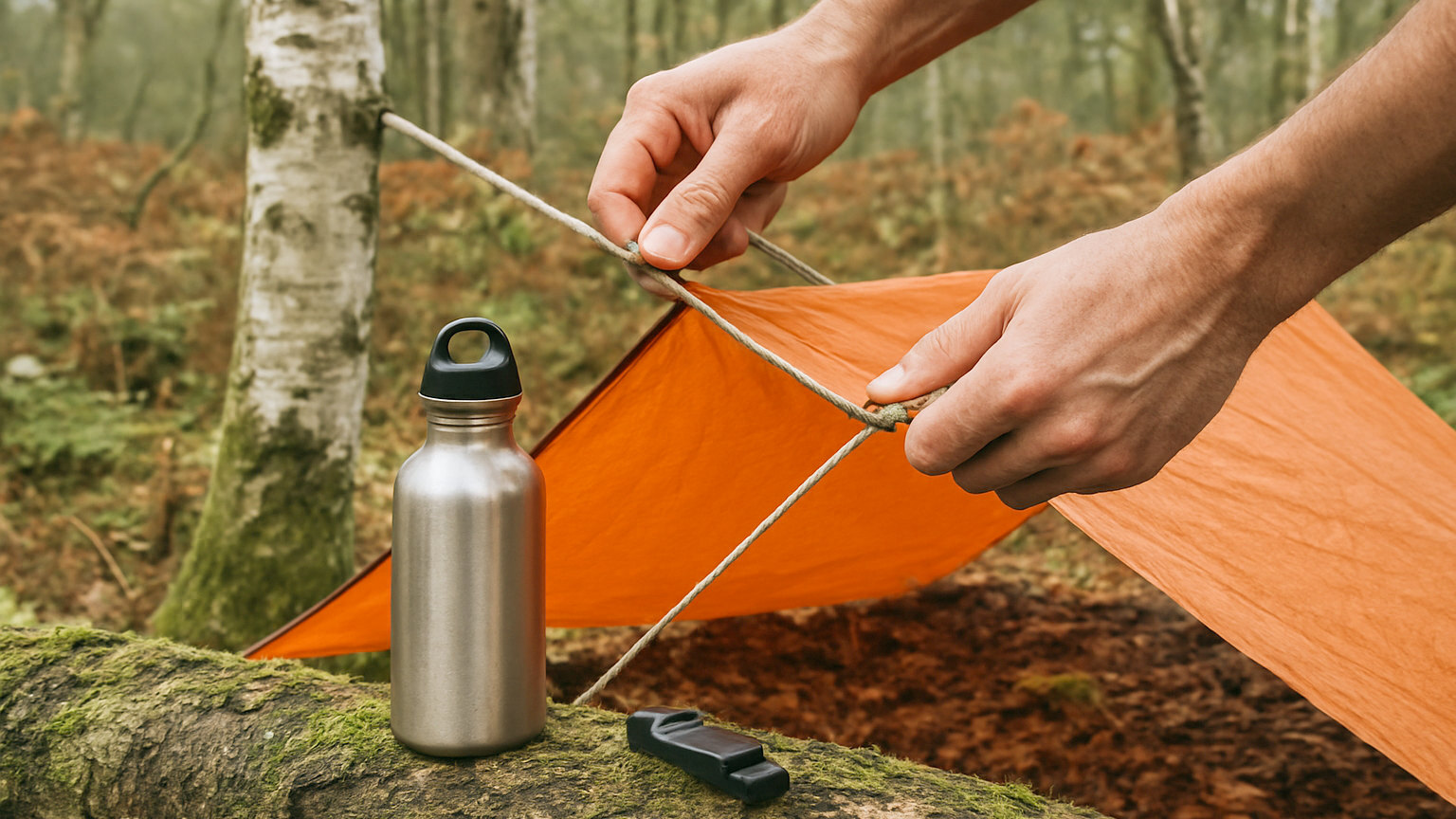
Survival priorities are usually taught as a list, and the value is in the order rather than the items. Getting the order right prevents people spending the first hour on the wrong thing.
What is the order?
Protection, location, water, food. Protection means staying alive against the immediate environment, principally cold and wet in Britain. Location means being findable, which is what actually ends the situation. Water follows over a day or more. Food is last and, in almost any British scenario, irrelevant.
Why does protection come first?
Because exposure kills in hours while thirst takes days. A wet person in a British wind can become hypothermic in a summer evening, let alone in winter. Getting out of the wind, getting insulation underneath you and getting dry layers on addresses the thing most likely to kill you, and it should happen before anything else.
- Protection: shelter, warmth, staying dry
- Location: being findable by rescuers
- Water: relevant after a day or more
- Food: essentially irrelevant on British timescales
- First aid overrides everything if someone is injured
- Reassess the order as circumstances change
Why is location second?
Because being found is what ends the situation, and almost every British incident ends with rescue rather than self extraction. Making yourself findable means calling 999 if you have signal, staying put if that is the plan, and being visible: bright colours, a torch, a whistle, and open ground rather than under trees.
Where does first aid sit?
Above all of it, when there is an injury. Catastrophic bleeding, an obstructed airway or someone unresponsive takes precedence over anything else, and the priorities only apply once the immediate medical situation is stable. After that, treat the casualty as the reason protection matters even more, since injured people cool faster.
Why is food last?
Because a healthy adult manages for weeks without it, and no British outdoor incident lasts that long. Food matters for morale, for warmth generation and for maintaining function, so eat what you have. Spending effort obtaining food in a situation lasting hours or a day is effort taken from things that matter.
Does the order ever change?
With circumstances. In genuine heat, water rises sharply and can outrank shelter beyond the immediate need for shade. If you are already warm and dry, location moves to the top immediately. If you are injured, medical care leads. The framework is a default that stops people improvising badly, not a rule to follow when it obviously does not fit.
What do people actually do wrong?
Press on toward a destination when they should be stopping and getting warm. Spend time on fire when they should be putting on every layer. Worry about water on a four hour walk out. Move around looking for a better spot instead of getting a group shelter over everyone. In each case the effort goes somewhere lower down the list.
How do you use it under stress?
By saying it out loud. Under pressure people fixate, and running through four words forces a check on whether what you are doing matches what matters. Protection, location, water, food. If you are doing something that is not one of those, and nobody is injured, stop and do one of those instead.
What about air and immediate danger?
They precede everything and are usually momentary. Drowning, an obstructed airway, an unstable slope, rockfall or a rising tide all demand action within seconds and are not part of a considered list. Deal with the thing that is actively killing someone right now, get clear of the hazard, and then start at protection.
How does this differ from wilderness elsewhere?
The relative weights change considerably. In genuine desert, water rises to the top and shelter means shade rather than warmth. In arctic conditions, protection dominates absolutely. In tropical forest, water is abundant and treatment becomes the issue. The four categories hold everywhere and the order shifts, which is why understanding why they are ordered matters more than memorising the sequence.
Protection first, then location, then water, with food essentially irrelevant, and first aid overriding all of it when someone is hurt.


