
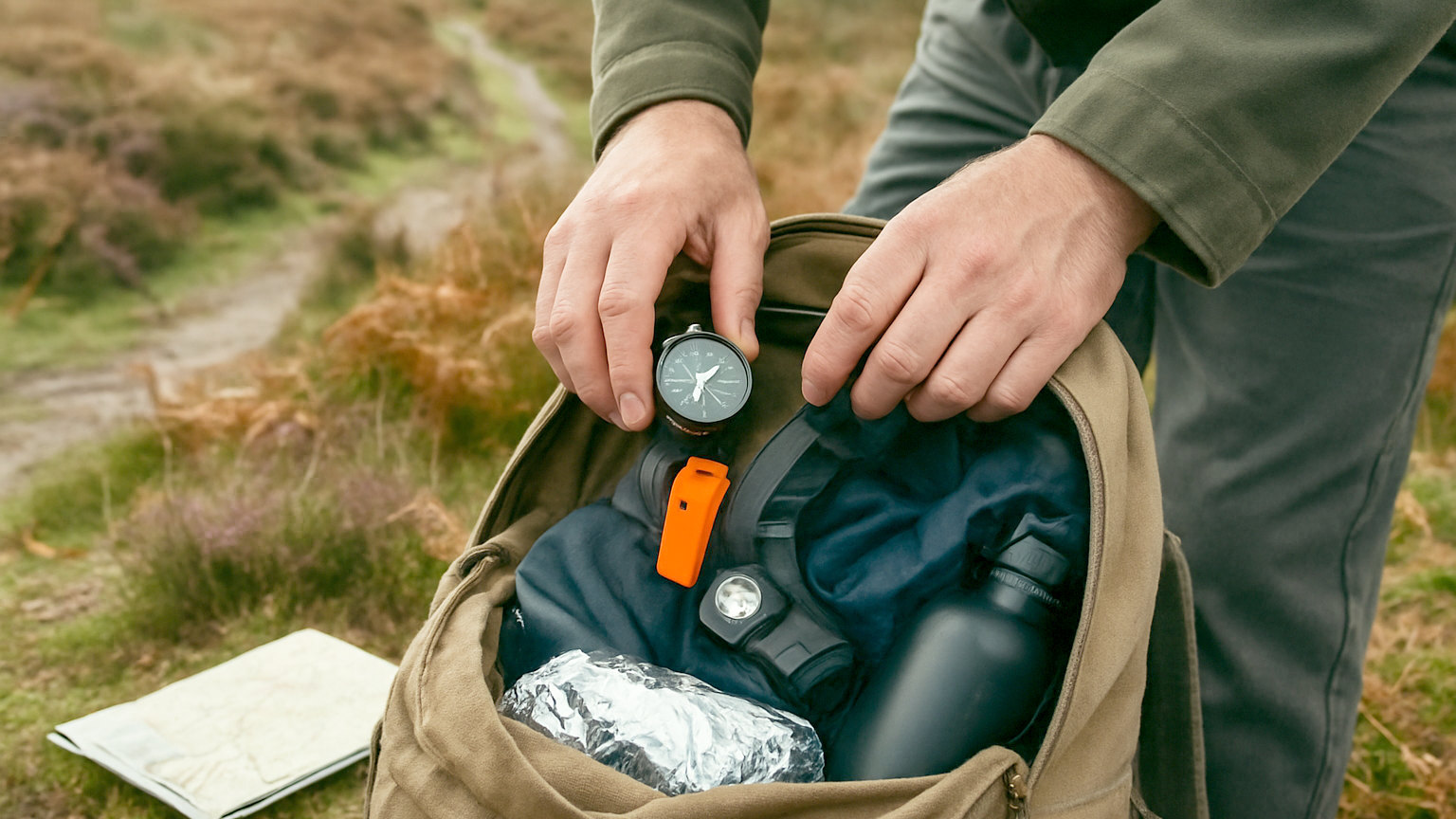
Serious outdoor incidents follow recognisable patterns. Reading rescue reports and accident analyses produces a short list that recurs with striking consistency.
What is the most common?
Pressing on when the situation called for turning back. It appears in almost every serious incident: worsening weather, failing light, a member struggling, growing doubt about the route, and a decision to continue anyway. The destination, the effort already invested and the reluctance to be the one who suggests stopping all push in the same direction.
What comes next?
Telling nobody where you are going. Without a route and a return time left with someone reliable, no search begins, which converts a manageable overnight situation into a serious one. It costs a text message and it is the single most consequential preparation there is.
- Pressing on instead of turning back
- Leaving no route or return time with anyone
- Inadequate clothing, particularly cotton and no spare layers
- No torch, so being caught out by darkness
- Ignoring the forecast, particularly wind and cloud base
- Splitting the group, leaving people unaccounted for
Why does clothing feature so heavily?
Because hypothermia is the mechanism in a large share of British incidents, and clothing determines how fast it develops. Cotton loses all insulating value when wet and dries extremely slowly, which is why jeans and cotton t shirts appear repeatedly in accounts. No spare layer, no hat, no gloves and no waterproof turn a delay into an emergency.
What about torches?
Being caught by darkness without light is one of the most common causes of a callout, and it is entirely avoidable. Days are short for much of the British year, walks take longer than planned, and a head torch weighs almost nothing. People navigating by phone screen or feeling their way down in the dark are how simple descents become falls.
Why do people ignore the forecast?
Because they check the wrong one. The town forecast bears little relation to conditions at six hundred metres, where wind speed, cloud base and wind chill are what matter. Mountain specific forecasts exist and are free, and checking them changes plans. Wind in particular is consistently underestimated and is what makes exposed ground unmanageable.
What about overconfidence?
It is the thread through most of the others. Familiarity with a route in summer does not transfer to winter, and previous success without incident reinforces habits that were always risky. The people who get caught out are frequently experienced, and the specific failure is treating a familiar route as a known quantity when conditions have changed.
What about phones?
Relying on one entirely. A phone navigation app is excellent and it is a single point of failure that runs out of battery, breaks, gets wet and loses signal. Carrying a map and compass and being able to use them, and carrying a power bank, removes that dependency. Many callouts involve a party whose phone died.
What is the common thread?
Small decisions accumulating rather than one dramatic error. Nobody sets out to be caught in the dark on a mountain in a storm without a coat. It happens through a series of individually reasonable choices, each of which slightly narrowed the options. Recognising that pattern is what allows you to interrupt it early.
What about water and tides?
Two specific British killers worth naming separately. River crossings in spate are far more dangerous than they appear and have killed experienced people, and the correct answer is almost always to find another way or wait. Tidal cut off around coastal paths, causeways and sand traps catches people every year, and it develops faster than anyone expects. Check tide times before any coastal route.
Why do experienced people feature?
Because familiarity replaces assessment. Someone who has done a route twenty times stops checking conditions against the plan, carries less, starts later and pushes through weather they would not have accepted as a beginner. Experience is protective on average and it creates a specific vulnerability, which is why the most useful habit is to assess each day on its own terms.
Be willing to turn back, tell someone your route, carry layers and a torch, check the mountain forecast, keep the group together, and do not rely solely on a phone.


