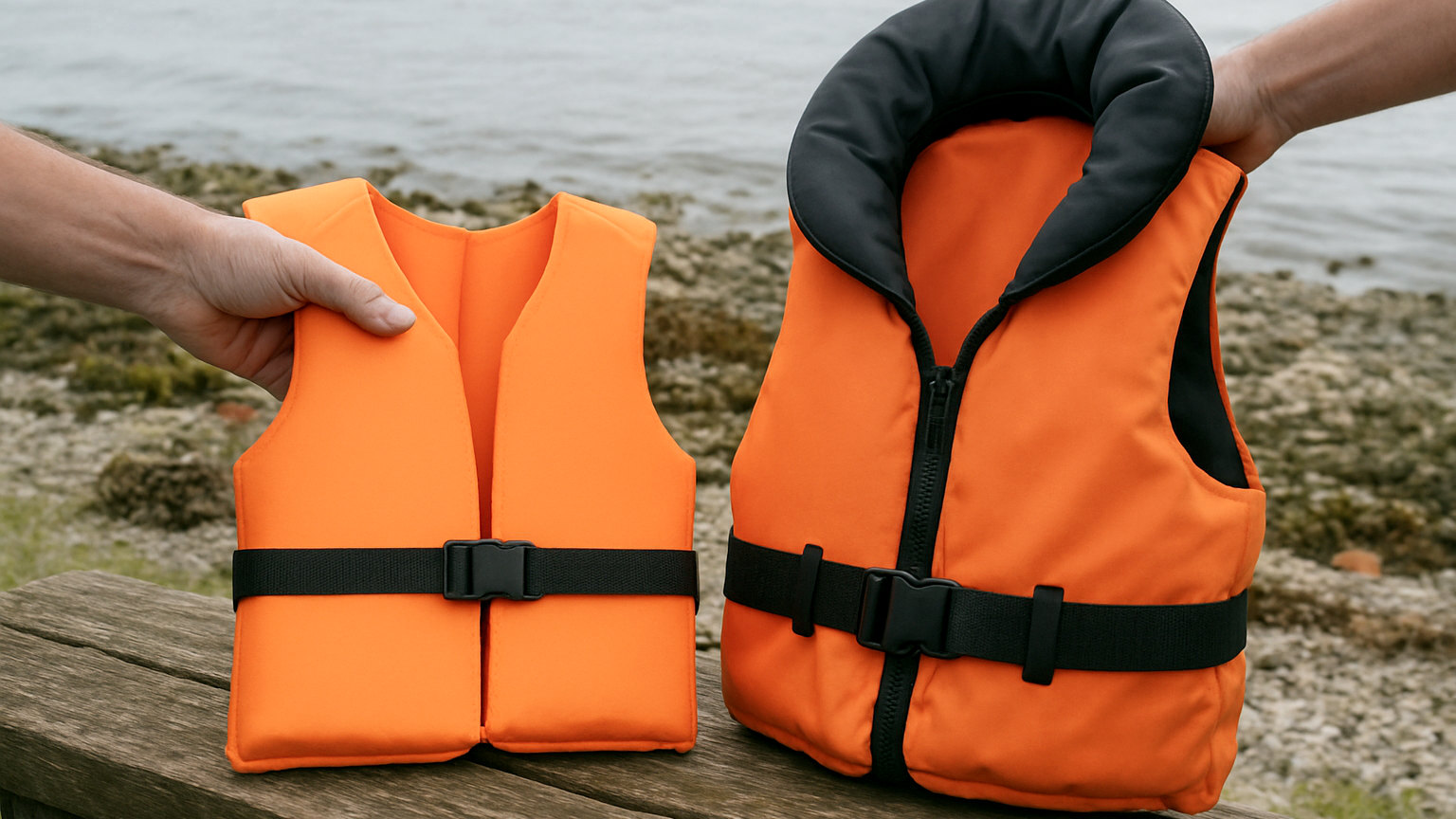
The distinction between a lifejacket and a buoyancy aid is the most important thing in this subject and the most commonly confused, and the words are used interchangeably in shops and conversation.
What is the difference?
A lifejacket is designed to turn an unconscious person face up and hold their airway clear of the water without any effort from them. A buoyancy aid provides flotation to a conscious person who can swim and help themselves, and will not turn you. They serve different purposes and one is not a lesser version of the other.
What do the ratings mean?
Buoyancy in newtons. Fifty newton is a buoyancy aid for conscious swimmers in sheltered water, typically used for kayaking, dinghy sailing and paddlesports. A hundred newton is a lifejacket for inshore use in light clothing. A hundred and fifty is the general purpose offshore lifejacket. Two hundred and seventy five is for offshore use with heavy clothing or equipment.
- A lifejacket turns you face up, a buoyancy aid does not
- Fifty newton is a buoyancy aid for conscious swimmers
- One hundred and fifty newton suits most general boating
- Always do up the crotch straps or it rides up
- Have automatic lifejackets serviced annually
- A spray hood and light are genuinely worth having
Why do crotch straps matter?
Because without them a lifejacket rides up over the head and does nothing at all. This is the single most common way an inflated lifejacket fails to work, and it is entirely down to the wearer. If the jacket has crotch straps, use them every time. If it does not, consider whether it is the right jacket.
Automatic or manual?
Automatic for most people, since an unconscious or shocked person cannot pull a toggle. Automatic jackets inflate on contact with water, typically within seconds, and hydrostatic types inflate only on submersion rather than in spray. Manual jackets have a place where accidental inflation would be dangerous, such as in enclosed spaces, and require the wearer to be capable of operating them.
What servicing does it need?
An annual check, and it is very frequently neglected. The gas cylinder must be full and correctly screwed in, the automatic firing head must be within its date, the bladder must hold air, and the fabric and straps must be sound. Many jackets found on boats have been fired, corroded or partially unscrewed and would not inflate.
How do you check it yourself?
Open the cover, unscrew and weigh the cylinder against its stated weight, check the firing head indicator and date, and orally inflate the bladder and leave it overnight to test for leaks. Do that annually alongside a professional service if the manufacturer requires one. It takes fifteen minutes and it is the difference between a lifejacket and a bag of nylon.
What features are worth having?
A spray hood, which keeps waves off your face and is transformative in any sea. A light, which is what allows anyone to find you at night. Reflective tape. A whistle. A crotch strap. A lifting becket for recovery. And a harness point if you sail, so you can clip on and avoid going over in the first place.
What about children?
Size and fit matter more than for adults, since a jacket that is too large will not hold a small child face up. Buy to the weight range, do up every strap including the crotch strap, and test it in a pool if you can. Children should wear a lifejacket rather than a buoyancy aid on any boat.
Is it a legal requirement?
It varies, and the practical answer is to wear one regardless. Requirements differ between commercial and leisure use, between vessel types and between jurisdictions, and some harbours and clubs impose their own rules. Since the overwhelming majority of people who drown from boats were not wearing one, the legal position is far less relevant than the habit.
Choose a lifejacket rather than a buoyancy aid for boating, use the crotch straps, service it annually, add a spray hood and light, and fit children properly.