Going into the water unexpectedly is survivable and the first minute determines a great deal. The instincts that take over are almost all the wrong ones.
What happens first?
Cold shock. An involuntary gasp on immersion followed by uncontrollable rapid breathing, peaking within thirty seconds and settling over one to three minutes. It is the reason people drown in the first minute rather than from hypothermia later, because the gasp can occur underwater and the hyperventilation makes breath holding and swimming impossible.
What should you do about it?
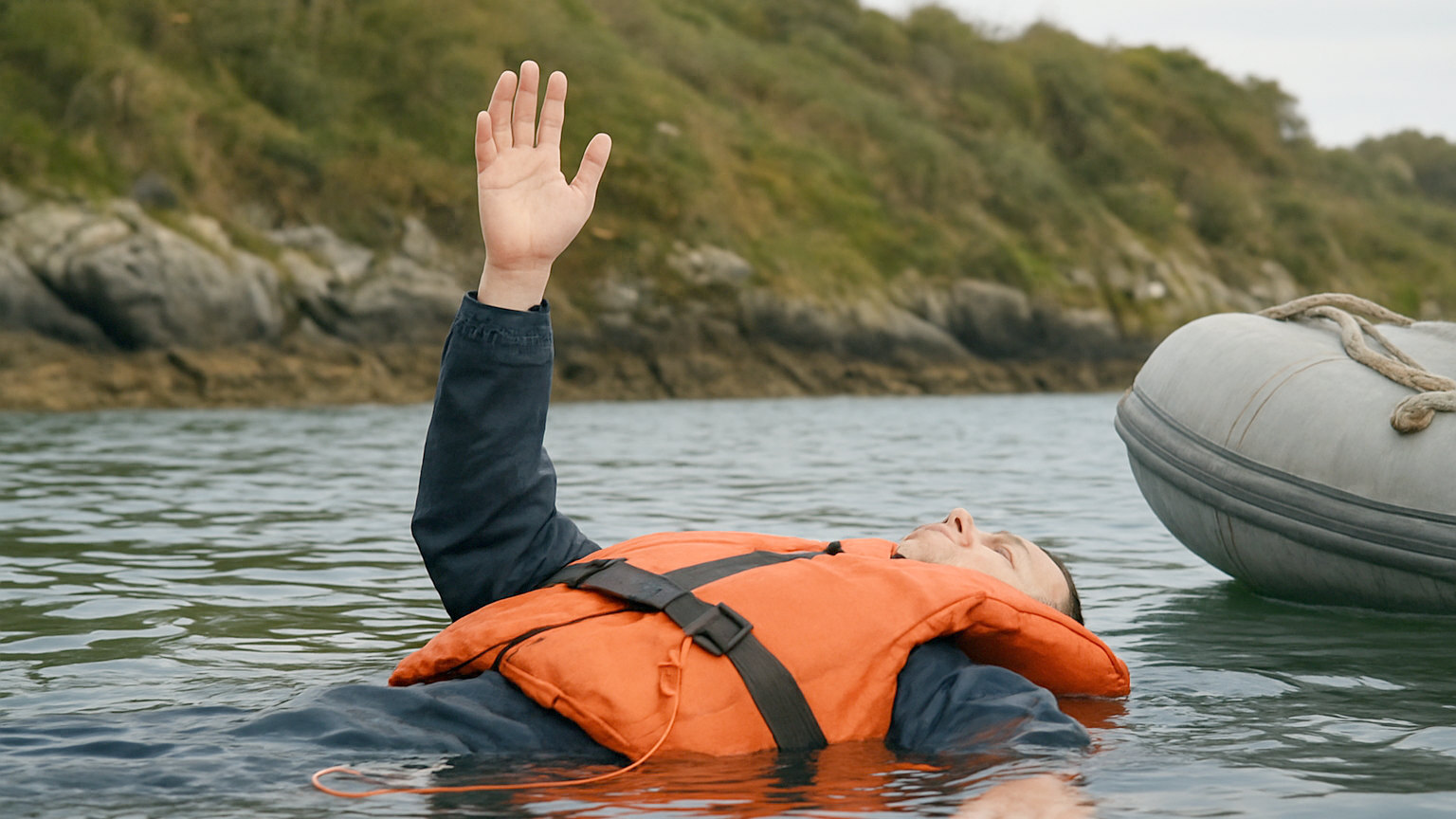
Float and let it pass. Lean back, keep your airway clear of the water, spread your arms and legs, and float for sixty to ninety seconds until the breathing settles. Do not try to swim, shout or do anything else during that period. This is the advice the RNLI promotes and it is the single most useful thing anyone can know about falling into water.
- Float on your back until the gasping stops
- Do not swim or thrash during the first minute
- Stay with the boat or anything that floats
- Adopt the HELP position to conserve heat
- Keep the whistle and light on your lifejacket accessible
- Use the spray hood if your lifejacket has one
Should you swim for the boat?
Only if it is very close and stationary. A boat under way moves faster than anyone can swim, and chasing it wastes the energy and heat you need. Swim failure develops within ten to thirty minutes in cold water, so effort spent early leaves you unable to help yourself later. Stay still, stay afloat and stay visible.
What is the HELP position?
The heat escape lessening posture: knees drawn up toward the chest, arms pressed against the sides, floating still in a lifejacket. It protects the areas of highest heat loss, the sides of the chest, the groin and the armpits, and it noticeably slows cooling. It only works in a lifejacket that holds you face up without effort.
What if there are several of you?
Huddle. Facing inward, arms around each other, chests together, with any children in the middle. It conserves heat considerably better than floating apart, keeps everyone together for recovery, and helps morale enormously. It also means one large target for searchers rather than several small ones.
How do you stay visible?
With everything on the lifejacket. A whistle carries far further than a voice and costs almost no energy. A light matters enormously at night and in poor visibility. Reflective tape helps searchlights find you. A spray hood keeps waves off your face, which is the difference between breathing comfortably and inhaling water in any sea state.
What if you have no lifejacket?
Find something that floats and hold onto it. Anything buoyant reduces the effort of staying afloat, which conserves heat and energy. Float on your back where you can. Kick off heavy boots only if they are dragging you down, since trapped air can help and removing them uses energy. Never remove clothing, which provides insulation in the water.
What matters most overall?
Wearing the lifejacket in the first place. The overwhelming majority of people who drown after falling from boats were not wearing one, and one that is on the seat beside you is of no use. Wear it, fit it properly with the crotch straps done up, and check it works before going out.
How long do you have?
Longer than most people assume, provided you survive the first minute. Cold shock passes within a few minutes, swim failure develops over ten to thirty, and hypothermia takes considerably longer than that. That sequence is worth knowing because it tells you that staying still and staying afloat is a viable strategy rather than a desperate one, and that rescue is realistic.
Float until the gasping stops, do not chase the boat, adopt the HELP position or huddle, use the whistle and light, and wear the lifejacket in the first place.