
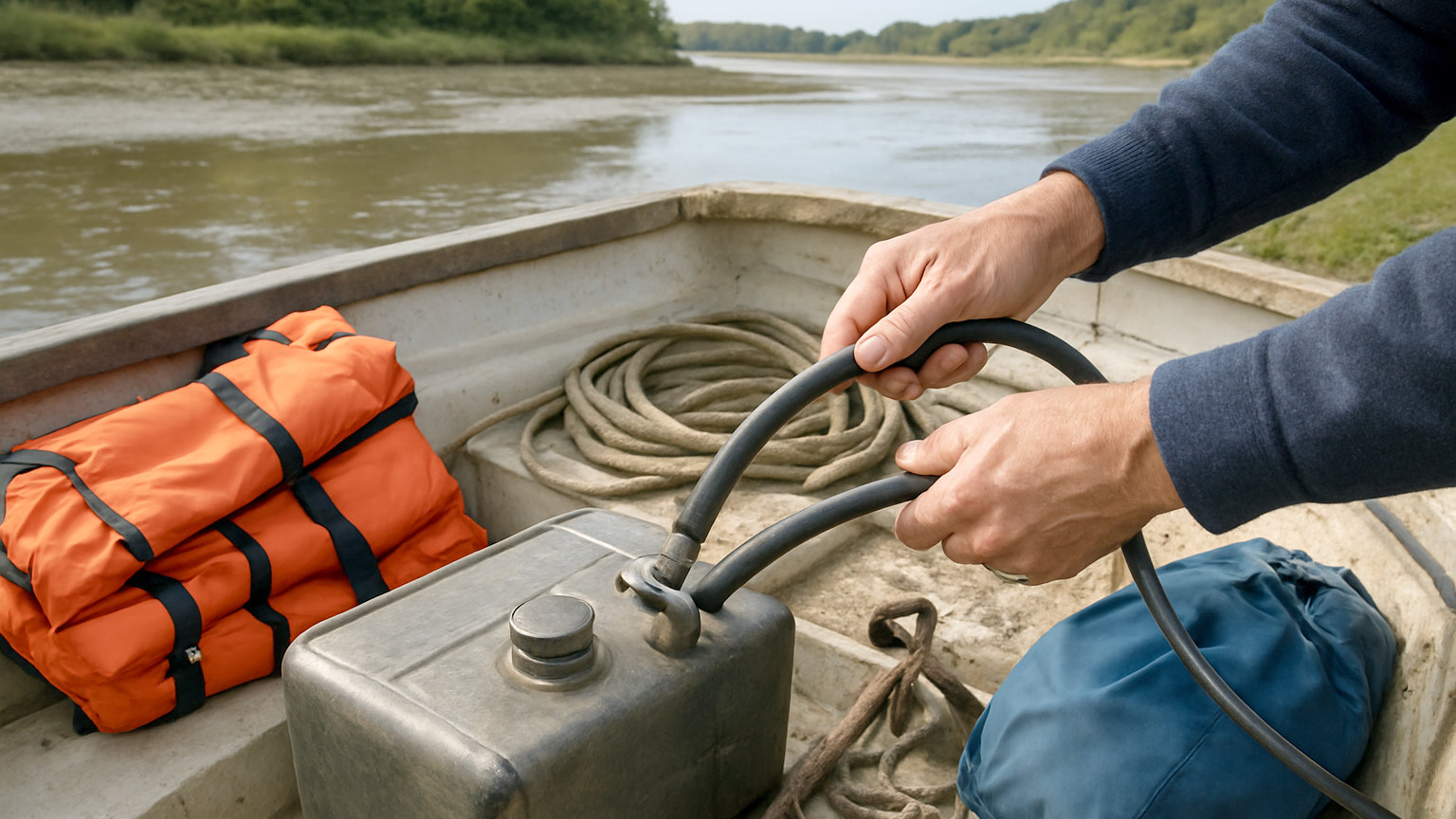
Coastguard statistics repeatedly identify the same causes: machinery failure, running out of fuel, and getting caught by weather or tide. All are addressed before leaving.
What about the weather?
Check a marine forecast rather than a general one, since wind over tide, sea state and visibility matter more than whether it will rain. Look at the wind strength and direction, whether it will increase, and how it relates to the tide, because wind against tide produces short steep seas far worse than the wind alone suggests.
What about tides?
Check heights and times for where you are going, since they determine depth, whether harbours and moorings are accessible, and how strong tidal streams will be. Tidal streams around headlands and in narrows can exceed the speed of a small craft. Plan passages to work with the tide rather than against it.
- Check a marine forecast, including wind over tide
- Check tide times, heights and streams for the passage
- Carry a third of fuel out, a third back and a third in reserve
- Check the engine, battery, bilge and steering before leaving
- Confirm lifejackets, radio and beacon are working
- Tell someone ashore the plan and expected return
How much fuel?
The traditional rule of thirds: a third to get there, a third to get back and a third in reserve. Fuel consumption rises sharply against wind and tide, and a return journey into weather can use far more than the outward leg. Running out of fuel is one of the most common reasons for a lifeboat launch and is entirely avoidable.
What should you check on the boat?
Engine oil and coolant, fuel level and filters, battery charge, bilge and bilge pump, steering, seacocks, and navigation lights. Start the engine before leaving the berth. Check the anchor and its warp are ready to deploy. A short mechanical check before every trip catches most of the failures that lead to a tow.
What safety equipment?
Lifejackets for everyone, correctly sized and serviced. A working radio with a registered identity. A beacon if you go offshore. Anchor and warp. Bailer or pump. Torch. First aid kit. Means of making a sound signal. Charts or a chart plotter with paper backup. Check each is present and functioning rather than assuming.
Who should you tell?
Someone ashore, with your plan, your expected return time and a description of the boat, and agree what they do if you do not report in. Schemes and apps exist to record a passage plan and alert a nominated contact. Without this, nobody raises the alarm and a search cannot begin from a known plan.
What about the crew?
Brief them. Where the lifejackets, flares, radio and first aid kit are. How to use the radio and make a distress call, including someone other than the skipper. What to do if the skipper is incapacitated, which is a genuine scenario and one most small boats have never discussed. Five minutes before leaving covers it.
When should you not go?
When the forecast exceeds what the boat or the crew can handle, when visibility is poor, when anything on the boat is unserviceable, or when you feel uneasy about it. The decision not to go is always available and it costs nothing. Most people who have been rescued describe a moment before departure when they had doubts.
What about the boat capability?
Be honest about what it is designed for. Small open boats, inflatables and inshore craft are built for sheltered water and modest conditions, and their limits arrive far sooner than those of a larger vessel. Manufacturers assign design categories indicating the conditions a boat is intended for, and exceeding those categories because the day happens to look fine is a common route to a rescue.
Check the marine forecast and tides, carry fuel in thirds, run through the boat and the safety equipment, brief the crew, and tell someone ashore.


