
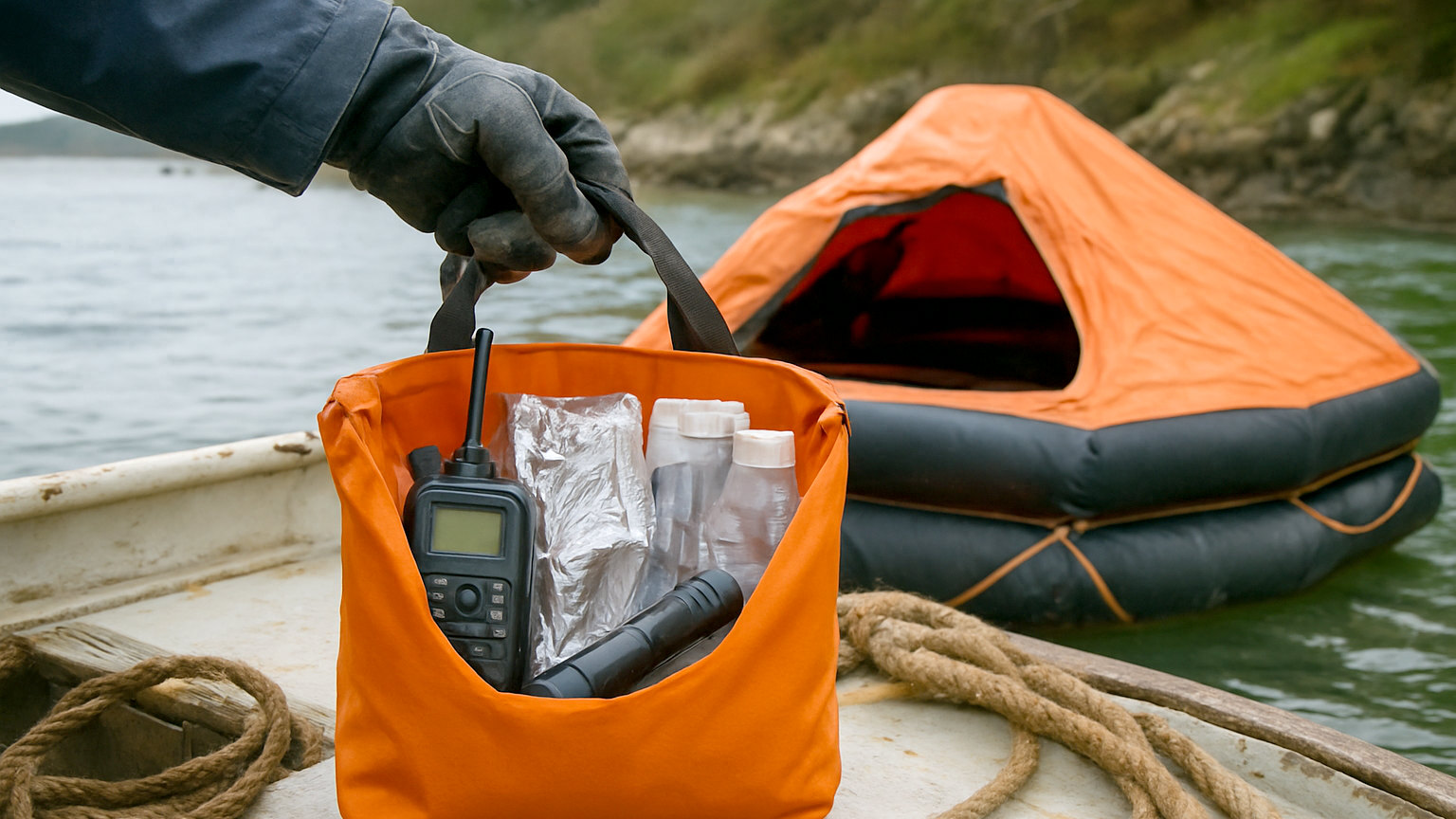
A grab bag is what leaves the vessel with you when there is no time for anything else. Its value depends entirely on being packed, buoyant and reachable.
What is it for?
Extending survival and shortening the search. A liferaft contains basic equipment and the grab bag adds communications, extra water and personal items that make the difference between a difficult few hours and a serious situation. It should be packed to be taken in one movement while wearing a lifejacket in the dark.
What should it contain?
A beacon, a handheld VHF in a waterproof case, spare batteries, water, thermal protection, a torch, a knife, signalling equipment, first aid supplies, seasickness tablets and copies of documents. Add anything essential and personal such as medication and spectacles, which are frequently forgotten and difficult to manage without.
- Beacon and handheld VHF in a waterproof case
- Water, and more than seems necessary
- Thermal protective aids or survival bags
- Torch, spare batteries and signalling equipment
- Seasickness tablets, first aid and personal medication
- Copies of passports, insurance and vessel documents
Why do seasickness tablets belong in it?
Because a liferaft is one of the most motion sick environments imaginable and vomiting causes rapid dehydration and weakness. Tablets taken immediately on boarding, before anyone feels ill, keep the occupants able to function. It is a small item with a disproportionate effect on survival and it is easy to overlook.
How much water?
As much as you can carry in the bag, in sealed containers that float, plus a means of collecting rainwater. Water is the limiting factor in a raft, and the raft ration is minimal. Some crews keep additional water in separate floating containers tied to the grab bag, since water is heavy and one bag can only hold so much.
What thermal protection?
Thermal protective aids, which are insulated bags designed for exactly this, or survival bags at minimum. Hypothermia is the main threat in a raft in British waters, and getting people into dry insulating cover matters more than almost anything else. Include spare warm hats, which are light and effective.
Should the bag float?
Yes, and it should be brightly coloured and marked. A grab bag that sinks when dropped during a chaotic abandonment is worthless. Use a purpose made buoyant bag, or add flotation and use dry bags inside for the contents. Attach a line so it can be secured to the raft.
Where should it be kept?
Somewhere reachable in seconds from the cockpit or companionway, not in a locker under something else. Everyone aboard should know exactly where it is and be able to find it in the dark. Its location should be part of the crew briefing along with the lifejackets and the radio.
How often should you check it?
Annually, and before any significant passage. Water goes stale, batteries die, beacon batteries and hydrostatic releases have expiry dates, medication expires and flares have limited lives. A bag packed five years ago and never opened is likely to contain several items that no longer work.
Should everyone have a personal kit too?
Yes, on anything offshore. A personal locator beacon, a whistle, a light and a knife attached to the lifejacket mean that a person separated from both the boat and the grab bag is still findable. Equipment on the vessel is only useful if you are with the vessel, which is precisely what an abandonment or a fall overboard removes.
How big should it be?
Small enough to lift with one hand while wearing a lifejacket in the dark, which is a real constraint. A bag nobody can carry up a companionway in a hurry will be left behind. If you need more than one bag, use two smaller ones rather than one large, and make sure the priority items are in the one most likely to be taken.
Pack a beacon, handheld radio, water, thermal protection and tablets in a buoyant marked bag, keep it reachable, brief the crew, and check it annually.


