
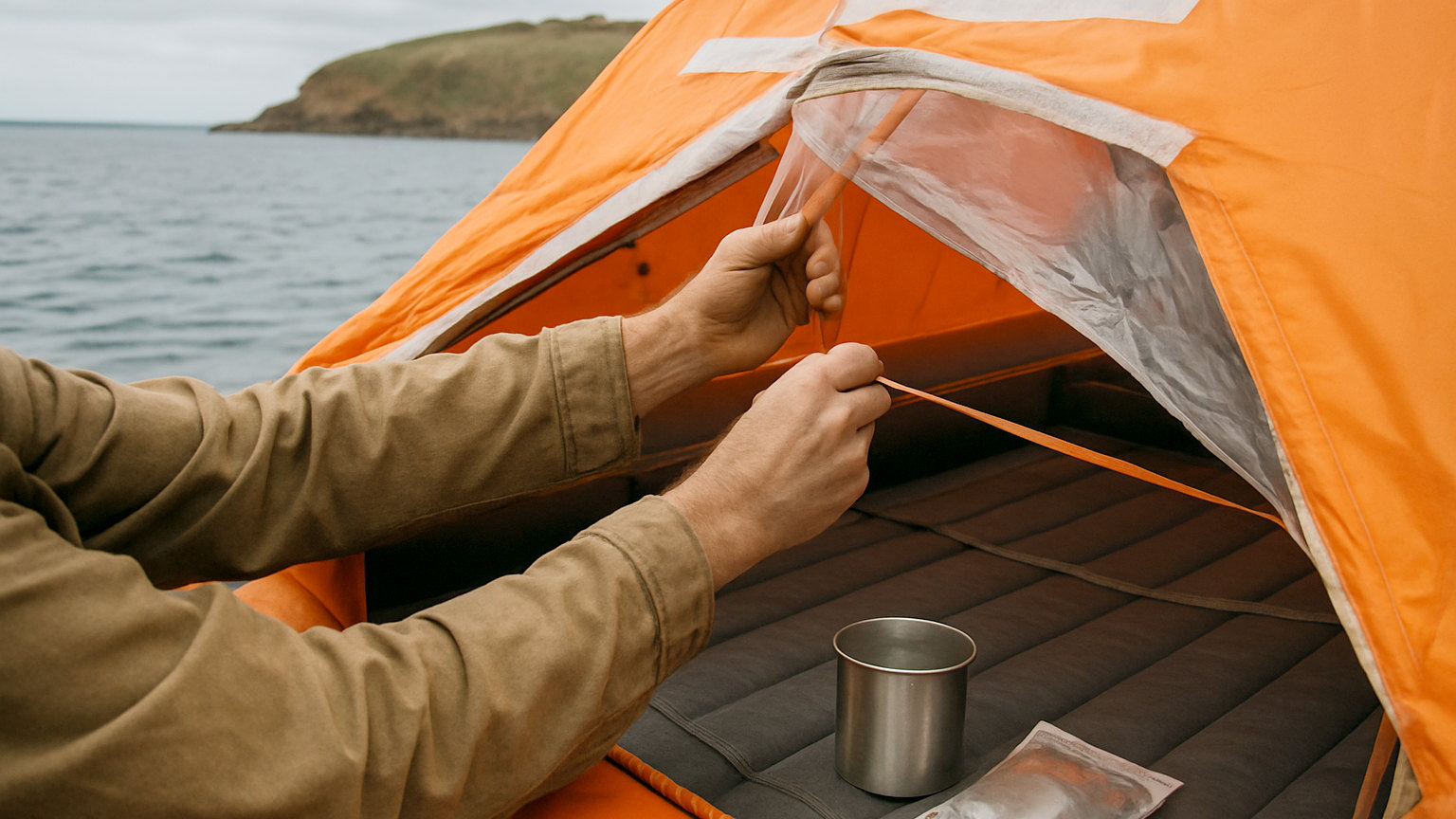
Liferafts are equipment of last resort and the standard advice is to step up into one rather than down. Everything about using one runs against instinct.
When do you abandon ship?
Only when the vessel is actually sinking. The saying is that you step up into a liferaft, meaning you leave only when the boat is going down beneath you. A floating hull is more stable, more visible and better equipped than any raft, and people have died after abandoning vessels that stayed afloat and were later recovered.
How do you board?
Dry if at all possible, straight from the deck, since getting wet before entering starts the hypothermia clock immediately. Attach the painter to the vessel before deploying, board, then cut the painter with the knife provided once everyone is in. Take the grab bag with you and any additional water and equipment you can reach safely.
- Leave the vessel only when it is genuinely sinking
- Board dry from the deck if you possibly can
- Cut the painter once everyone is aboard
- Close the canopy and deploy the drogue
- Take seasickness tablets immediately, before anyone feels ill
- Never drink seawater, however desperate
What do you do first once aboard?
Cut the painter, deploy the drogue or sea anchor which stabilises the raft and slows drift, close the canopy against wind and spray, account for everyone, bail out any water, and check for damage. Then activate any beacon and prepare signalling equipment. Doing these in order prevents the raft capsizing or drifting away from the search area.
Why do seasickness tablets matter so much?
Because vomiting causes rapid dehydration and profound weakness, and a liferaft is one of the most motion sick environments there is. Take tablets immediately on boarding, before anyone feels unwell, since they work far better preventively. Seasickness in a raft incapacitates people who would otherwise be able to look after themselves and each other.
How should you manage water?
Ration it and do not drink for the first day if you can manage. Common survival guidance is to avoid drinking in the first twenty four hours, since the body conserves water efficiently at first, then to ration what you have at around half a litre a day. Collect rainwater whenever possible. Never drink seawater or urine, both of which accelerate dehydration.
What about food?
It matters far less than water and it is not urgent. A person survives weeks without food and days without water, and eating increases the need to drink. Ration what is in the raft, eat little, and prioritise water entirely. Fishing is possible with the equipment in some rafts and is a secondary concern.
How do you stay findable?
Beacon on, canopy closed but signalling equipment ready, and a lookout maintained. Use flares or an electronic signal only when you can see or hear a vessel or aircraft, since firing them into an empty sea wastes them. Keep the radar reflector deployed. Stay near the last known position of the vessel where possible, which is where searching begins.
What keeps people alive?
Warmth, water and morale. Keep the canopy closed and everyone dry, bail continuously, huddle for warmth, take the tablets, ration water strictly, and give people jobs and a routine. Survival accounts consistently emphasise that organisation and determination mattered as much as equipment.
What about the raft equipment?
Know what is in yours before you need it. Rafts are packed to different specifications, and knowing whether yours contains water, flares, a torch, a knife, a bailer, a repair kit and seasickness tablets determines what your grab bag needs to add. Check the service record and the pack contents when it is serviced rather than opening it at sea.
How do you look after people?
Assign roles and keep a routine. Someone on lookout, someone managing water, someone bailing, rotated regularly. Keep everyone talking, insist on the seasickness tablets, and maintain a sense of time and order. Survival accounts consistently describe organisation and morale as decisive, and a raft where nobody is in charge deteriorates quickly.
Leave only when sinking, board dry, cut the painter and deploy the drogue, take seasickness tablets at once, ration water, and never drink seawater.


