
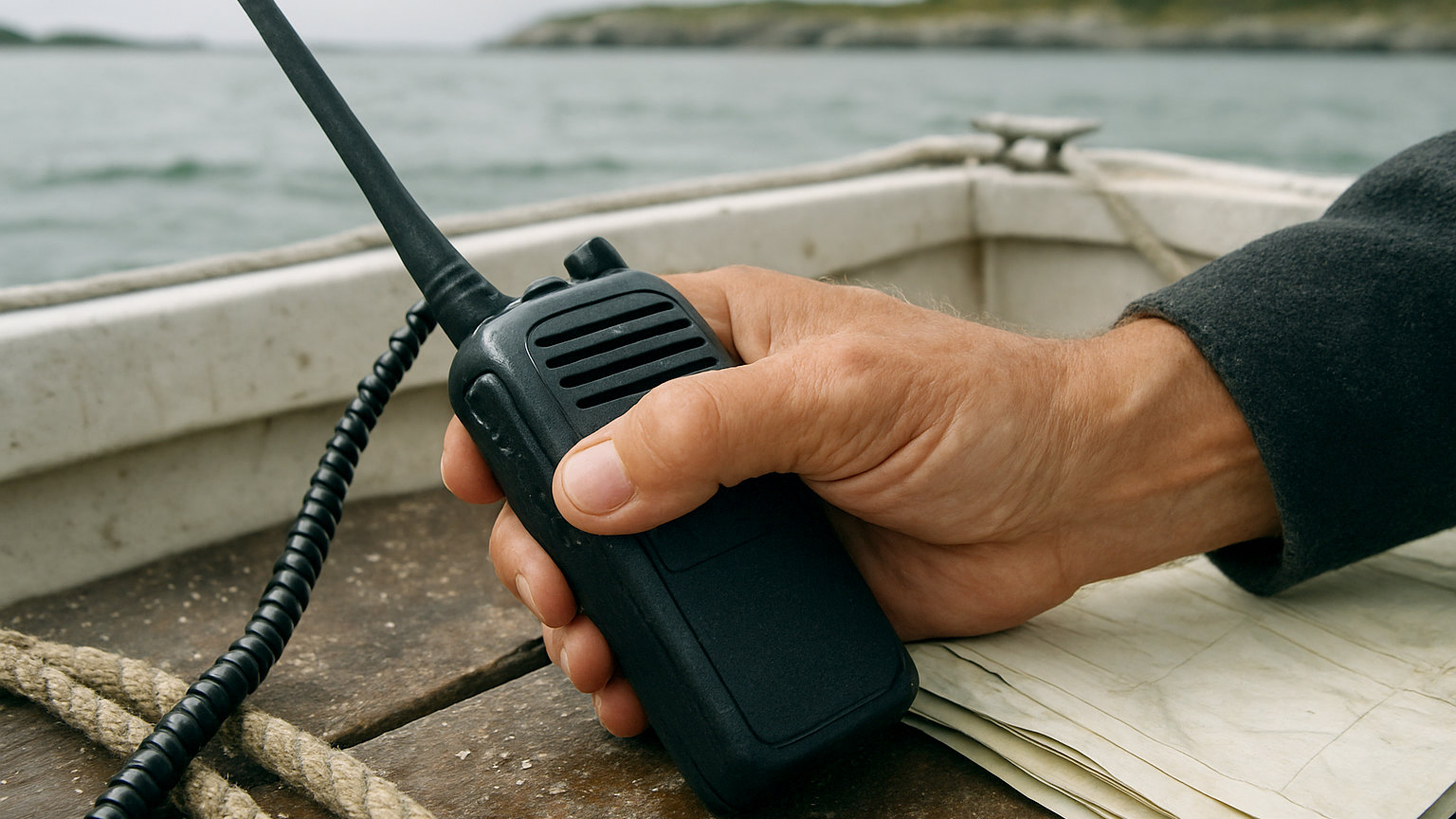
Getting help at sea depends on reaching the coastguard and any nearby vessel at once, which is exactly what marine radio does and what a phone call does not.
Why VHF rather than a phone?
Because a radio call on the distress channel is heard by the coastguard and by every vessel in range simultaneously, and the nearest boat is frequently far closer than any lifeboat. A phone call reaches one person. Radio also allows direction finding, and a digital distress alert transmits your position automatically.
What is channel 16?
The international distress, safety and calling channel, monitored continuously by the coastguard and by vessels at sea. Distress calls are made on it, and routine communication moves to a working channel once contact is established. Anyone with a marine radio should have it monitoring channel 16 whenever under way.
- Channel 16 is the distress and calling channel
- Press the red DSC button first if fitted, then call
- Mayday for grave and imminent danger to life or vessel
- Pan pan for urgency without immediate danger to life
- Give position, nature of distress, and number on board
- 999 and ask for the coastguard if you have no radio
What is DSC?
Digital selective calling, a system built into modern marine radios where a red button sends an automated distress alert containing your identity and, if connected to a GPS, your position. It is faster and more reliable than voice, it reaches everyone in range instantly, and it requires the radio to be registered with an MMSI number to be useful.
What is the mayday format?
Say the word mayday three times, then your vessel name three times, then your call sign or identity. Then give your position, the nature of the distress, the assistance required, the number of people on board, and any other useful information. Then say over and listen. Following the format means nothing essential is forgotten.
When do you use pan pan instead?
For urgent situations that are not immediately life threatening: engine failure in a safe position, a medical problem that is not critical, or a situation deteriorating but not yet grave. It alerts the coastguard and other vessels without invoking the full distress response. If in doubt, and the situation could become grave, use mayday.
Do you need a licence?
Yes, in the United Kingdom. Operating a marine VHF requires an operator qualification, commonly the short range certificate, and the set itself requires a ship radio licence. Both are straightforward to obtain, and the course teaches the procedures properly, which is worth considerably more than the certificate itself.
What are the alternatives?
An emergency position indicating radio beacon, registered to the vessel, which transmits a distress signal via satellite with your identity and position. A personal locator beacon, registered to a person, which does the same on a smaller scale. AIS beacons attached to lifejackets, which show up on nearby vessel displays. And 999 asking for the coastguard, which works where there is mobile coverage.
What about flares?
They remain in use and their role is changing, with electronic distress signals increasingly used and pyrotechnic flare disposal becoming difficult. Flares are for indicating your position to someone already looking rather than for raising the alarm, since nobody may be watching. Check current guidance on carriage and disposal, which has changed.
What if you are not sure it is serious enough?
Call anyway, using pan pan if it is not immediately life threatening. The coastguard would far rather receive an early call about a manageable problem than a late one about a serious one, and an early call means they can monitor the situation and task help before it deteriorates. A call can always be cancelled and a delay cannot be recovered.
Press the DSC button, call mayday on channel 16 using the standard format, register your radio and beacon, and use 999 for the coastguard without a radio.


