
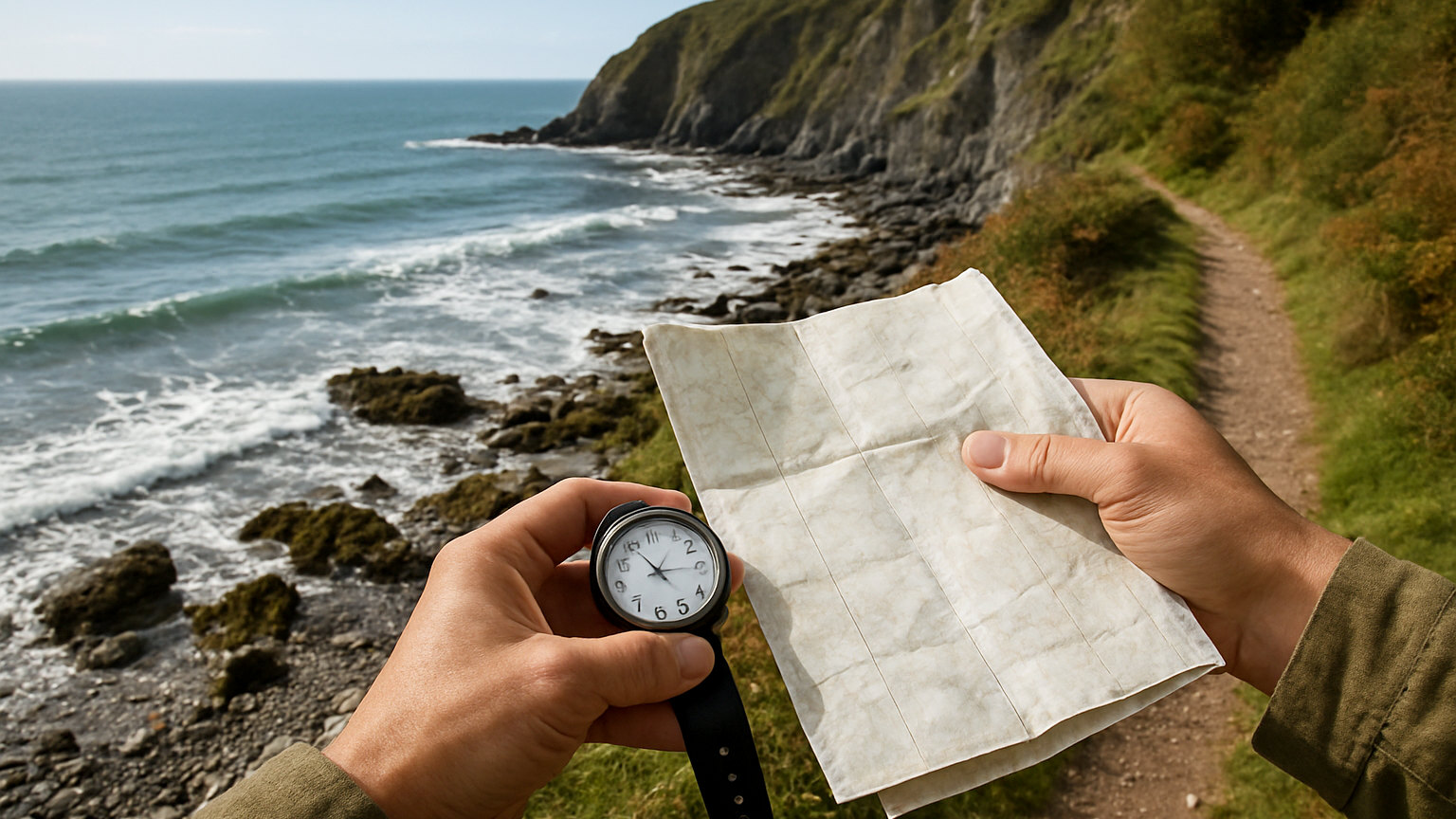
Coastal walking produces a category of incident almost unknown inland: being cut off by water that was not there an hour ago. It is entirely predictable and catches people every year.
What is cut off?
Being trapped by a rising tide, typically on a beach, below cliffs, on a sandbank or beyond a causeway. The water comes in behind you as well as in front, and a route that was walkable becomes impassable. It develops faster than people expect, particularly on flat sand where the tide advances quickly across a shallow gradient.
How do you avoid it?
Check tide times before you go and plan the walk around them. Tide tables are published for every stretch of coast and are freely available, and they tell you when high water occurs and how large the tide is. Walk on a falling tide where possible, know your escape points, and turn back with plenty of margin rather than exactly enough.
- Check tide times and heights before setting off
- Walk on a falling tide where you can
- Know your exit points and turn back with margin
- Spring tides come in higher and faster than neaps
- Stay well back from cliff edges, top and bottom
- Call 999 and ask for the coastguard, not mountain rescue
What are spring tides?
The larger tides occurring around new and full moon, with a greater range between high and low water and therefore faster movement of water. They are not seasonal despite the name. A route that is comfortable on a neap tide can be impossible on a spring tide, which is why checking the height as well as the time matters.
What about causeways?
They flood, and vehicles are stranded on British tidal causeways with wearying regularity. Published safe crossing times exist for each one and should be treated as instructions rather than guidance, with a margin. Water rises across a causeway quickly and a car that stalls in salt water is a write off and occasionally a rescue.
What about cliffs?
Stay well back from the top and well out from the bottom. Cliff edges are undercut and unstable, and coastal erosion means the ground you are standing on may be overhanging. Beneath cliffs, rockfall is a genuine and unpredictable hazard, worse after rain and frost. Keep dogs and children away from edges, and do not sit with legs over the side for a photograph.
What about soft ground?
Some estuaries and beaches have areas of soft sand and mud that trap people, and being stuck on a falling tide becomes serious as the water returns. Do not attempt to walk out across estuary mud or unfamiliar sand flats. If someone becomes stuck, do not go in after them, spread your weight if you must approach, and call 999 for the coastguard immediately.
Who do you call?
999 and ask for the coastguard for anything on the coast, in the water or on cliffs. That includes cut off by tide, people stuck in mud, cliff incidents and anyone in the sea. The coastguard coordinates coastal rescue teams, lifeboats and helicopters, and calling early makes a substantial difference.
What else is different on the coast?
Wind is stronger and less sheltered, waves during storms are far larger and more unpredictable than they appear, and people are swept from promenades, harbour walls and rocks every year. During rough weather, stay well back from the water entirely and watch from inland rather than going to look at the sea.
What about the coastal path itself?
It erodes, and diversions are common. Cliff falls close sections at short notice, and paths that appear on older maps may no longer exist or may run closer to the edge than they did. Check for current diversions before a coastal walk, follow signed reroutes rather than the mapped line, and treat any fenced section as fenced for a reason.
Check tides before you go, walk on a falling tide, keep well back from cliff edges, respect causeway crossing times, and call 999 for the coastguard.


