
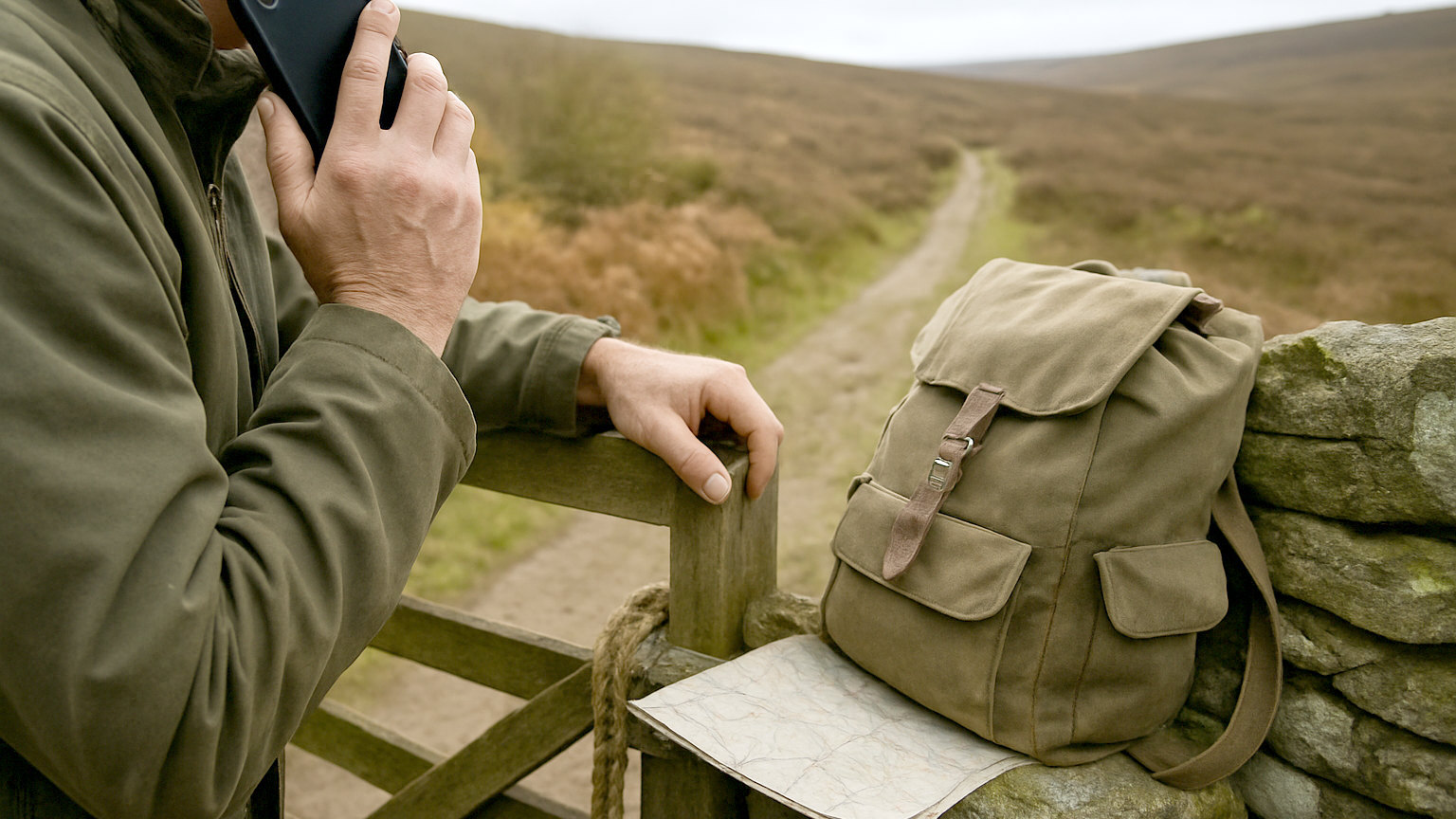
Anxiety about other people is one of the more common reasons given for not walking alone, particularly by women. It deserves a straightforward answer rather than either dismissal or alarm.
How risky is it actually?
Very little, statistically. Violent crime in the British countryside is rare and rural areas consistently record the lowest rates in the country. The genuine risks of walking alone are navigational error, injury, weather and benightment, which is why almost all outdoor safety advice concerns those. That does not make the anxiety unreasonable, and it is worth putting the risks in order.
What is the single most useful precaution?
Telling someone your route and expected return time. It covers every category of risk at once: injury, getting lost, weather and, if it ever mattered, anything involving another person. Without it nobody knows where to look for you, and with it a problem of any kind becomes something somebody will act on.
- Leave a route and expected return time with someone
- Agree a check in and what happens if you miss it
- Carry a charged phone and a power bank
- Trust the instinct to change route or turn back
- A personal alarm is legal, light and reassuring
- Consider a beacon or satellite messenger for remote ground
What about staying contactable?
Carry a charged phone, register for emergency SMS by texting the word register to 999 beforehand, and consider a location sharing arrangement with someone at home. Some walking apps share live position with chosen contacts. For genuinely remote ground with no coverage, a personal locator beacon or satellite messenger removes the dependency on a signal entirely.
Should you trust your instinct?
Yes, and act on it without needing to justify it. If an encounter or a situation feels wrong, change your route, turn back, or wait until someone else is nearby. You owe nobody an explanation and being wrong costs nothing. This applies equally to car parks and lanes at either end of a walk, which is where people actually feel uneasy.
What about the practicalities?
Park in daylight where you can, note who else is around, keep valuables out of sight in the car, and have your keys ready when returning. Consider the timing of a walk so that the isolated section is not at dusk. None of this restricts where you go, it adjusts when and how.
Does walking with others help?
It addresses everything at once and it is not the only option. Walking groups, clubs and organised meets exist everywhere, are welcoming and solve the company question along with navigation and confidence. Many people alternate between group walks and solo days, using the group for more committing routes.
What should you do about encounters?
Most are entirely ordinary and courteous, since people out walking tend to be friendly. Greet people normally, keep moving, and do not feel obliged to stop and talk. If someone makes you uncomfortable, put distance and other people between you, and continue in a direction you have chosen rather than the one they suggest.
What is the honest framing?
That solo walking is safe, enjoyable and worth doing, that the precautions are the same ones that address injury and weather, and that anyone who has been put off by anxiety about other people is being deterred by the smallest of the risks involved. Tell someone your route and go.
What about dogs?
Livestock and loose dogs are a more realistic outdoor concern than people. Give working dogs and dogs with owners space, do not run from a dog that approaches, stand still with hands low and avoid eye contact, and report any dog that behaves aggressively toward you. The overwhelming majority of encounters are entirely fine, and knowing the response in advance is worth having.
Tell someone your route and return time, carry a charged phone, trust the instinct to change plans, and put the human risk in proportion to the real ones.


