Dogs make excellent walking companions and introduce a specific set of hazards, most of which involve other animals rather than terrain.
What is the cattle rule?
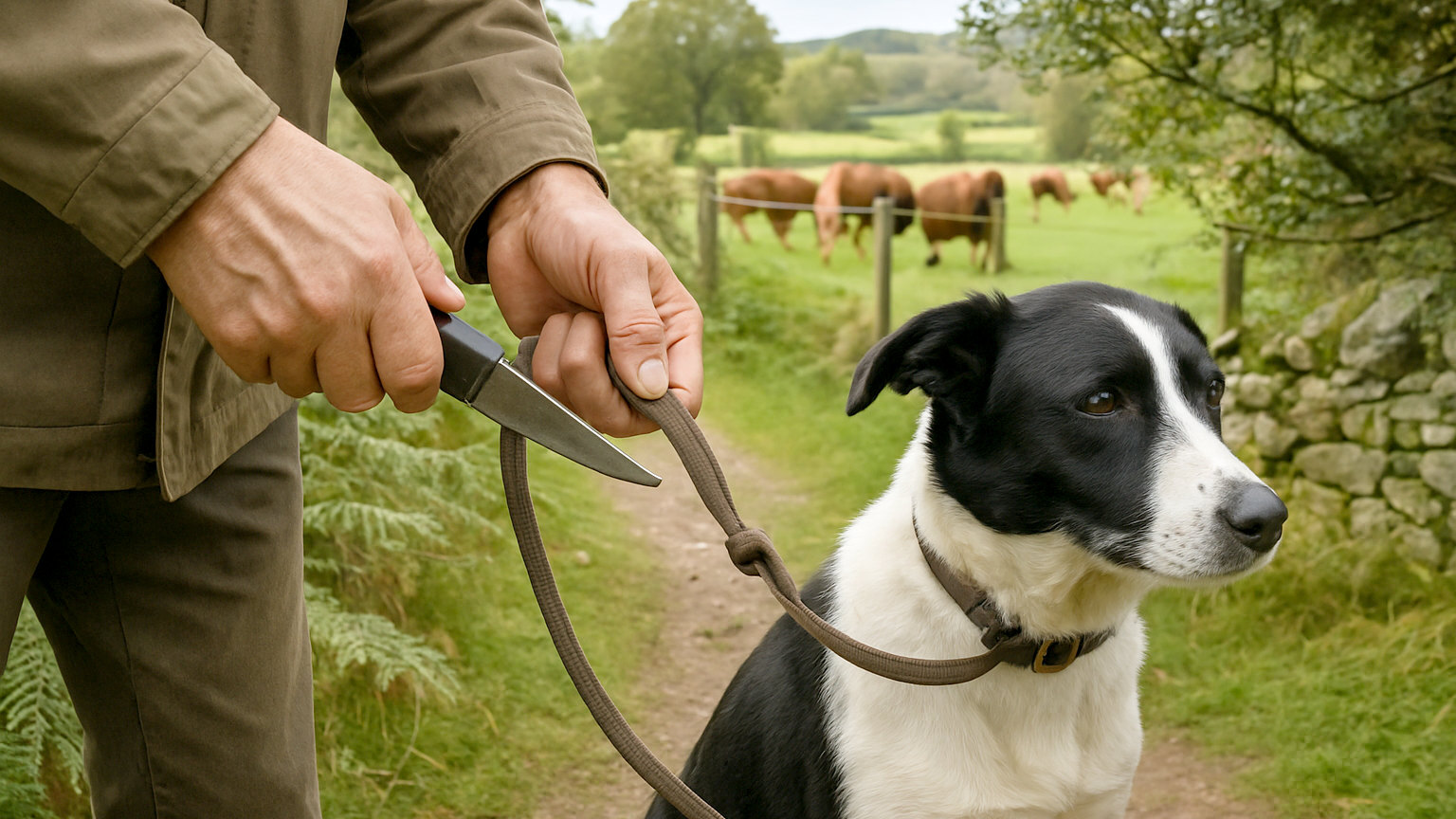
If cattle approach or chase you while you have a dog, let the dog off the lead immediately and move away calmly. The dog will outrun the cattle and they will follow it rather than you. Most incidents involving cattle and walkers occur because someone held onto a lead, and cattle have killed people in Britain in exactly this situation.
How should you behave around cattle?
Give them space, particularly cows with calves, which are the most dangerous. Do not walk between a cow and its calf, do not approach them, and move quietly and steadily rather than running. Walk around a field rather than through the herd where possible, and consider an alternative route entirely if cattle are close to the path.
- Release the dog immediately if cattle chase you
- Keep dogs on a lead around all livestock
- Never walk between a cow and her calf
- Keep dogs on leads on access land in the bird breeding season
- Check paws for cuts, grit and ice balls
- Carry water for the dog and offer it regularly
What about sheep?
Keep the dog on a lead, always, near sheep. Dogs worrying livestock is a serious offence and causes real distress, injury and death to animals and to pregnant ewes. Farmers are permitted in certain circumstances to shoot a dog worrying livestock, and every year dogs are lost this way. Even a dog with excellent recall should be on a lead near sheep.
What are the access rules?
On access land in England and Wales, dogs must be kept on a short lead between the start of March and the end of July to protect ground nesting birds, and at any time near livestock. Some areas exclude dogs entirely. In Scotland the outdoor access code sets similar expectations. Check local signage, which will state anything specific.
Why do ground nesting birds matter?
Because they nest on open moorland and grassland where a running dog causes them to abandon nests and young. Curlew, lapwing, skylark and others are in serious decline and the breeding season overlaps exactly with the best walking weather. Keeping a dog close during those months costs very little and matters considerably.
What about the dog itself?
Water, paws and stamina. Carry water and a bowl and offer it often, since dogs overheat readily and cannot tell you. Check paws for cuts from rock and scree, for grit between pads, and in winter for ice balls forming in the fur. Build distance gradually as you would for a person, and be aware that dogs will keep going past the point of exhaustion.
What about heat?
It kills dogs, quickly, and they cope far worse than people. Walk early or late in warm weather, avoid the middle of the day, test hot ground with the back of your hand since tarmac and rock burn paws, provide shade at stops, and watch for heavy panting, drooling, weakness and confusion. Never leave a dog in a car.
What about water and cliffs?
Two specific dangers. Dogs go onto frozen water and through the ice, and owners drowning attempting rescue is a recurring British tragedy: do not follow, call 999 and try to call the dog back from the bank. Near cliffs and steep ground, keep dogs on leads, since they chase and do not judge edges.
What about other walkers?
Assume some people are frightened of dogs and act accordingly. Call the dog in and put it on a lead when passing others, particularly children, and do not rely on it being friendly, which is what every owner believes. It costs nothing, avoids confrontation, and a great deal of the pressure to restrict dogs on access land comes from encounters that were avoidable.
Lead near all livestock, release the dog if cattle chase, lead on access land from March to July, carry water, check paws, and never follow a dog onto ice.