
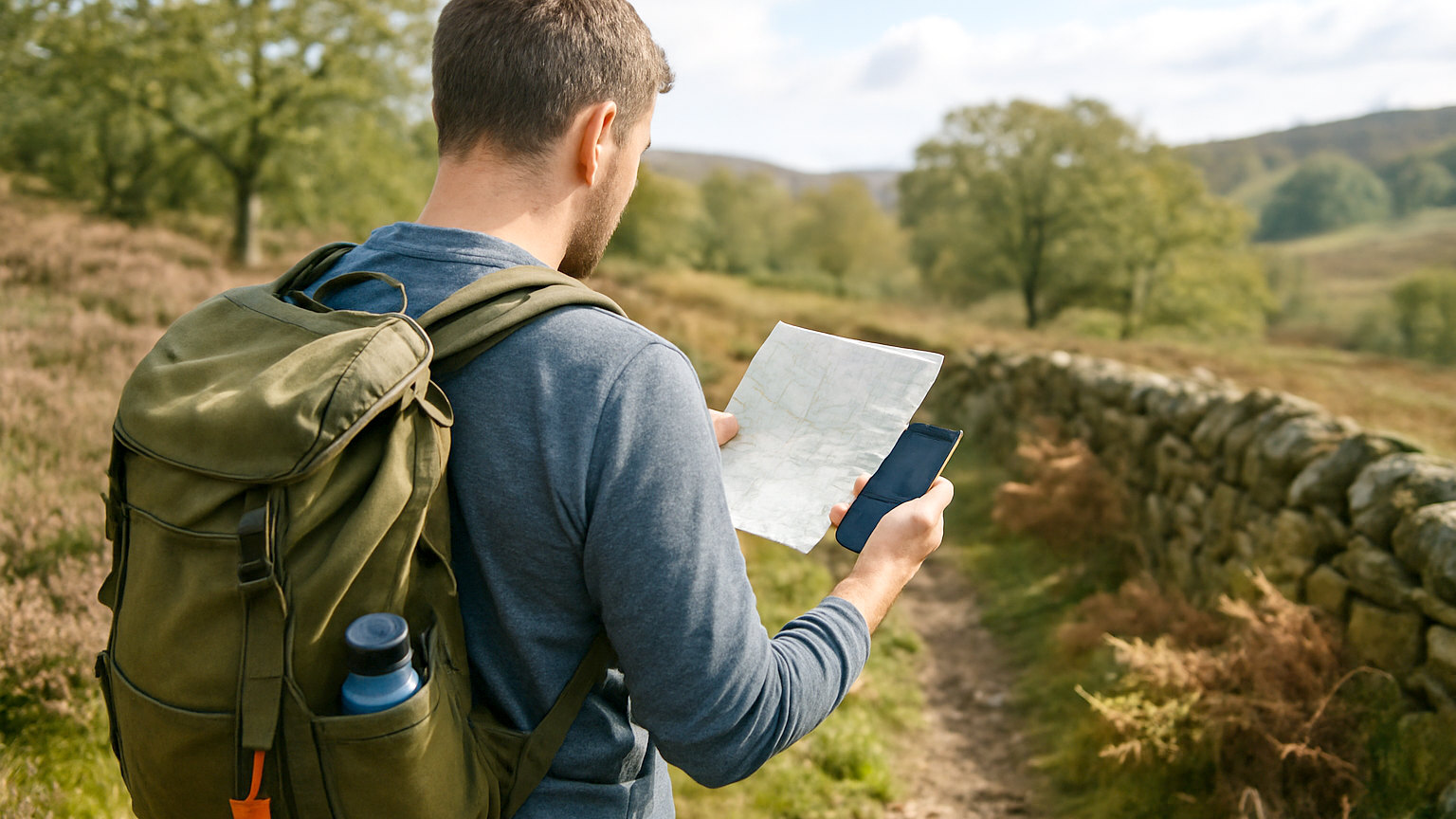
Walking alone is one of the great pleasures of the outdoors and it removes the safety net entirely. The adjustment is a wider margin rather than a different activity.
What changes when you are alone?
Nobody can go for help, nobody can insulate you if you cannot move, and a minor injury that a group would absorb becomes a serious problem. An ankle that would mean a slow assisted walk out becomes an inability to move at all. Every consequence is amplified, which is why the margin needs widening rather than the activity avoiding.
What is the most important precaution?
Telling someone your route and return time, and agreeing what they do if you do not check in. This matters more when solo than in any other circumstance, because you are the only person who knows where you are. Without it, nobody will start looking, and an immobilising injury becomes a night or more before anyone even notices.
- Leave a route and return time and agree a check in
- Choose routes with a wider margin than you would in a group
- Turn back earlier than you otherwise would
- Register for emergency SMS before you go
- Consider a personal locator beacon or satellite messenger
- Avoid unnecessary scrambling, river crossings and steep wet ground
How should route choice change?
Toward the conservative. Popular routes where others pass, ground you know, less committing terrain, and days with better forecasts. This does not mean only walking on paths, and it does mean thinking about what an injury would look like at each point. Remote pathless ground alone in November is a different proposition from the same ground in a group in June.
What about communication?
Register for emergency SMS in advance by texting the word register to 999, which allows a text where a call will not connect and needs far less signal. Carry a power bank. For genuinely remote solo walking, a personal locator beacon or a satellite messenger provides a way to summon help with no mobile coverage at all, and is worth the cost for anyone doing it regularly.
What is a check in system?
An agreement that you contact someone at a set time and that they act if you do not. That could be a message on reaching a summit and another on returning to the car, with an agreed action if the second does not arrive by a stated hour. Being specific matters, since a vague arrangement produces a delayed response.
What about turning back?
Do it earlier than you would in a group. Solo, there is nobody to notice you are struggling, nobody to share the navigation and nobody to help if it goes wrong, so the point at which conditions become unacceptable arrives sooner. Being alone also makes it easier to turn back, since there is nobody to disappoint.
Is solo walking irresponsible?
No, and it is frequently framed that way. A large proportion of British walking is done alone, safely, by people who plan well and choose sensibly. The genuine issue is doing it with the same margins as a group day, which is where the risk lies. Solo walking with a wider margin is a reasonable activity.
What about personal safety?
Statistically a very small concern in the British countryside compared with injury and weather, and worth a thought nonetheless. Trust your instinct about any encounter, carry a phone, and let someone know your plans, all of which you should be doing anyway. Most people who walk alone report that the countryside feels considerably safer than a town at night.
How do you handle navigation alone?
More carefully, since there is nobody to cross check you. Groups catch errors because someone else is also thinking about it, and solo you have only your own judgement. Check the map more often than feels necessary, confirm your position at every feature, and be more willing to stop and resolve doubt rather than pressing on to see whether it makes sense.
Tell someone and agree a check in, widen every margin, turn back earlier, register emergency SMS, and consider a beacon for remote routes.


