
Most walking injuries are minor and self managed, and knowing the small number that matter, and how to handle them, prevents a great deal of misery. This is general information rather than medical advice.
What is the most common problem?
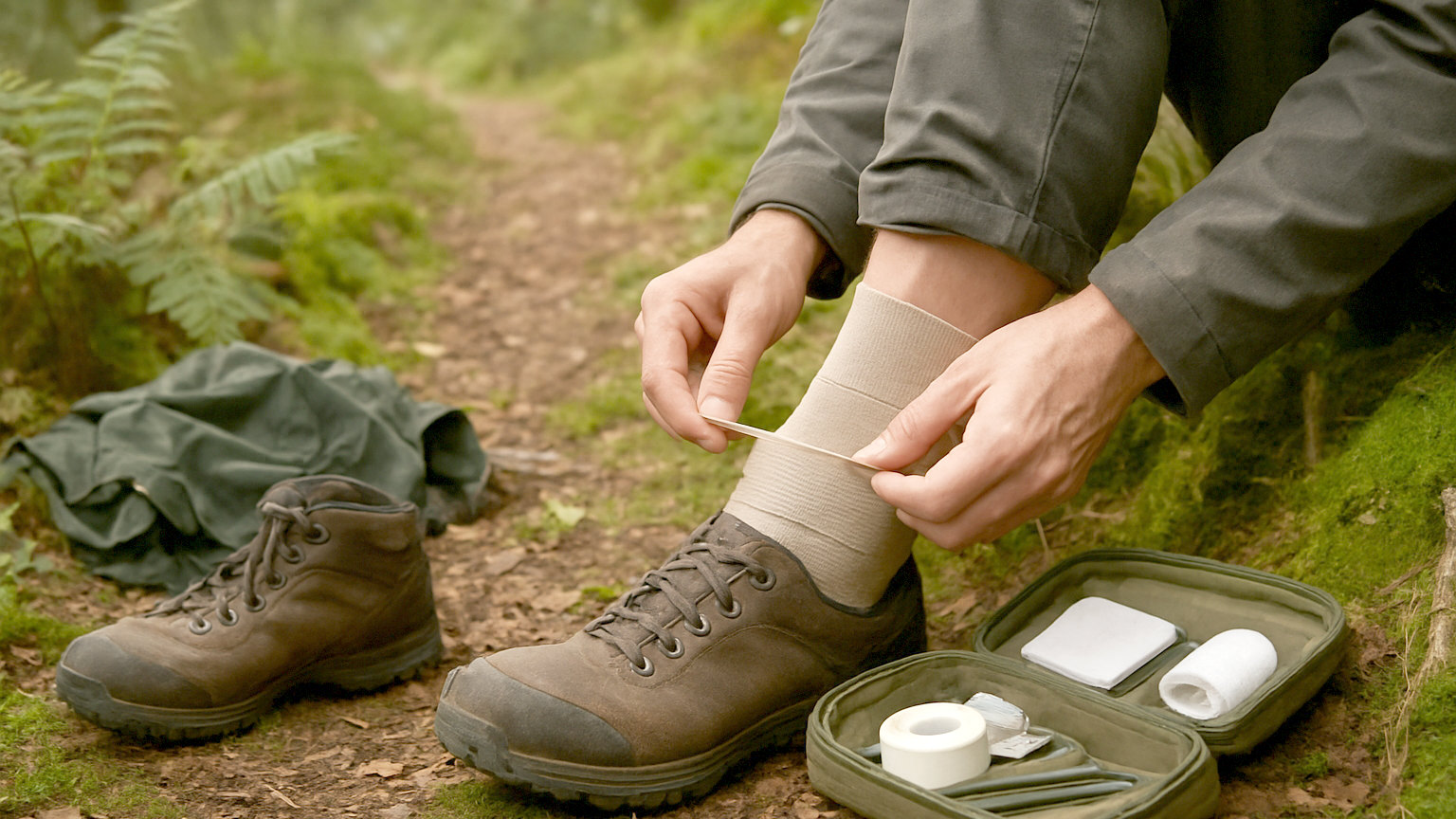
Blisters, by a wide margin. Stop at the first hot spot, dry the foot and tape the area smoothly with no wrinkles. Do not press on hoping to reach the top, since twenty more minutes converts a two minute fix into a painful walk out. Carry tape somewhere you can reach without unpacking the whole rucksack.
What do you do about a sprained ankle?
Assess whether the person can weight bear. If they can, keeping the boot on provides support and taking it off allows swelling that prevents it going back on, so leave it laced and walk out slowly with assistance and poles. If they cannot weight bear, or the pain is severe or there is obvious deformity, treat it as a possible fracture, insulate them and call for help.
- Tape a hot spot immediately rather than pressing on
- Keep the boot on a sprained ankle for support
- Direct pressure controls almost all bleeding
- Remove ticks promptly with a proper tick tool
- Insulate any casualty from the ground
- Call 999 for police then mountain rescue if they cannot walk
What about cuts?
Firm direct pressure for several minutes controls almost all bleeding, then clean and cover. Do not keep lifting the dressing to check. Anything gaping, anything on a hand affecting movement, anything with something embedded and anything that will not stop bleeding needs medical attention rather than a plaster. Check tetanus vaccination status afterwards.
How do you deal with ticks?
Remove promptly with a proper tick removal tool or fine tipped tweezers, gripping close to the skin and pulling steadily upward without twisting or crushing the body. Do not burn it, smother it or use any substance, all of which can make it regurgitate. Clean the area and note the date. Prompt removal substantially reduces the risk of Lyme disease.
What are the Lyme symptoms?
A spreading circular rash around the bite, often but not always with a clearer centre, developing days to weeks afterwards, and flu like symptoms including fever, headache, fatigue and joint pain. See a GP promptly if either appears and mention the tick bite, since early antibiotic treatment is effective and delayed diagnosis causes lasting problems.
What about hypothermia?
Watch for shivering, stumbling, fumbling, slurred speech, confusion and unusual behaviour. Get the person out of wind and rain, insulate them from the ground, remove wet layers if you can replace them, add dry insulation, and give warm sweet drinks if they are fully conscious. Shivering that stops without warming is a serious sign requiring urgent help.
What about heat and sunburn?
Both are underestimated in Britain. High ground gets more ultraviolet exposure and wind masks the burning, so sun cream, a hat and sunglasses matter on clear hill days, including in snow where reflection is severe. For heat exhaustion, move to shade, cool them, give fluids, and treat any confusion or unresponsiveness as heatstroke and call 999.
When should you call for help?
When someone cannot walk, when there is a head injury, when anyone is deteriorating, or when getting out safely is beyond the party. Call 999, ask for police and then mountain rescue, and give a grid reference. Calling early is far better than late, and the situation almost always worsens while people deliberate.
What should be in the kit?
Blister tape and plasters, a couple of larger dressings, a triangular bandage, painkillers, antiseptic wipes, gloves, a tick tool and any personal medication. That covers a day walk and fits in a small pouch. Knowing how to use it matters far more than the contents, and a one day outdoor first aid course is among the best value training available to any walker.
Tape hot spots early, keep the boot on a sprain, use direct pressure on bleeding, remove ticks properly and promptly, and call for help if they cannot walk.


