Feet end more walks than weather does. Boot choice and blister prevention are unglamorous and produce a larger improvement in the average day than almost anything else.
How should boots fit?
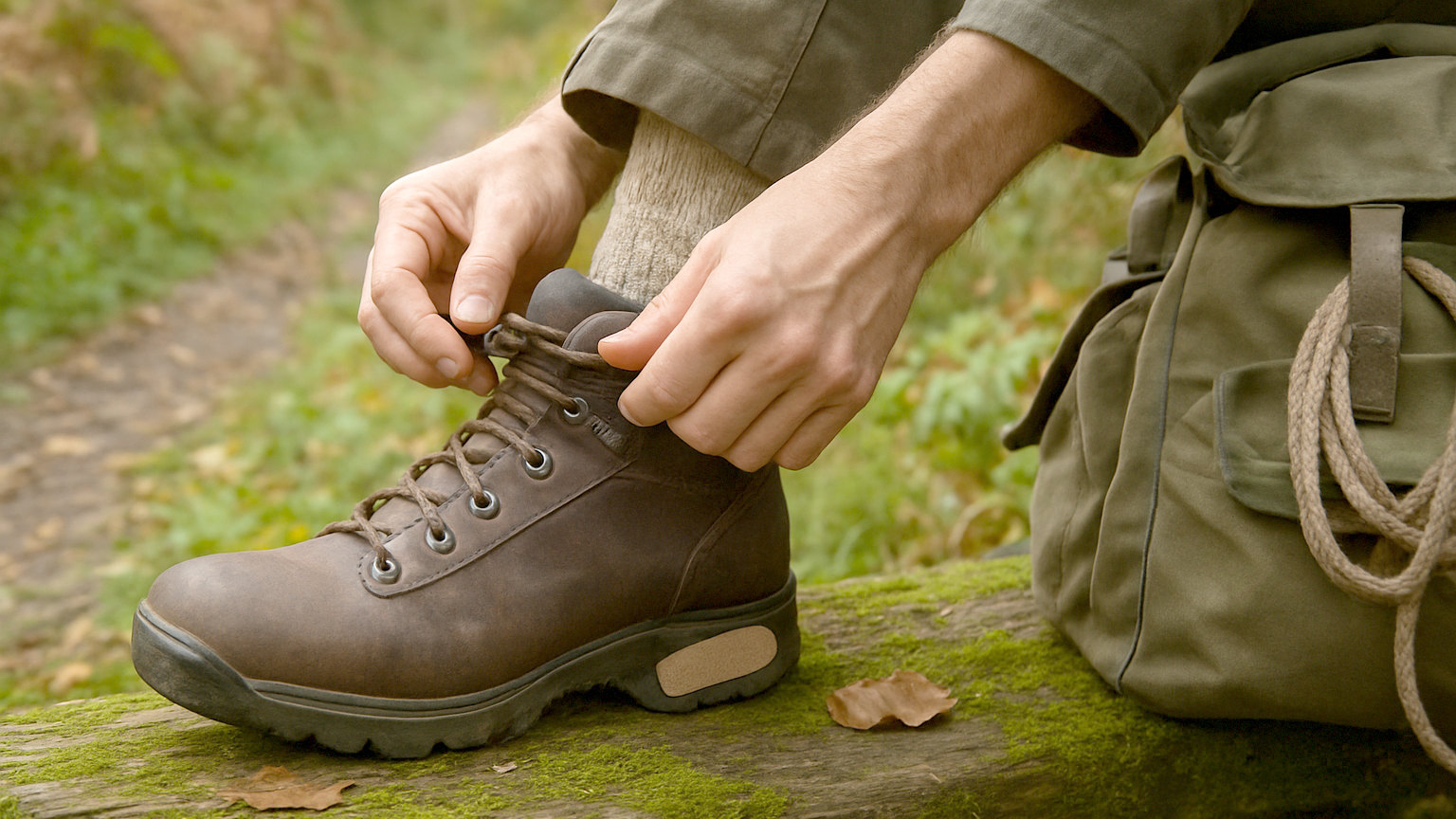
Snug at the heel, roomy at the toes, with about a thumb width in front of your longest toe when standing. Your heel should not lift when you walk, since that movement is what causes blisters. Try them on in the afternoon when feet have swollen, wear the socks you will actually walk in, and walk up and down a slope in the shop.
What size should you buy?
Usually larger than your shoe size, sometimes by a full size or more. Feet swell over a day of walking and slide forward on descents, and boots that fit perfectly in the shop frequently bruise toenails on the first long descent. Descending a ramp in the shop is the test: if your toes touch the front, they are too small.
- Snug heel, roomy toes, about a thumb width at the front
- Try boots on in the afternoon with proper walking socks
- Test on a slope, especially descending
- Wear them in before a long day
- Tape a hot spot immediately rather than pressing on
- Keep toenails short and cut straight across
What socks should you wear?
Wool or a wool blend designed for walking, never cotton, which holds moisture and abrades. A single good pair generally works better than two thin ones, though some people find a thin liner sock under a thicker one reduces friction by letting the layers slide against each other rather than against skin. Carry a spare pair.
What actually causes blisters?
Friction combined with moisture and heat. Skin slides against the sock, the sock slides against the boot, and repeated shear separates the skin layers. Damp skin blisters far more readily than dry, which is why wet feet, sweaty socks and poor sock choice all matter. Reducing movement and reducing moisture are the two levers.
What is a hot spot?
The warm sore patch that precedes a blister, and the moment to act. Stop as soon as you feel one, take the boot off, dry the foot and apply tape over the area. Continuing for another twenty minutes because you are nearly at the top converts a two minute fix into a painful walk out and several days of discomfort.
What should you tape with?
Zinc oxide tape or a purpose made blister plaster, applied smoothly with no wrinkles, since a crease becomes the new friction point. Some people tape known problem areas before setting off, which is sensible if you blister in the same place every time. Carry tape where you can reach it without unpacking everything.
Should you pop a blister?
Generally leave intact ones alone, since the skin is a sterile dressing. If it is large, painful and going to burst anyway, current advice is usually to drain it with a sterilised needle at the edge, leave the roof of skin in place, and cover it. Keep it clean, and see a doctor if it becomes red, hot, swollen or discharges.
How do you wear boots in?
Gradually and on real ground. Wear them around the house, then on short local walks, then on a longer one, over a few weeks before any big day. Modern boots need far less breaking in than traditional leather and still need some. Never take brand new boots on a long or remote walk.
Do you need boots at all?
Not always, and it depends on the ground. Trail shoes are lighter, more comfortable and entirely adequate for paths and moderate ground, and many experienced walkers use them for most of the year. Boots earn their place on rough pathless terrain, in bog, in winter and for anyone wanting ankle support, and the heavier the pack the more the support matters.
Buy roomy at the toes and snug at the heel, wear proper socks, break them in beforehand, and tape any hot spot the moment you notice it.