The instinct in heat is to wear as little as possible, and traditional desert dress does the opposite for good reasons that hold up well.
Why cover up?
Because loose clothing shades the skin from direct and radiant heat, holds a layer of cooler air against the body, and slows evaporation from the skin so that sweat cools you rather than running off and being wasted. Exposed skin in strong sun absorbs radiant heat directly and burns. Covering up is cooler as well as safer.
What should the clothing be like?
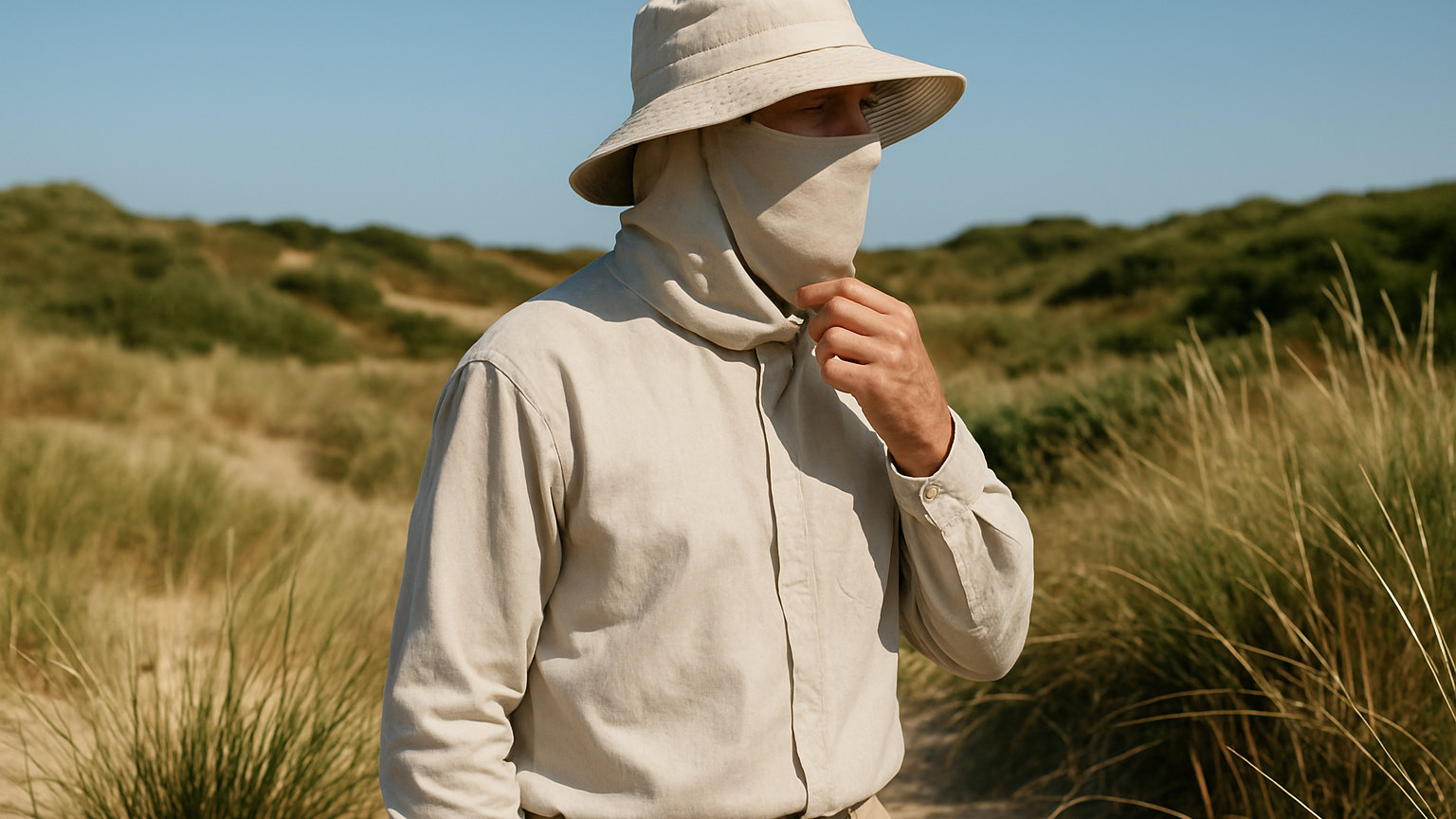
Loose, light in colour, long sleeved, and made from a fabric that breathes. Loose is essential, since the benefit comes from the air layer and from airflow, and tight clothing provides neither. Light colours reflect more radiation than dark ones. Cotton and linen work well in dry heat, and synthetics that wick suit high exertion.
- Loose fitting rather than close, to trap air and allow flow
- Long sleeves and long legs to shade the skin
- Light colours to reflect radiant heat
- A head covering with a brim or neck flap
- Sunglasses with proper ultraviolet protection
- Warm layers for the night, which is genuinely cold
What about the head?
Cover it, including the neck and ears. A wide brimmed hat, or a cloth arrangement covering the back of the neck in the traditional style, protects the areas that burn most and shades the head from direct sun. The neck is frequently forgotten and burns severely, and the ears are among the most common sites of sun damage.
Does damp clothing help?
In dry heat, considerably, if you can spare the water. Wetting a shirt, a hat or a neck cloth provides evaporative cooling for a period without losing body fluid, which is an efficient use of a small amount of water. In humid conditions it does much less, since evaporation is already limited. Do not use drinking water for this unless you have plenty.
What about footwear?
Closed, sturdy and covering the ankle where possible. Sand and rock become extremely hot, thorny vegetation is common, and snakes and scorpions are a genuine consideration. Sandals are comfortable and offer no protection from any of those. Gaiters keep sand out, which matters more than it sounds for comfort over distance.
What about the cold?
Pack for it, because desert nights are genuinely cold. Clear dry air radiates heat away rapidly after sunset and temperatures can drop dramatically, in some places to near freezing. A warm layer, a hat and a decent sleeping bag are necessary on any desert trip involving a night out, however implausible that seems while packing.
What about high humidity?
The advice shifts. In humid tropical heat, evaporation is already limited, so the priority becomes maximising airflow and staying as dry as possible rather than trapping air. Lighter, looser, more open clothing and frequent changes work better, and covering up for sun protection still applies during the day.
What do you sleep in?
More than you expect, and shake everything out first. Scorpions and other creatures shelter in boots, clothing and bedding, so shaking out footwear and clothing before putting them on is standard practice in many hot countries and is worth adopting rather than treating as exotic advice.
What about the feet specifically?
They swell in heat, so boots that fit in a British spring can be uncomfortably tight in a hot country. Allow room, wear socks that manage moisture, change them when damp, and check for hot spots frequently since sweaty feet blister readily. Sand working into boots causes abrasion, which is why gaiters earn their place over any distance.
Does the traditional approach still hold?
Largely, and it is worth taking seriously rather than treating as folklore. Loose flowing robes, covered heads and light colours are used across hot arid regions because they work, and studies of desert dress have generally supported the reasoning. Modern technical fabrics add wicking and sun rated protection, and the underlying principles of loose, covered and light have not changed.
Wear loose light coloured long sleeves, cover the head and neck, choose closed footwear, damp a cloth for cooling if water allows, and pack for a cold night.