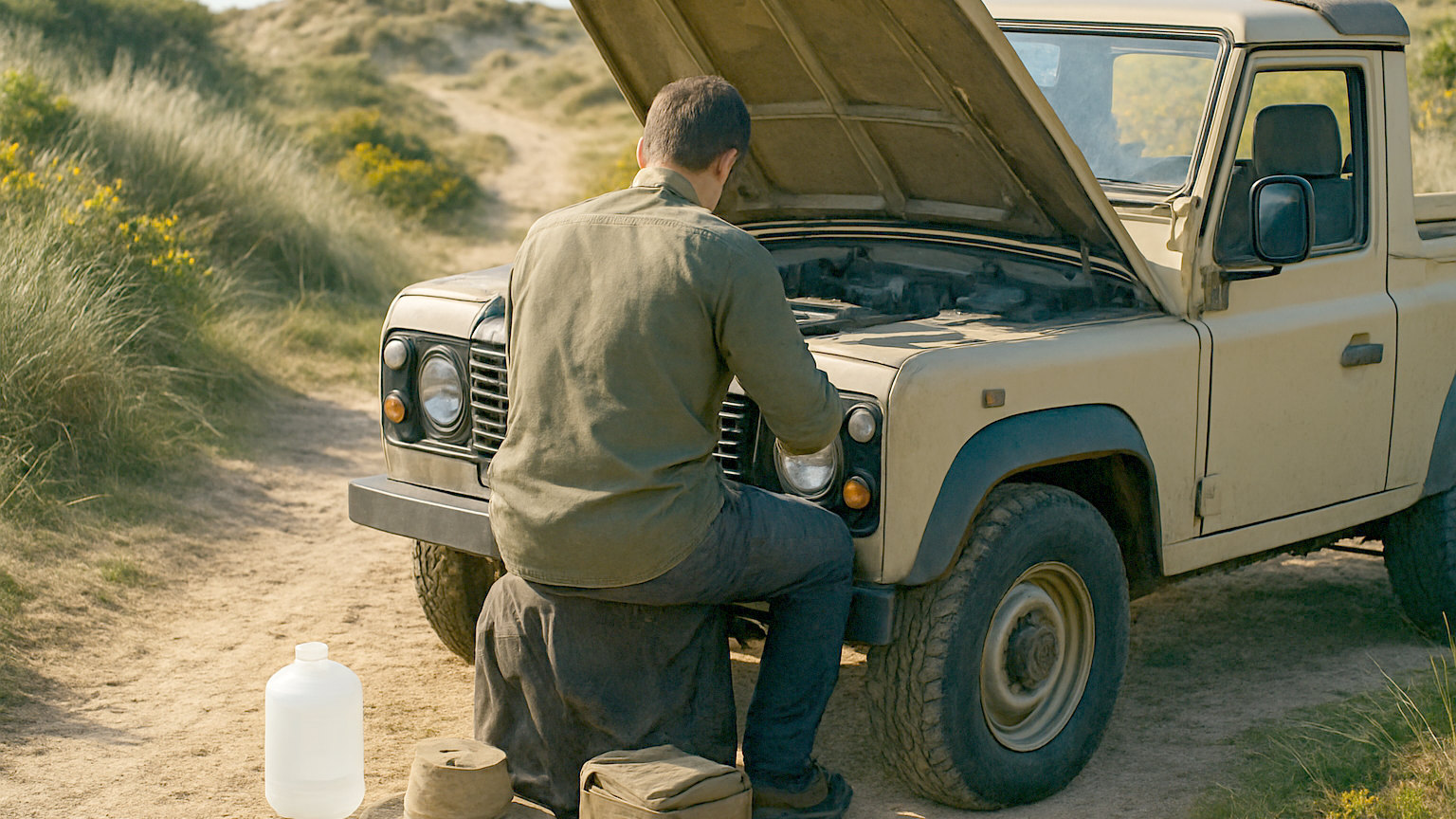
Desert vehicle breakdowns produce a well documented pattern of fatalities, and the common factor is almost always the same decision.
Why stay with the vehicle?
Because it provides shade, carries your water and equipment, and is a large metal object visible from the air and from a distance on the ground. Searchers look for vehicles. A person walking across open country is nearly invisible, has left their supplies behind, and is generating heat and losing water at exactly the wrong time.
What happens to people who walk?
They die within a day or two, frequently within a few miles of the vehicle, and search reports repeatedly describe bodies found between an abandoned car and a road. Distance in open country is drastically underestimated, heat load while walking is enormous, and water carried by hand is a fraction of what remains behind.
- Stay with the vehicle, which is shade and a visible marker
- Shelter beside or under it rather than inside it
- Do not ration water to the point of not drinking
- Signal with mirrors, bright material and the horn
- Rest through the day and do any work at night
- Tell someone your route before you set off
Should you shelter inside it?
No, a closed vehicle in the sun becomes an oven far hotter than the outside air. Use it for shade instead: rig a tarp, a groundsheet or a blanket from the side to create shaded space, and sit beside or underneath it rather than in it. Elevated shade with airflow underneath is considerably cooler than lying directly on hot ground.
How do you manage water?
Drink it. Reduce heat production by staying still in shade and doing nothing during the day, and drink what you need. The error is sipping tiny amounts while continuing to work in the sun, which produces dehydration with water remaining. Radiator and windscreen washer fluid should not be drunk, and any clean water aboard should be pooled.
How do you signal?
With everything available. A mirror or any reflective surface aimed at aircraft or distant vehicles is visible a long way. Bright material spread on the ground or on the roof. The horn, which carries. At night, headlights and any light. Raising the bonnet is a recognised sign of a vehicle in difficulty. Three of anything is the international distress signal.
What about a fire?
A smoky fire is highly visible by day and a flame by night, and it needs fuel and care. A tyre produces dense black smoke and should be a last resort given the fumes and the loss of a tyre. Anything burnt should be well away from the vehicle and its fuel.
When should you consider walking?
Almost never, and only if you know with certainty that help is close, nobody knows where you are, and you have the water to reach it. If it is genuinely unavoidable, walk at night, leave a clear written note at the vehicle stating where you have gone and when, mark your route, and take all the water.
How do you avoid the situation?
Preparation, which is entirely within your control. Tell someone the route and expected arrival, carry far more water than the journey requires, carry a satellite messenger or beacon where there is no phone coverage, check the vehicle before departure, carry basic spares and recovery equipment, and travel in convoy where the route is remote.
What should be in the vehicle?
Far more water than the journey needs, a shade sheet, warm layers for the night, a means of signalling, basic spares and tools, recovery equipment, and a satellite messenger or beacon where there is no phone coverage. A written note of the route left with someone, and a realistic expected arrival time, matters as much as any of the equipment.
Stay with the vehicle, shelter beside it rather than inside, drink your water rather than rationing it, signal continuously, and tell someone before you go.