
Preparing for a hot country is mostly medical and logistical rather than a matter of equipment, and the biggest single adjustment is to the first few days.
What health preparation is needed?
See a travel health clinic or your GP well in advance, ideally two months or more, since some vaccination courses take weeks and antimalarial prophylaxis may need starting before departure. Requirements vary by country and by the areas within it. Take a written record of what you have had and any medication you take.
What about insurance?
Check it covers the activities you intend and the destination, including any area subject to travel advice. Trekking, diving, motorcycling and desert travel are frequently excluded or require an upgrade. Confirm medical evacuation cover, since repatriation from a remote area is extremely expensive and is the thing insurance genuinely exists for.
- See a travel clinic two months ahead for vaccinations and advice
- Check insurance covers the destination and the activities
- Read Foreign Office advice for the country
- Plan easy first days to allow acclimatisation
- Work out the water plan before committing to a route
- Use local guides for remote travel
What about the first few days?
Make them easy, deliberately. Arriving from a temperate climate and immediately attempting a full day of activity in strong heat is the classic route to heat illness, and most of the adaptation takes a week or more. Plan light activity in the cooler parts of the day at first and build up, which also allows for jet lag and stomach adjustment.
How do you plan water?
Before deciding on the route. Work out how much you will need at realistic sweat rates, where you can obtain and treat more, and what you would do if a source failed. In remote areas this frequently determines the itinerary entirely. Carry a filter or treatment and do not rely on being able to buy bottled water everywhere.
Should you use local guides?
For remote travel, yes, and it is frequently a requirement as well as a sensible choice. Local knowledge of water, terrain, weather patterns, hazards and permissions is not obtainable any other way, and it supports the local economy. In many desert regions independent travel off established routes is genuinely inadvisable and sometimes prohibited.
What should you take?
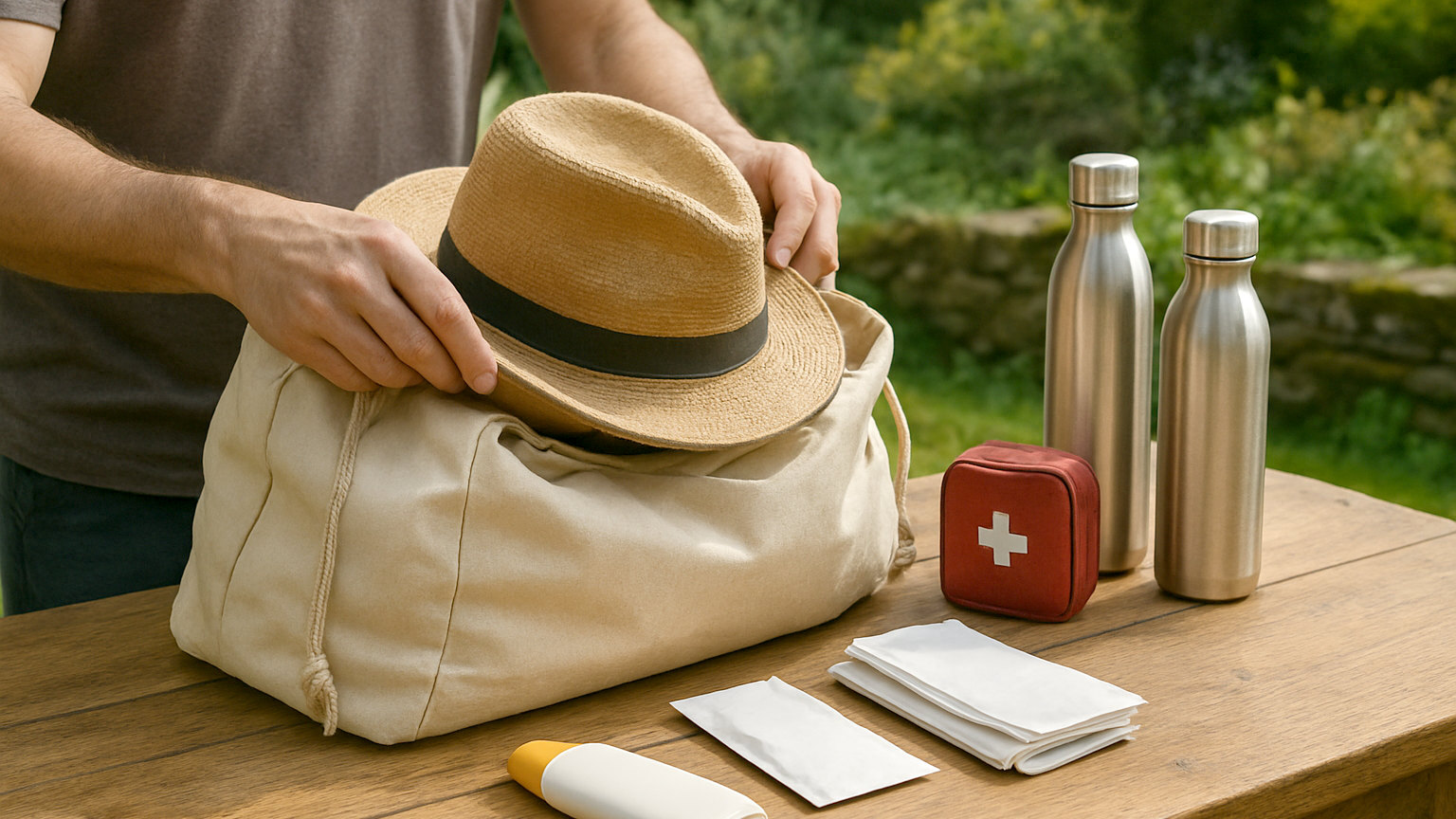
Sun protection, covering clothing, a hat, sunglasses, water containers and treatment, rehydration sachets, a first aid kit including anything for stomach upsets, insect repellent and any prescribed medication in original packaging with a copy of the prescription. Warm layers for the night. A means of calling for help where there is no phone coverage.
What should you check before you go?
Foreign Office travel advice for the country, which covers safety, entry requirements and local risks, and which affects your insurance if you travel against it. Subscribe to alerts for the country. Check entry requirements, visas and any vaccination certificates required. Confirm what the local emergency number is.
Who should you tell?
Someone at home, with your itinerary, accommodation and expected contact times, and agree what they do if you do not check in. For remote travel this matters as much as it does on a British hillside, and considerably more where local search and rescue capability may be limited.
What about the journey itself?
Arrive rested and hydrated rather than depleted. Long flights are dehydrating, jet lag impairs judgement, and arriving late at night into heat after a poor journey is a bad starting point for a demanding first day. Drink on the flight, avoid alcohol, and plan the first day to be genuinely undemanding rather than an early start.
What should you know about the destination?
The season, the local emergency number, whether tap water is safe, what the typical daytime and night temperatures are, and what the local practice is around the middle of the day. Many hot countries organise the day around a long midday rest for good reason, and travellers who work against that pattern find everything harder than it needs to be.
See a travel clinic early, check insurance and Foreign Office advice, plan the water before the route, use local guides in remote areas, and take the first days easy.


