
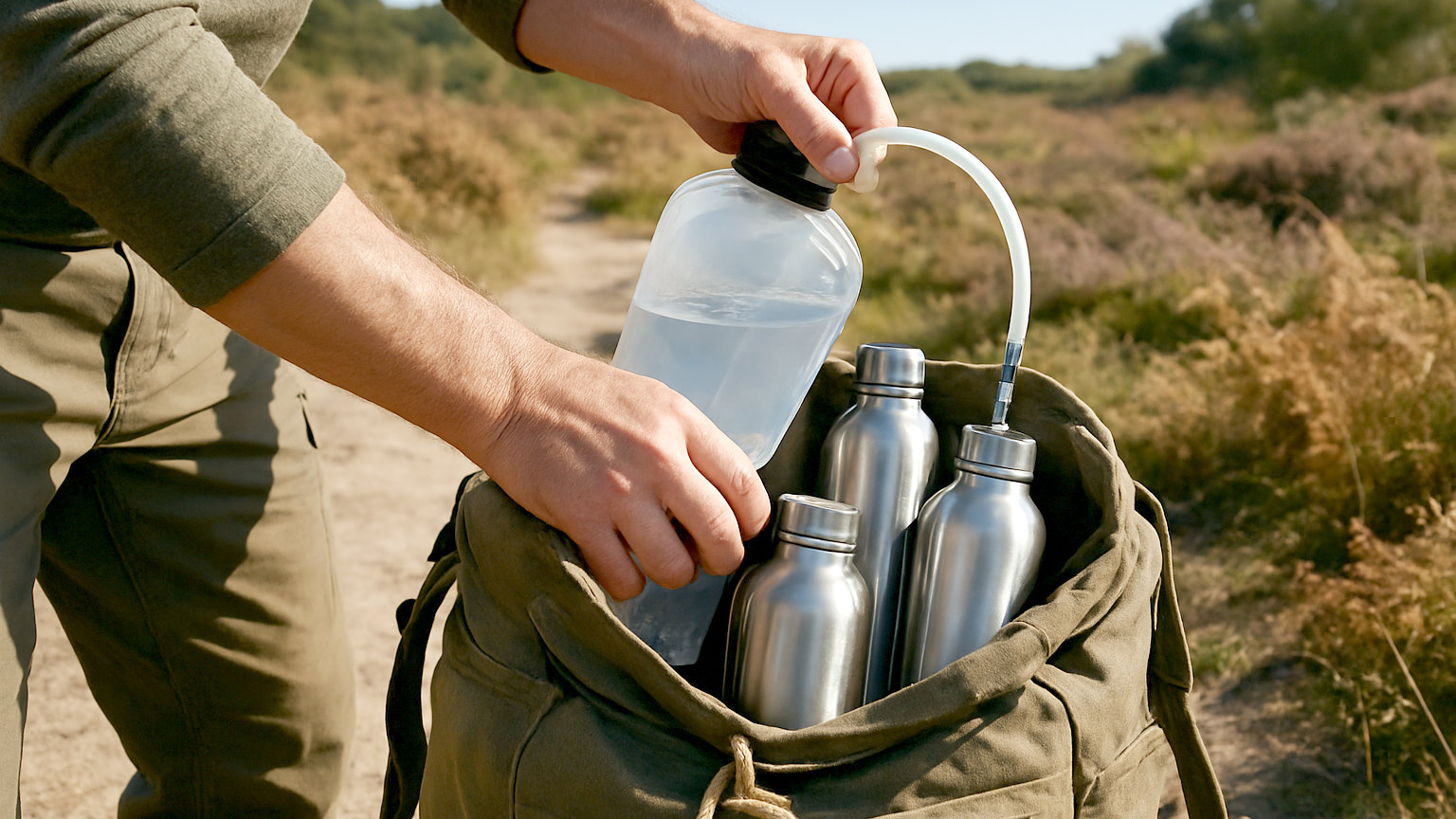
Fluid requirements in heat are far higher than in temperate conditions and are consistently underestimated, which is how people run out with distance still to cover.
How much do you actually need?
It depends entirely on sweat rate, which varies with heat, humidity, exertion and the individual. During strenuous activity in heat, losses of a litre an hour are common and two litres an hour occurs in extreme conditions. That means a four hour walk in real heat may require four litres or more, which is four kilograms of water.
Is thirst a reliable guide?
Not in heat. Thirst lags behind actual need, so by the time you feel it you are already somewhat dehydrated, and it is blunted further in older people. Drink to a schedule rather than to thirst, taking regular measured amounts, and use urine colour as a rough check, aiming for pale rather than dark.
- Losses of one litre an hour are common during exertion in heat
- Drink to a schedule rather than waiting for thirst
- Do not ration water while you still have it
- Replace salt as well as fluid on long hot days
- Use urine colour as a rough check on hydration
- Plan the route around water sources rather than carrying everything
Why should you not ration water?
Because water in your bottle does nothing for you and water in your body maintains cooling. The classic desert error is sipping sparingly to make a supply last, becoming progressively dehydrated, losing the ability to sweat effectively, and then being found with water remaining. Drink what you need and plan the journey around resupply instead.
What about salt?
It matters on long hot days. Sweat contains sodium, and prolonged heavy sweating replaced only with plain water dilutes blood sodium, which causes its own problems. Salty snacks, electrolyte tablets or oral rehydration solution all address it. For a short hot day, ordinary food covers it, and for sustained exertion over hours it needs attention.
How do you carry enough?
You frequently cannot, which is why planning matters more than capacity. Four litres is four kilograms and it does not fit comfortably in a day pack alongside everything else. Plan routes around known water sources, carry a filter or treatment, cache water where practical for vehicle based travel, and shorten the day rather than assuming you can carry your way out.
What are the early signs of dehydration?
Headache, tiredness, dark urine, reduced output, dry mouth, dizziness on standing and a sense that everything is harder work than it should be. Judgement is affected before any of the obvious signs, which is why dehydration contributes to poor decisions in heat rather than merely to discomfort.
Can you drink too much?
Yes, and it is a genuine hazard on long hot events. Drinking very large volumes of plain water while sweating heavily can dilute blood sodium to dangerous levels, producing symptoms that resemble dehydration and leading people to drink more. Drink to replace what you are losing rather than as much as possible, and include salt.
What should you do if water runs low?
Reduce heat production and heat gain rather than reducing intake. Stop moving, get into shade, wait for the cool of evening, and drink what you have. Conserving water by not drinking it while continuing to walk in the sun is the combination that kills people. Send for help early rather than pressing on.
How do you carry and treat it?
In several containers rather than one, so a single failure does not lose everything, and with a means of treating more. Bladders are convenient and encourage regular sipping, and they hide how much is left, so check the level deliberately. Bottles are easier to monitor and to share. A filter or tablets weigh little and turn a doubtful source into a usable one.
Expect a litre an hour during exertion, drink to a schedule, never ration water while you still have it, replace salt, and plan around resupply.


