
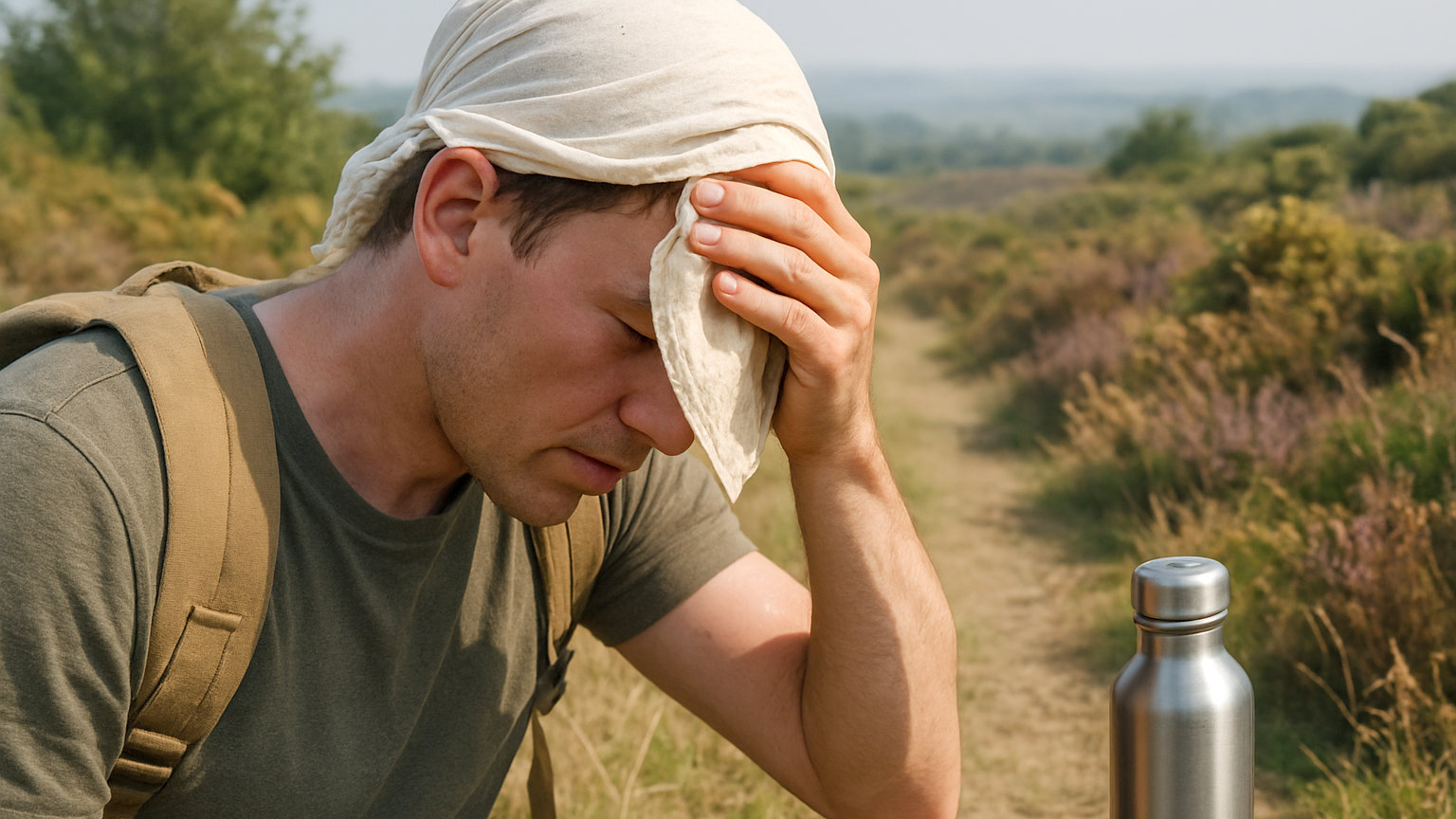
Almost everything about heat safety follows from one fact: the body cools itself by evaporating sweat, and anything preventing that evaporation removes the cooling entirely.
How does the body shed heat?
Principally by sweating and letting it evaporate, which carries a large amount of energy away from the skin. It also dilates blood vessels near the surface to move heat outward, and reduces heat generation by making you disinclined to move. Radiation and convection help when the air is cooler than you are, and stop helping when it is hotter.
Why does humidity matter so much?
Because evaporation depends on the air being able to absorb more moisture. In humid conditions sweat forms and runs off without evaporating, which produces fluid loss with no cooling benefit at all. That is why thirty degrees in dry desert air is manageable and the same temperature in humid tropical air is not, and why humidity is the more dangerous variable.
- Cooling depends on sweat evaporating, not on sweating itself
- High humidity removes the cooling while the fluid loss continues
- Sweat rates can reach one to two litres an hour
- Dehydration reduces the ability to sweat and to cool
- Radiant heat from sun and ground adds to the load
- Exertion generates far more heat than the environment does
How much do you sweat?
Far more than people expect. Sweat rates of a litre an hour are common during exertion in heat, and can reach two litres an hour in extreme conditions. That is a very large fluid loss and it is why heat safety is largely about drinking, and why running out of water in heat becomes dangerous within hours rather than days.
What happens if you are dehydrated?
Cooling fails progressively. With less fluid available, sweat production falls, blood volume drops, and the body becomes less able to move heat to the skin and shed it. Dehydration therefore does not merely make you thirsty, it directly undermines the mechanism keeping your core temperature safe, which is how heat illness develops.
What about radiant heat?
It adds substantially to the load. Direct sun, hot ground and reflected heat from sand, rock, water or a vehicle all deliver energy to you regardless of air temperature. Ground surface temperature in a desert can be far above the air temperature, which is why shade and elevation off the ground matter so much.
Why does exertion matter more than the weather?
Because working muscles generate a great deal of heat internally. Most serious heat illness in temperate countries occurs in people exercising or working hard rather than in people sitting in the sun, and exertional heatstroke happens on days that are warm rather than extreme. The heat you produce is frequently larger than the heat you absorb.
Who copes less well?
Older people, whose sweating response is reduced. Young children, who have a large surface area and less effective thermoregulation. People with heart or lung conditions. Anyone taking medication affecting fluid balance or sweating, including some antidepressants, antihistamines and diuretics. Anyone unacclimatised, unwell, dehydrated or who has been drinking alcohol.
What follows practically?
Get out of the sun, get off hot ground, reduce exertion, drink enough, replace salt, and give the body time to adapt. Every piece of heat advice is an application of one of those, and understanding why makes the priorities obvious rather than arbitrary.
What is wet bulb temperature?
A measurement combining heat and humidity that indicates how much evaporative cooling is possible. It is read from a thermometer with a wet cloth over the bulb, so it reflects the temperature something can reach by evaporating water. Above a certain wet bulb figure the body cannot shed heat at all regardless of shade, water or rest, which is why humid heat is treated as a distinct hazard.
Can you adapt to it?
Substantially, over one to two weeks of repeated exposure involving some exertion. Sweating begins earlier, sweat volume rises, and less salt is lost. That adaptation is real and it fades within a few weeks away from the heat, which is why travellers arriving from a temperate climate are consistently the group most affected.
Cooling depends on sweat evaporating, humidity is more dangerous than temperature, exertion generates most of the heat, and dehydration undermines the whole system.


