
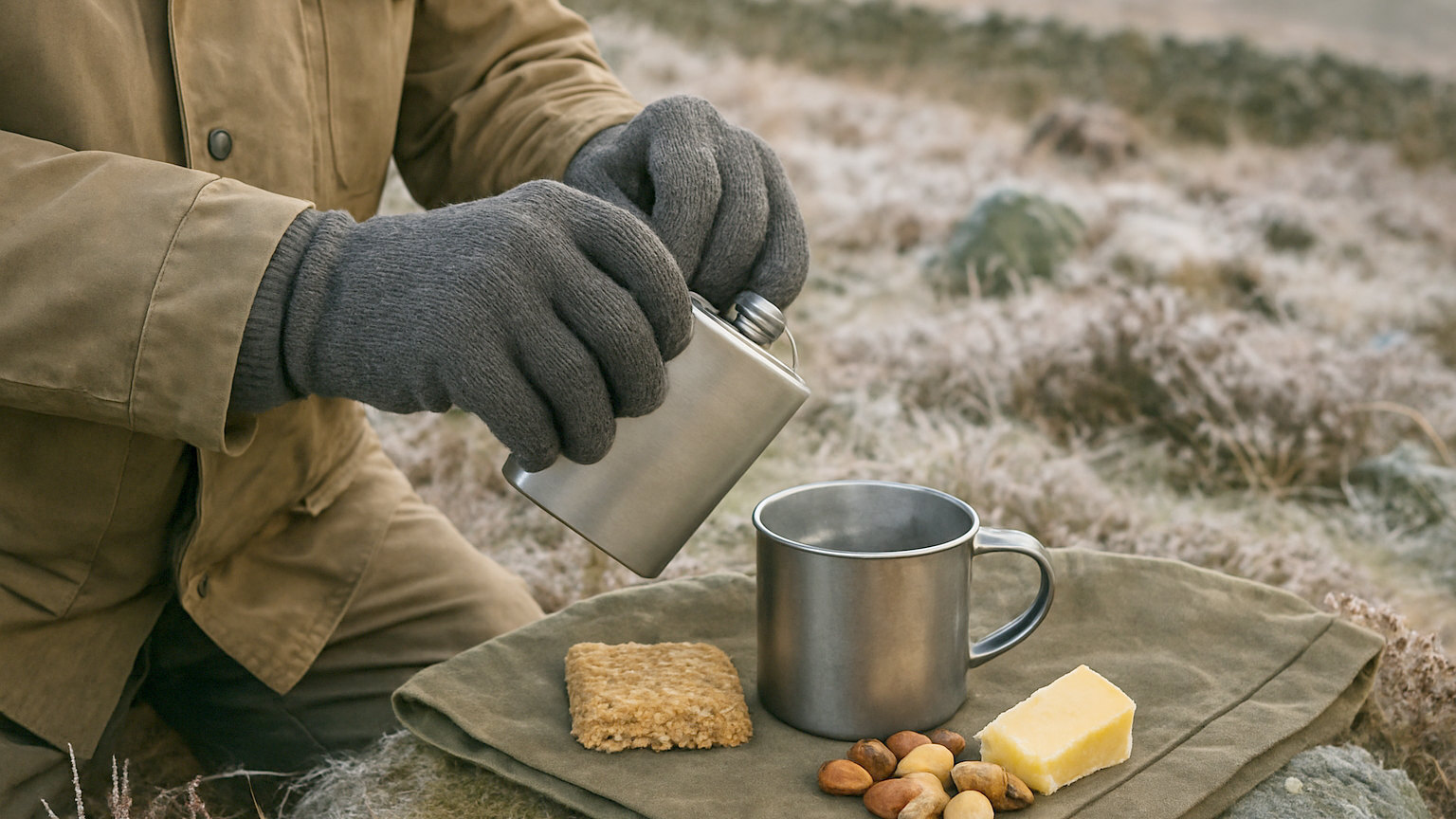
Cold weather changes both the quantity and the practicalities of eating and drinking, and both are consistently underestimated by people used to summer conditions.
Why do calorie needs rise?
Because maintaining core temperature requires energy, and shivering in particular consumes a great deal. Add heavier clothing, deeper snow underfoot and a heavier pack, and a winter hill day can demand substantially more than the summer equivalent. Winter mountaineering days can run to several thousand calories, which is far more than people carry.
What happens if you do not eat enough?
Heat production falls and you get cold. There is a direct link between fuel and warmth, and someone who has run out of energy cannot shiver effectively and cools rapidly. A large proportion of cold, miserable people on hills are underfed rather than underdressed, and the fastest way to warm someone is frequently food.
- Cold and exertion together raise calorie demand sharply
- Eat little and often rather than one large stop
- Fat and carbohydrate together give sustained and quick energy
- Thirst is suppressed in cold, so drink to a schedule
- Carry a flask, since hot drinks are worth the weight
- Keep water from freezing by insulating or inverting bottles
What should you eat?
Things you can eat with cold hands, in a hurry, without preparation. Chocolate, flapjack, nuts, cheese, dried fruit, sandwiches and energy bars all work. Anything that freezes solid, needs unwrapping with bare hands or requires sitting down to prepare will not get eaten. Test a bar in the freezer before relying on it in winter.
Why do people dehydrate in winter?
Because thirst is suppressed by cold, drinking is unappealing when everything is freezing, and you lose water through breathing dry cold air and through sweating under layers without noticing. Winter walkers routinely finish a day significantly dehydrated, which causes fatigue, headache, poor judgement and worse circulation to the extremities.
How do you keep water from freezing?
Insulate it, keep it close and invert it. Water freezes from the top, so storing a bottle upside down means the ice forms at the base and the drinking end stays clear. An insulated cover or a sock over the bottle helps. Keep it inside the pack rather than in an outside pocket, and at night keep it in the sleeping bag.
Is a flask worth carrying?
On a winter day, yes, and it is one of the few luxuries that earns its weight. A hot drink at a cold stop does more for morale and for willingness to eat than almost anything else, and it warms you from inside while you are stationary. Soup is even better, providing salt and calories together.
What about a stove?
Useful on longer winter days and it needs planning. Gas performs poorly in the cold, so keep canisters warm inside clothing before use and consider a propane blend or a liquid fuel stove for severe conditions. Melting snow for water uses enormous quantities of fuel, so carry considerably more than a summer trip would need.
What about before and after?
Eat well before setting off, since starting a cold day underfuelled is a poor beginning. Eat something at the end too, because rewarming and recovery both need energy and appetite frequently returns sharply once warm. Rehydrate deliberately afterwards, since you will have drunk less than you needed.
Does alcohol help?
It does the opposite. Alcohol dilates the blood vessels in the skin, which produces a strong sensation of warmth while accelerating heat loss from the core, and it impairs both shivering and judgement. It is genuinely dangerous in cold conditions and features in a number of hypothermia cases. Save it for after you are indoors and warm.
What about hot food?
Worth the effort on a long winter day, particularly at a fixed camp. Something hot in the evening restores morale and body temperature together, and starting a cold morning with something warm makes an enormous difference to the first hour. On the move, a flask of soup achieves most of the benefit for none of the effort.
Eat far more than in summer and little and often, choose food you can eat with cold hands, drink to a schedule rather than to thirst, and carry a flask.


