Avalanche is widely assumed to be a hazard for the Alps and Rockies. Scotland has a genuine avalanche problem, a daily forecasting service and a regular toll of casualties.
Where does it happen?
Principally in the Scottish Highlands, with an avalanche information service issuing daily forecasts through the winter season for the main mountain areas including Lochaber, Glencoe, Creag Meagaidh, the Northern Cairngorms, the Southern Cairngorms and Torridon. Avalanches also occur outside those areas and in other British upland where snow accumulates.
How many are there?
Well over a hundred are recorded in a typical Scottish winter, and the actual number is higher since many go unobserved. They cause fatalities and serious injuries most winters. The combination of maritime snowpack, frequent thaw and freeze cycles and strong winds redistributing snow produces conditions that are genuinely dangerous.
- Scotland has daily avalanche forecasts through the winter season
- Windslab on lee slopes is the main British hazard
- Slopes around thirty to forty five degrees are most prone
- Cornices collapse and trigger slides below
- Check the forecast before choosing a route, not after
- Avalanche awareness training is part of winter skills
What is windslab?
Snow transported by wind and deposited as a cohesive slab on sheltered lee slopes, sitting on a weaker layer beneath. It is the dominant British avalanche problem. It forms quickly, frequently during or shortly after a windy snowfall, and it can be triggered by a person walking onto it. Recognising where wind has been depositing snow is the key skill.
Which slopes are dangerous?
Generally those between around thirty and forty five degrees, which is exactly the angle of a great many walking routes and gully approaches. Shallower slopes rarely slide and steeper ones tend to shed snow continuously. Lee slopes, where wind has loaded snow, are the concern, and the forecast identifies which aspects and altitudes are affected.
What about cornices?
Overhanging snow formed on the lee side of ridges, which collapse without warning and can trigger avalanches on the slope below. They are a specific Scottish hazard because ridges are frequently the walking route. Stay well back from any corniced edge, since the fracture line is further back than it looks, and be aware of cornices above any slope you are on.
How do you use the forecast?
Before choosing the route, not after. The forecast gives a hazard level, identifies which aspects and altitudes are affected, and describes the snowpack. Use it to choose a route avoiding the loaded slopes, which frequently means a different hill or a different aspect rather than abandoning the day. Reading it after deciding defeats the purpose.
What should you do if caught?
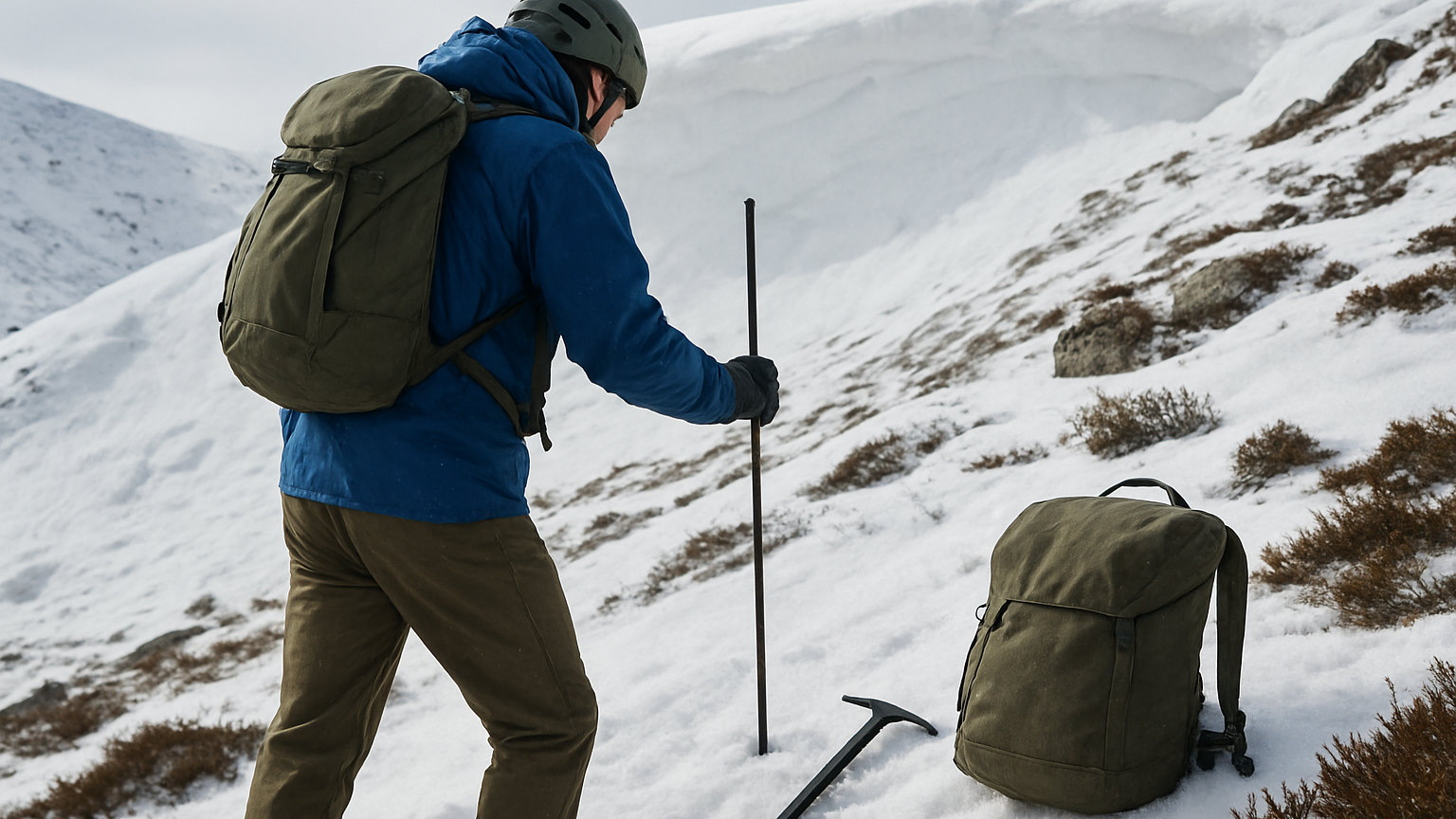
Try to move to the side out of the flow, discard poles and pack if possible, and as it slows make swimming motions and try to create an air space in front of your face with your hands. Survival depends largely on how quickly companions locate and dig you out, which is why avalanche safety equipment is used on committing winter routes.
Do you need transceivers?
For ski touring and committing winter mountaineering in avalanche terrain, they are standard, along with a probe and shovel and the training to use them fast. For general winter hillwalking, the sensible approach is route choice that avoids the hazard, informed by the forecast, rather than equipment to survive being caught.
When is the risk highest?
During and immediately after heavy snowfall combined with strong wind, which is when slabs form on lee slopes. Rapid thaw and rain onto snow also destabilise the pack. The days after a storm are typically the most dangerous, which is exactly when the weather clears and people head out, so a fine day after a snowy windy spell warrants particular caution.
Check the Scottish avalanche forecast before choosing a winter route, learn to spot wind loaded lee slopes, stay well back from cornices, and take awareness training.