
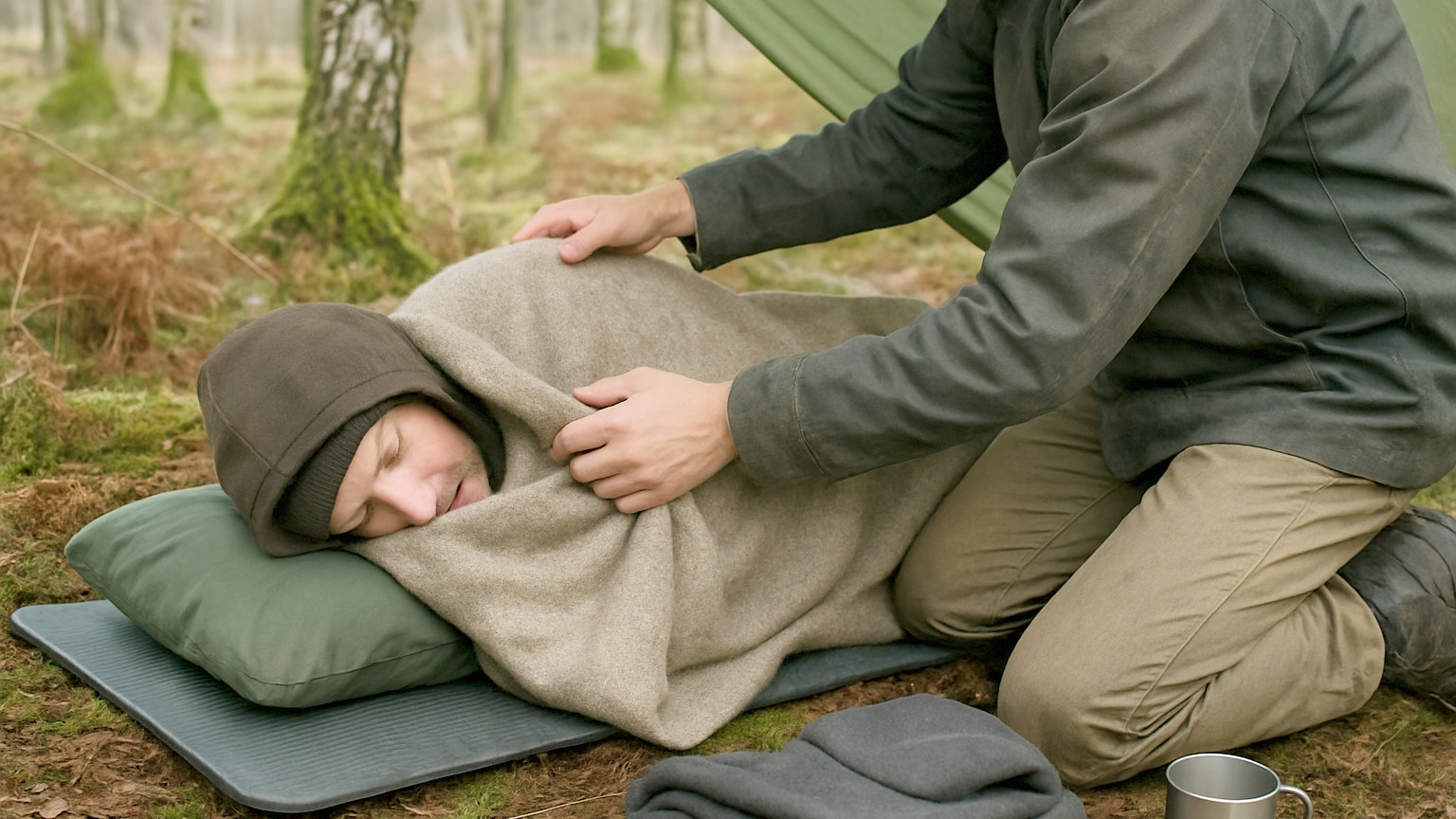
Treating hypothermia outdoors is mostly about stopping further heat loss rather than adding heat, and the handling matters as much as the warming. This is general information and no substitute for training.
What comes first?
Stop the loss. Get them out of the wind and rain, into a group shelter, tent or any shelter available, and get insulation underneath them, since the ground is taking heat continuously. Remove wet clothing only if you can replace it with dry, since undressing someone into the wind makes matters worse.
How do you insulate them?
Underneath first, then around. Rucksacks, mats, spare clothing, rope, anything between them and the ground. Then a sleeping bag, survival bag or group shelter over the top, with a hat on. Add other people alongside if you have them, since body heat in a shared shelter warms the space effectively.
- Shelter from wind and rain immediately
- Insulate from the ground before anything else
- Replace wet clothing only if you can put dry on
- Warm sweet drinks only if fully conscious and able to swallow
- Handle very gently and keep them horizontal
- No alcohol, no rubbing limbs, no direct intense heat
Should you give them a drink?
A warm sweet non alcoholic drink, if they are fully alert and able to swallow safely. It provides fuel for heat generation and does a great deal for morale, and the warming effect of the liquid itself is modest. Never give anything by mouth to someone drowsy, confused or semi conscious, because of the risk of choking.
Why does handling matter?
Because a significantly cold heart is prone to dangerous rhythms, and rough movement can trigger cardiac arrest. Someone with moderate or severe hypothermia should be moved as little as possible, kept horizontal, and handled with deliberate gentleness. This is why walking a seriously hypothermic person out is not the straightforward answer it appears.
What is afterdrop?
A continued fall in core temperature after rewarming begins, as cold blood from the limbs returns to the core. It is one reason why rapid rewarming of the extremities, such as putting someone in a hot bath or rubbing their arms and legs, is not advised outdoors. Warm the core and the trunk, gently, and leave the limbs.
What should you not do?
Give alcohol, which dilates surface vessels and accelerates heat loss while feeling warming. Rub or massage limbs, which drives cold blood to the core and damages tissue. Apply intense direct heat to cold skin, which burns tissue that cannot feel it. Or assume that because they say they are fine, they are.
What about severe cases?
Call 999 immediately, ask for police then mountain rescue, insulate thoroughly, handle minimally and keep them horizontal. If they are unresponsive and not breathing normally, start CPR and continue, since people have recovered fully from profound hypothermia. The principle used in medicine is that resuscitation should continue until the person has been rewarmed.
When can you manage it yourselves?
Mild hypothermia in someone alert, shivering and improving within a reasonable time with shelter, insulation, food and a hot drink. Anything beyond that, anyone not improving, anyone confused or drowsy, or anyone who has stopped shivering while still cold needs emergency help rather than continued treatment by the party.
What about body to body warming?
It helps and it is not the priority. Sharing a sleeping bag or huddling in a group shelter adds warmth and comfort, and the main benefit comes from the shelter and the insulation rather than the contact. Get the person insulated from the ground and out of the wind first, then add whatever warmth is available.
Should you walk them out?
Only for mild cases that have clearly improved. Someone alert, shivering and warming up after shelter and food can usually walk out slowly. Anyone confused, drowsy or who has stopped shivering should not be walked, because exertion drives cold blood from the limbs to the core and movement risks dangerous heart rhythms. That is a case for calling for help.
Shelter and insulate first, warm drinks only if fully alert, handle very gently and keep them horizontal, avoid alcohol and rubbing, and call 999 early.


