
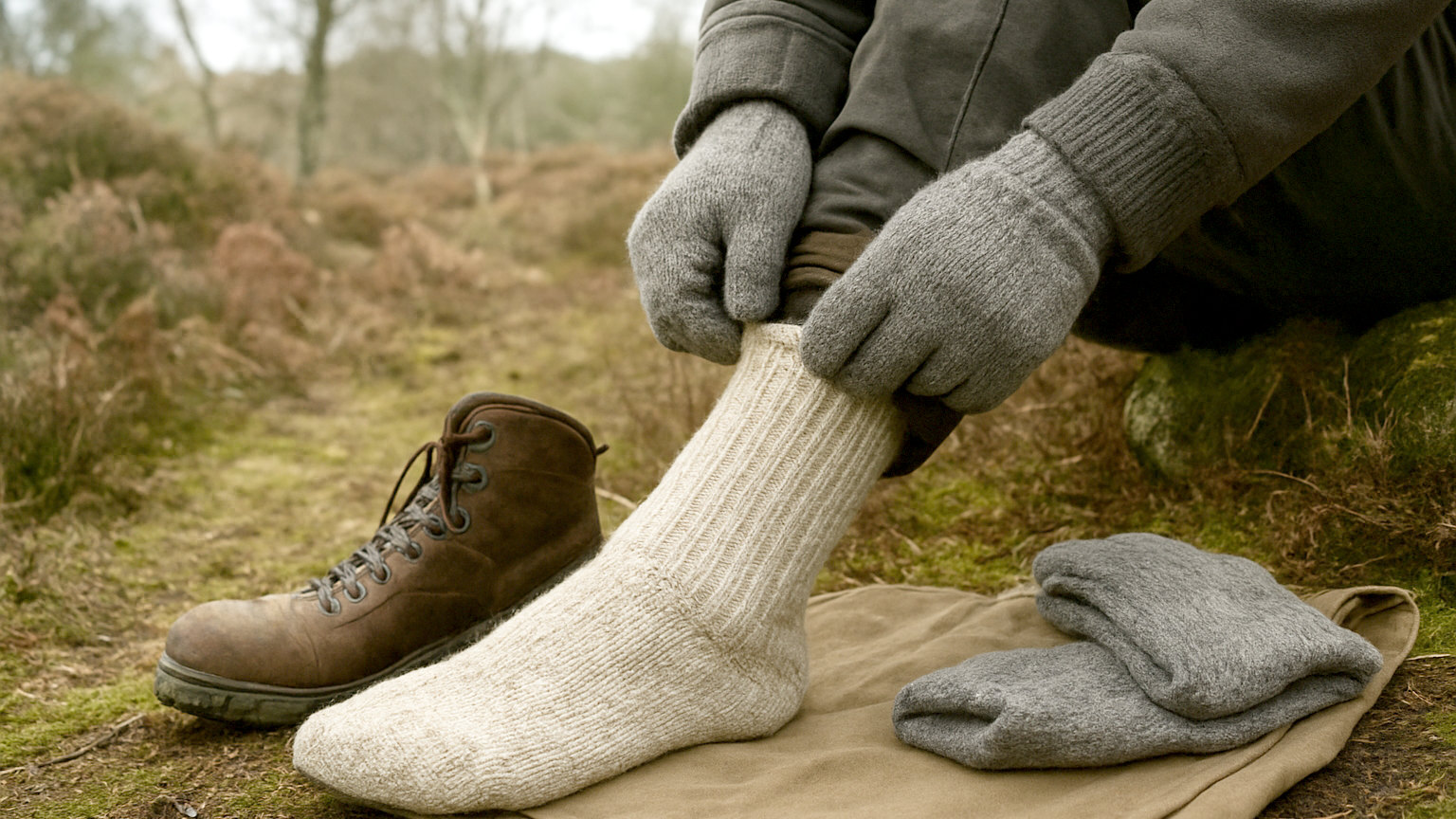
Hands and feet are where cold is felt first, where injury occurs and where losing function has the biggest practical consequences. They deserve more attention than they usually get.
Why do extremities suffer?
Because the body sacrifices them to protect the core. When cooling begins, blood vessels in the hands and feet constrict to reduce heat loss, which keeps the core warm and leaves the extremities cold. That is a functional response and it means cold hands are an early sign that the whole body is losing the balance.
Mittens or gloves?
Mittens are considerably warmer, because the fingers share warmth rather than each being individually insulated. Gloves give dexterity. The usual answer is a thin liner glove for tasks worn under a mitten, so you can do something fiddly without fully exposing your hands. In severe cold, mittens are the sensible choice.
- Mittens are warmer than gloves for the same weight
- Carry at least one spare pair, kept dry in the pack
- Thin liner gloves let you do tasks without bare hands
- Tight boots restrict circulation and cause cold feet
- Change socks when they are wet, on multi day trips
- Never touch cold metal with bare skin
Why do spares matter so much?
Because gloves get wet, and wet gloves are worse than none. Handling snow, ropes, tent fabric and cooking all soak them, and once they are wet they will not dry on the hill. A spare pair kept sealed in the pack is worth more than an expensive single pair, and many winter walkers carry two spares.
Why are tight boots a problem?
Because circulation is what keeps feet warm, and compression from over tight laces, thick socks crammed into a snug boot or tight gaiter straps restricts blood flow. People experiencing cold feet frequently add another sock, which makes it worse. Boots should be sized to allow a thick sock without pressure anywhere.
How do you warm cold hands?
Under armpits or against the stomach, inside clothing, which is faster and safer than any external heat. Swing the arms vigorously to force blood into the fingers. Eat something, since fuel is needed to generate heat. Avoid direct heat on numb hands, which cannot feel burning. Chemical hand warmers are genuinely useful in severe conditions.
What about feet during the day?
Keep them moving and keep them dry. Wiggle toes regularly, particularly when stationary. Change into dry socks if they get soaked and you have spares. Avoid standing still on snow or cold rock for long periods. On multi day trips, drying feet and socks overnight is one of the most important routines there is.
What is a vapour barrier?
A waterproof layer worn next to or near the skin to stop sweat soaking the insulation, used in severe cold and on long trips. A plastic bag over a liner sock inside the boot keeps the insulating sock dry, which sounds unpleasant and works well in genuinely cold conditions where nothing dries.
What are the warning signs?
Numbness, waxy white patches, loss of dexterity and pain that then stops. Numbness that has replaced pain is a warning rather than an improvement. Check each other hands and faces during the day, since people do not notice their own frostnip, and act on the first white patch rather than waiting.
What about Raynaud phenomenon?
It makes cold hands considerably more difficult and it is common. The blood vessels in the fingers and toes over constrict in response to cold, producing white then blue then painful red digits, and people affected need to be far more proactive: mittens rather than gloves, chemical warmers, warming hands before they go numb, and avoiding getting cold in the first place. It is worth mentioning to companions.
What about gaiters?
They keep snow out of boots, which is the main cause of soaked feet in winter. Snow entering at the ankle melts against the sock and the whole foot is wet within an hour. Gaiters also keep trousers dry and protect against crampon points catching. Make sure the straps are not so tight that they restrict circulation.
Wear mittens with liner gloves, carry spares, avoid tight boots, keep toes moving, warm hands inside clothing, and check each other for white patches.


