
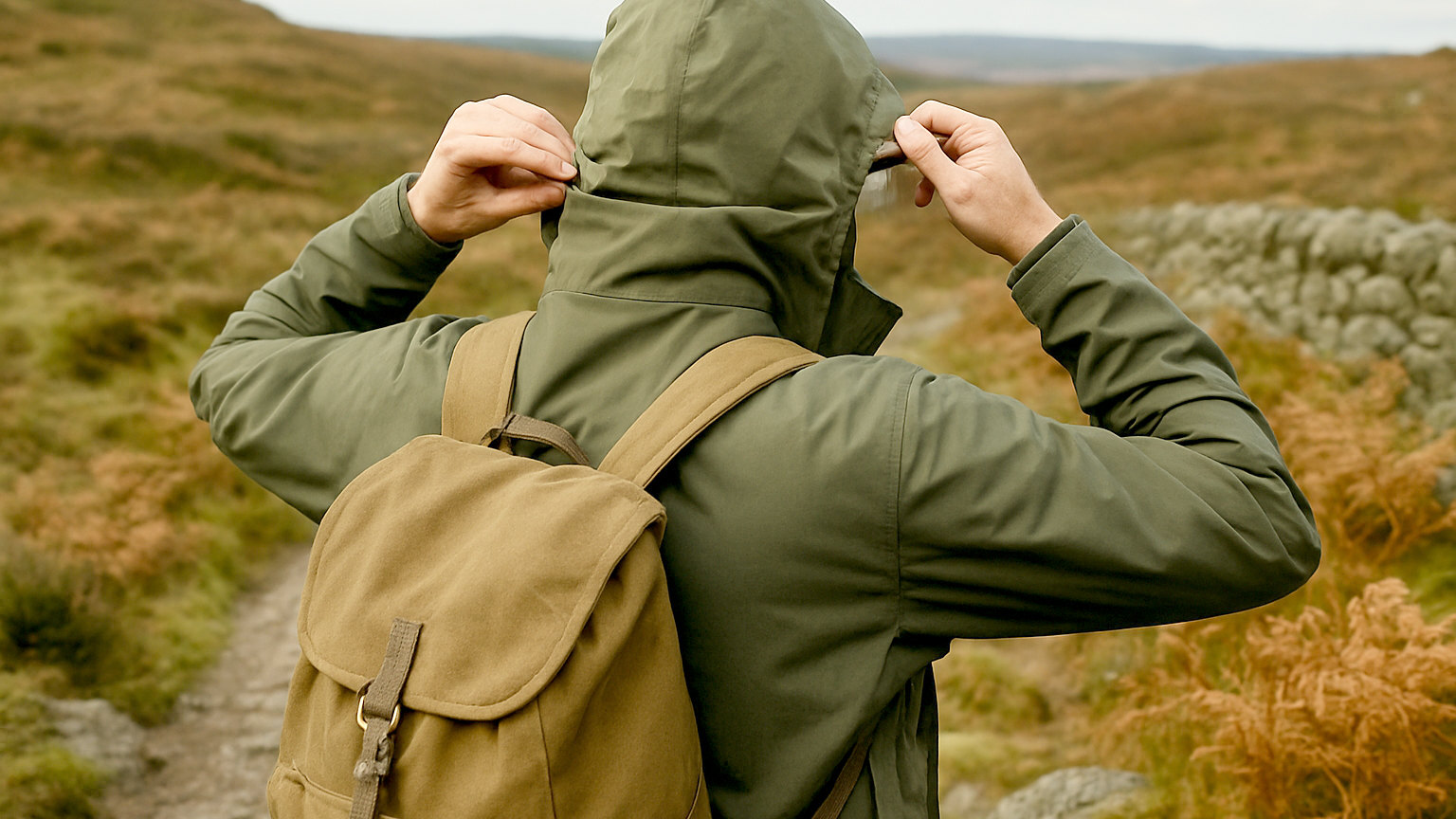
Layering is described as a system of garments and is better understood as a set of functions. Getting the functions right and adjusting them constantly matters far more than what the labels say.
What does each layer do?
The base layer moves moisture away from the skin so you do not sit in your own sweat. The mid layer traps still air to insulate. The shell blocks wind and rain, which are the two things that strip heat fastest. Any garment doing one of those jobs is the right garment, regardless of what it is called.
What should the base layer be?
Wool or synthetic, never cotton. Merino wool retains warmth when damp, resists odour and works across a wide temperature range. Synthetic base layers wick faster, dry more quickly and cost less. Cotton absorbs moisture, loses all insulation when wet and dries extremely slowly, which is why it appears repeatedly in British hypothermia cases.
- Base layer of wool or synthetic to move moisture
- Mid layer of fleece or insulation to trap air
- Windproof and waterproof shell on the outside
- Several thin layers beat one thick one
- Remove a layer before you sweat, not after
- Add a layer the instant you stop moving
Why several thin layers?
Because each traps its own layer of still air, and because they can be adjusted individually. Two thin fleeces are warmer than one of the same total thickness and allow you to remove exactly the right amount. A single thick garment is either on or off, which forces you to be too hot or too cold.
What is the big mistake?
Leaving adjustment too late in both directions. People start a climb warm, sweat heavily, then arrive at the top with wet base layers and stand in the wind. The correct approach feels wrong: start slightly cool, remove a layer at the bottom of a climb before you heat up, and put everything back on within seconds of stopping.
What about insulated jackets?
They belong in the pack for stops, not on while walking. A down or synthetic insulated jacket is enormously warm and traps sweat if worn during exertion. Carry it, put it on the moment you stop, and take it off before setting off again. That single habit is what experienced winter walkers do differently.
Down or synthetic?
Down is warmer for its weight, packs smaller and is useless when wet. Synthetic is heavier and bulkier, retains warmth when damp and dries faster. For British winter conditions where everything gets damp, synthetic insulation is forgiving, and down is superb if you can keep it dry under a shell.
What about the shell?
Windproof matters as much as waterproof, since convection is the fastest route of heat loss. Breathable membranes help and cannot keep up with heavy exertion, so pit zips and venting matter more than the membrane rating. Keep the outer fabric treated with a water repellent, since a wetted out face fabric stops the membrane working almost entirely.
What is often forgotten?
The extremities and the neck. A hat, a buff or neck gaiter, and mittens or gloves complete the system, and a huge amount of adjustment can be done through them alone. Taking a hat off is the quickest way to shed heat while climbing, and putting it back on is the quickest way to warm up at the top.
How many layers should you carry?
Enough that you could stand still for an hour in the worst conditions of the day. That is the useful test, and it usually means one more insulating layer than you expect to wear while moving. On a winter hill that means a proper insulated jacket in the pack, unused all day, which feels like dead weight until the moment you need it.
Base to wick, mid to insulate, shell to block wind, several thin layers, adjust before you sweat, and put the insulated jacket on the moment you stop.


