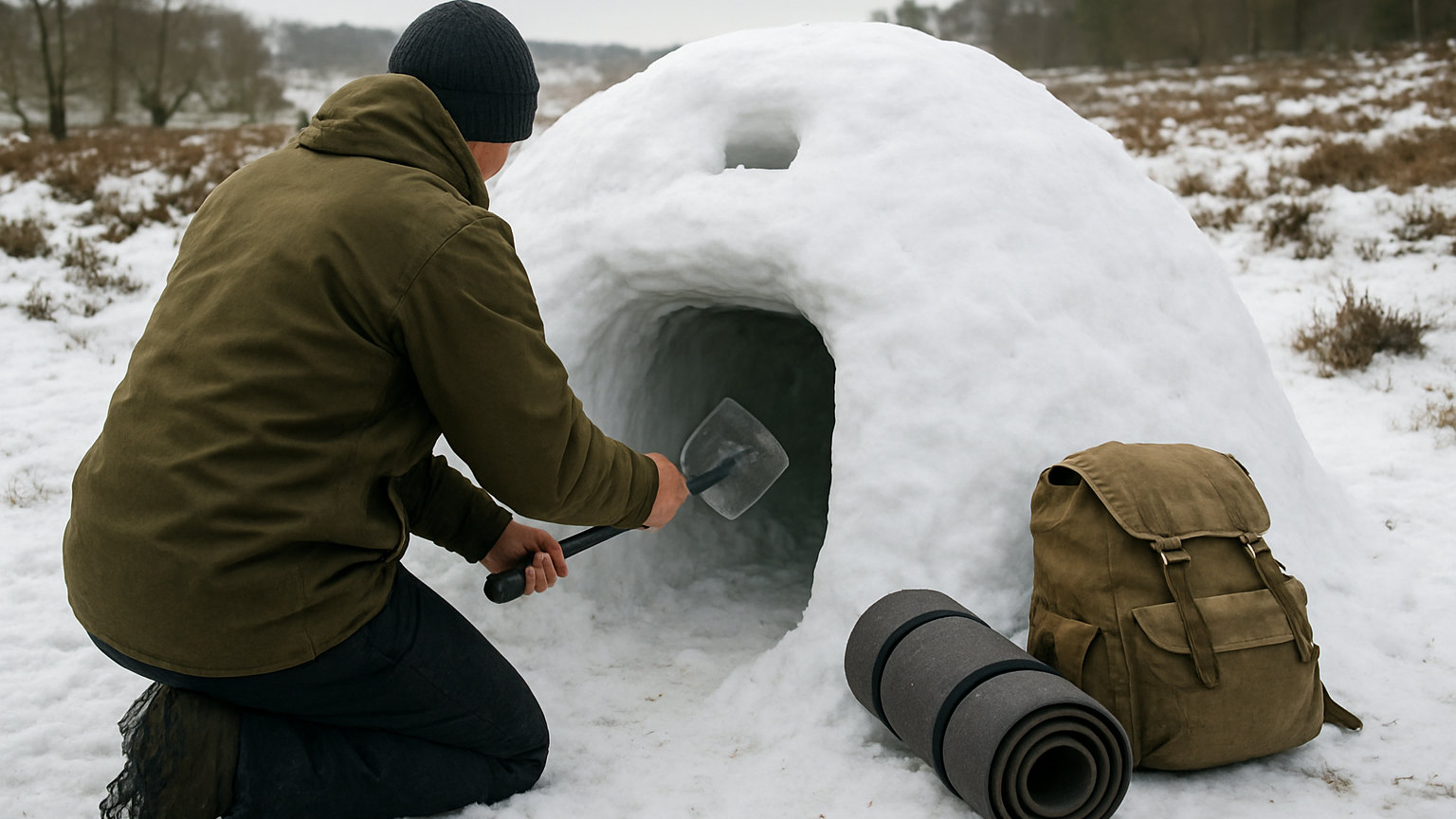
Snow shelters work well and they are far more demanding than the images suggest. Building one in an emergency, tired and without a shovel, is a very different proposition from building one deliberately.
Why does snow insulate?
Because it contains a great deal of trapped air. Snow is a poor conductor and a well built shelter stays close to freezing regardless of how cold it is outside, which may be far warmer than the ambient temperature. It also blocks wind completely, which removes the fastest route of heat loss.
What types are there?
A snow hole, dug into a deep drift or bank, which is the warmest and takes several hours. A snow trench, dug down and roofed with blocks or a tarp, which is far quicker and less comfortable. A quinzee, made by piling snow, letting it consolidate and hollowing it out, which needs hours of setting time. For an emergency, the trench is the realistic option.
- Snow holes need deep consolidated snow and hours of work
- A snow trench is far quicker and is the emergency option
- Digging soaks you, which is dangerous when you stop
- Keep the entrance below the sleeping platform to trap warm air
- Maintain a ventilation hole and check it stays clear
- Never run a stove in a sealed snow shelter
What is the main danger?
Getting wet while digging. Building a snow shelter is hard physical work in contact with snow, and you will sweat and soak your outer layers. Someone who then stops and sits in a cold shelter in wet clothing is in a considerably worse position than before they started. Strip layers while digging and put dry ones on afterwards.
What about carbon monoxide?
It is a genuine and repeated killer in snow shelters. A stove burning inside an enclosed snow space produces carbon monoxide with nowhere to go, and snow shelters seal themselves as the walls glaze and drifting snow blocks the entrance. Maintain a ventilation hole, check it repeatedly through the night, and keep a probe or pole to clear it.
How should it be shaped?
With the sleeping platform above the entrance level, so cold air sinks out and warm air is trapped. Keep the roof domed rather than flat, which is much stronger, and smooth the interior so meltwater runs down the walls rather than dripping. Keep the space small, since a large shelter is far colder and takes far longer to dig.
What do you need to dig one?
A snow shovel, realistically. Digging with an ice axe, a pan or your hands is possible and is exhausting and slow, and takes hours rather than the one or two a shovel allows. Anyone planning to rely on a snow shelter should carry a shovel, which is also part of avalanche equipment.
Is enough snow available in Britain?
Sometimes, in specific places. Scottish winter conditions produce deep consolidated drifts in gullies and on lee slopes where snow holing is genuinely practised, and in most British winters and most locations there is not enough. Relying on being able to build one is unwise, and carrying a group shelter is far more reliable.
Is it a realistic emergency option?
Rarely, and it is worth knowing. For a benighted party with a shovel, deep snow and some energy, a trench is a genuine improvement over sitting in the open. For a tired party without tools, a group shelter and good insulation is faster, drier and better. Mark the entrance clearly so rescuers can find you.
How warm does it actually get?
Around freezing, which is far warmer than a windy night outside and is still cold. Body heat and a sealed space raise the temperature to roughly zero and it will not go much above, since the walls would melt. That means you still need a sleeping bag and insulation from the floor, and people expecting comfort are disappointed.
Use a trench rather than a hole in an emergency, strip layers while digging to stay dry, keep a ventilation hole clear, and never run a stove inside.