
Understanding how heat actually leaves the body explains why the standard cold weather advice takes the form it does, and it makes the priorities obvious rather than arbitrary.
What are the mechanisms?
Radiation, where heat leaves exposed skin as infrared energy. Conduction, where heat passes directly into anything you touch. Convection, where moving air or water carries heat away from the surface. Evaporation, where moisture turning to vapour takes heat with it. And respiration, where you exhale warm moist air. All five operate simultaneously.
Which matters most outdoors?
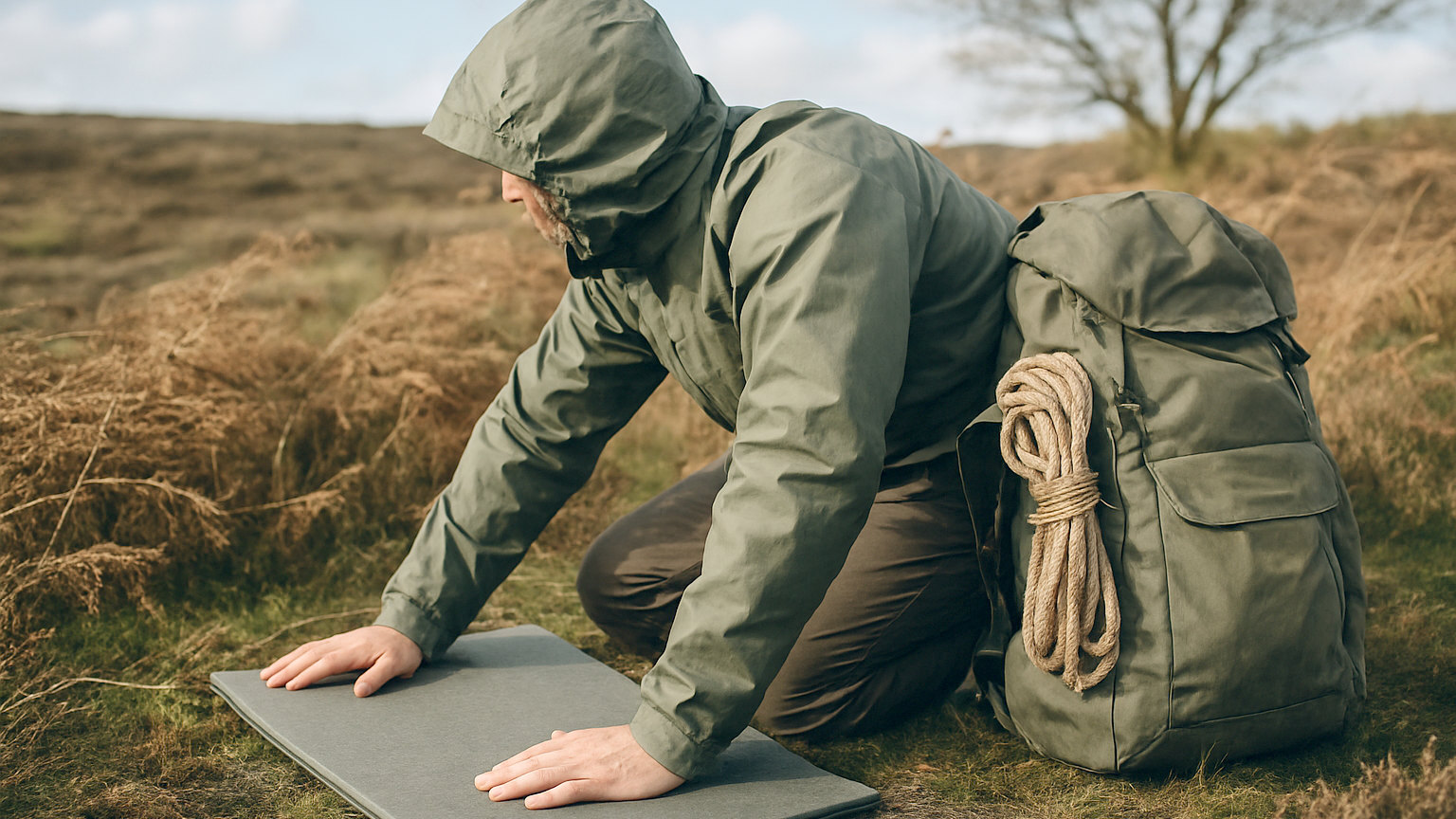
Convection and conduction. Wind strips the thin layer of warmed air next to your skin and clothing and replaces it continuously, which is what wind chill describes and why a windproof layer matters so much. Conduction into the ground is the other big one, since sitting or lying on cold ground draws heat out far faster than the air does.
- Wind removes the warm layer next to you continuously
- Ground contact conducts heat away rapidly
- Water conducts heat many times faster than air
- Wet clothing loses most of its insulating value
- Sweat evaporating cools you when you stop moving
- An uncovered head loses a substantial amount
Why is water so dangerous?
Because it conducts heat around twenty five times faster than air at the same temperature. That is why immersion in cold water is so rapidly incapacitating, and why wet clothing is a serious problem rather than merely uncomfortable. Damp clothing in wind combines the two worst mechanisms at once.
What does insulation actually do?
Traps still air. The material itself matters far less than the pockets of motionless air it holds, which is why loft matters in a sleeping bag and why compressing insulation destroys its value. It also explains why several thin layers outperform one thick one: each traps its own layer of air.
Why does sweat cool you?
Because evaporation takes a large amount of energy from the skin, which is exactly what it is for during exertion. The problem outdoors is that you keep sweating during effort and then stop moving, at which point the wet layers continue evaporating and cooling you rapidly. This is why layer management while walking is a safety measure rather than a comfort one.
How much is lost from the head?
A meaningful amount, and less than the old claim of most of your body heat. The head is well perfused with blood, does not constrict its vessels as readily as the limbs, and is frequently the only part left uncovered, which is why a hat makes such a noticeable difference. Covering any exposed area helps proportionally.
What does the body do about it?
Constricts blood vessels in the skin and limbs to reduce surface loss, then shivers to generate heat through muscle activity. Both are effective and both have costs: cold hands lose dexterity, and shivering consumes energy rapidly and stops when reserves run out or when the core cools too far, which is a serious sign.
What follows practically?
Block the wind, get off the ground, stay dry, cover extremities, eat to fuel heat production, and manage layers so you neither sweat nor cool. That short list addresses each mechanism directly, and every piece of cold weather advice is an application of one of them.
How much heat do you generate?
At rest, roughly the output of a light bulb, and many times that during hard exercise. That is why walking uphill keeps you warm in conditions that would chill you in minutes standing still, and why the moment you stop is the moment the balance reverses. Understanding the size of that swing explains most cold weather advice about layers and stops.
Does everyone lose heat at the same rate?
No, and the differences are substantial. Smaller and thinner people have more surface area relative to their mass and cool faster, which is why children are at greater risk. Fitness, food intake, hydration, alcohol, age and some medications all affect the response. In a group, the person who gets cold first is not being feeble, they are losing heat faster.
Block wind, insulate from the ground, stay dry, cover your head and hands, and eat, because each addresses a specific route heat is leaving by.


