Camping equipment is expensive and durable, and most of it that fails prematurely was damaged by storage rather than by use. Two habits prevent nearly all of it.
What is the most important habit?
Drying everything completely before it goes away. A tent packed damp grows mould within days, which stains permanently, smells and degrades the waterproof coating. Sleeping bags, mats and packs suffer similarly. Unpacking and drying everything the day after a trip is the single most valuable maintenance task there is.
How do you dry a tent?
Pitch it in a garden if you can, or hang the flysheet and inner separately somewhere airy indoors. A hallway, a bannister or a washing line all work. It takes hours rather than minutes, and both sides need to dry. If you got home late and packed it wet, get it out the next morning rather than leaving it for the weekend.
- Dry everything fully before storing it
- Store sleeping bags uncompressed, never in the stuff sack
- Store mats unrolled and slightly inflated with the valve open
- Reproof the flysheet when water stops beading
- Carry a repair kit and fix small damage immediately
- Keep zips clean and lubricated
How should sleeping bags be stored?
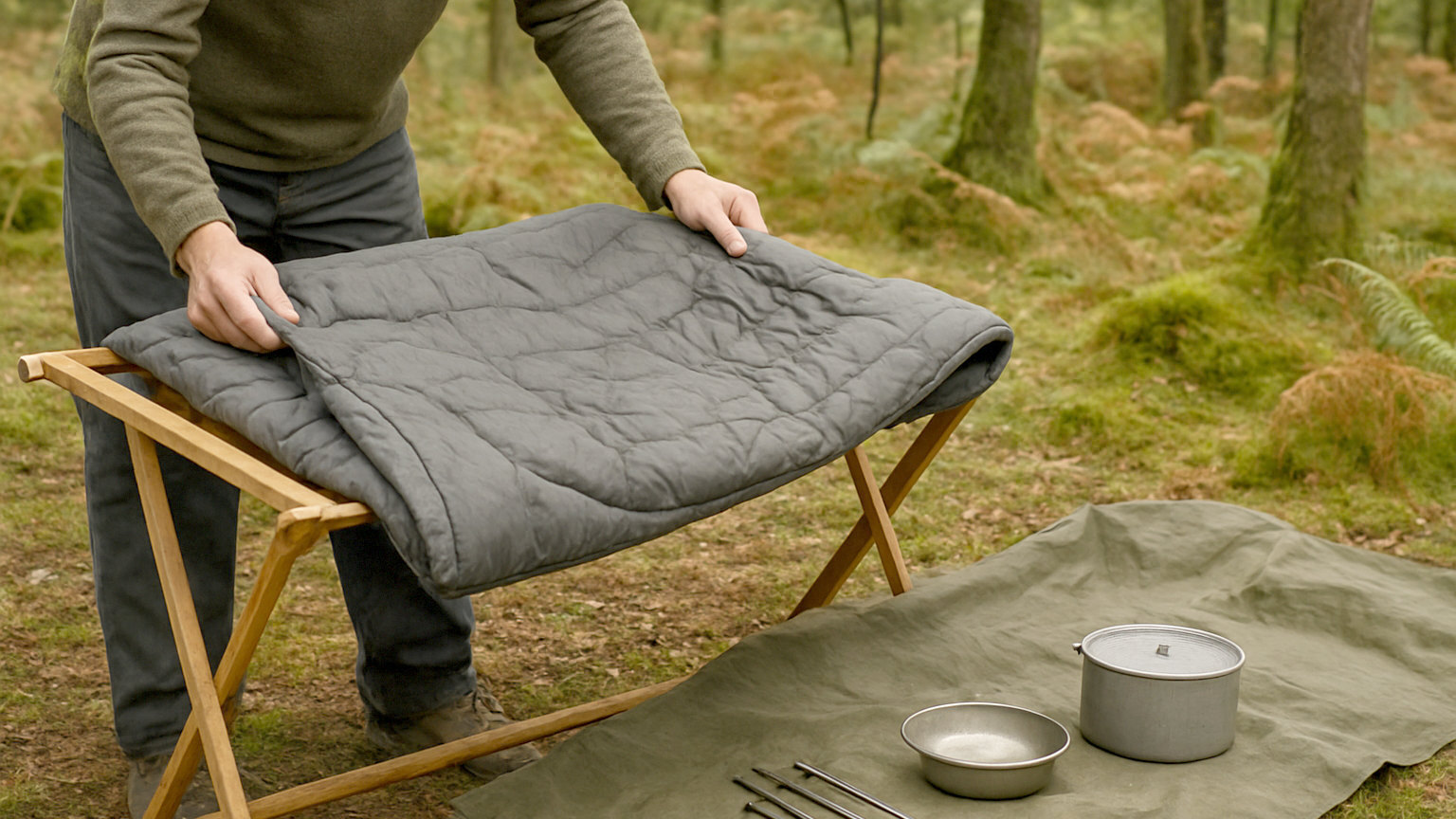
Uncompressed, in a large cotton or mesh sack, or hung up. Storing a bag in its stuff sack permanently damages the loft that provides the insulation, and a bag left compressed for a year may never fully recover. This applies to both down and synthetic and it is the most common way an expensive bag is quietly ruined.
What about mats?
Store inflatable mats unrolled and slightly inflated with the valve open, which stops the internal surfaces sticking together and lets any moisture inside dry out. Under a bed is ideal. Rolled tightly for months, the internal baffles can delaminate. Keep a puncture repair kit with it, since a punctured mat means a cold night.
When should you reproof?
When water stops beading on the flysheet and soaks in instead. Wash it with a technical cleaner rather than ordinary detergent, which leaves residues, then apply a proofing treatment. Seam sealing can also be redone where seams begin to leak. A tent that has lost its water repellency wets through and gets much heavier as well as leaking.
What should a repair kit contain?
Adhesive fabric patches, a pole repair sleeve, spare pegs, strong tape, a needle and thread, a mat puncture kit and a couple of spare guy lines. That covers the failures that actually happen and weighs very little. A field repair done properly frequently lasts for years.
How do you look after poles and zips?
Feed poles through sleeves rather than pulling them, which stresses the shock cord and the joints, and assemble them from the middle outward. Keep zips clean, since grit is what destroys them, and rinse them if they have been in sand. A rub of candle wax or a purpose made lubricant keeps them running smoothly.
What about the stove?
Check it works before every trip rather than discovering it does not at a campsite. Clean the burner, check hoses and seals for perishing and cracks, and make sure you have fuel and a means of lighting it. Store gas canisters outdoors and check for corrosion around the valve before use.
How do you wash a sleeping bag?
Rarely, gently and with the right product. Use a technical wash designed for down or synthetic, a large machine on a gentle cycle with no fabric conditioner, and never dry clean. Down bags need tumble drying on low with a few dryer balls to break up clumps, which takes hours. Using a liner means you need to do this far less often.
Where should you store it all?
Somewhere dry at stable temperature, indoors rather than in a garage or shed. Damp storage causes mould and corrosion, freezing damages some items, and lofts get hot enough to degrade coatings and elastic. Keep gas canisters outdoors and everything else in a cupboard where you will actually see it and remember to check it.
Dry everything before storage, keep bags uncompressed and mats unrolled, reproof when beading stops, carry a repair kit, and test the stove before each trip.