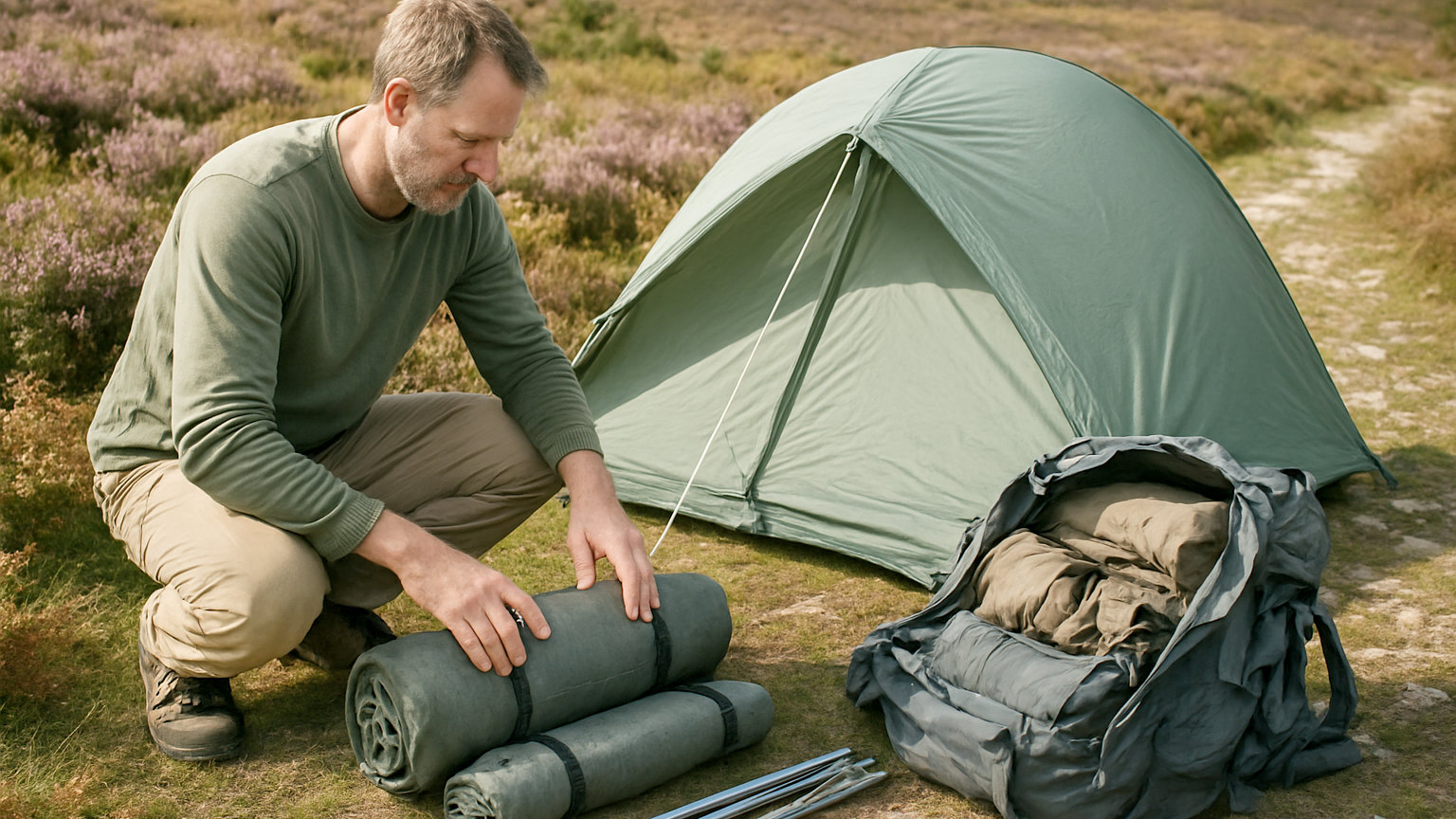
Tent choice is dominated by how you will get it to the site and what weather you expect. Most disappointment comes from believing the capacity figure and ignoring the porch.
What do the capacity numbers mean?
The number of people who can lie down shoulder to shoulder with no room for anything else. A two person tent is genuinely tight for two adults with rucksacks, and a great many people buy one size up for comfort. If you camp as a pair and are not counting grams, a three person tent transforms the experience for a modest weight penalty.
What is a season rating?
A rough indication of the conditions a tent is designed for. Two season suits summer, three season covers spring to autumn including wind and rain, and four season is built for winter, snow loading and severe wind. Most British camping is served by a good three season tent, and four season models are heavier and hotter than most people need.
- Capacity means people lying down with no gear
- Three season suits most British camping
- Look for a flysheet of at least three thousand millimetres
- A generous porch matters enormously in British weather
- Geodesic designs handle wind best, tunnels give more space
- Check whether it pitches outer first or all in one
What is hydrostatic head?
A measure of how much water pressure the fabric resists before leaking, in millimetres. Around fifteen hundred is the threshold for waterproof, and for a British flysheet three thousand or more is a sensible minimum, with groundsheets typically higher again since they take body pressure. Higher figures cost more and resist better under sustained rain.
Which design should you choose?
Geodesic and semi geodesic tents cross poles multiple times and handle wind best, which matters for exposed camping. Tunnel tents give the most usable space for their weight and must be pitched with the tail into the wind. Dome tents are freestanding and convenient. Choose for where you will actually camp rather than for the worst weather you can imagine.
Why does the pitching order matter?
Because of British rain. A tent that pitches inner first exposes the inner tent to rain while you assemble it, which means starting the night with a wet bed. Outer first or all in one pitching keeps the inner dry, and for the British climate that is a genuine advantage worth prioritising when choosing.
How important is the porch?
More than almost any other feature. A porch stores wet boots and packs, allows cooking under cover with ventilation, and gives somewhere to sit out a wet afternoon. A tent with no porch means everything wet comes into the sleeping area. Two porches on a two person tent is a considerable luxury and worth the weight.
What about weight?
It matters entirely differently depending on how you camp. Carrying everything on your back makes every hundred grams significant, so lightweight tents justify their cost. Driving to a site removes the constraint completely, and a heavier, roomier, more durable tent is the better choice. Buying a backpacking tent for car camping is a common and expensive mistake.
What should you check before buying?
Whether you can pitch it alone, since you frequently will. Whether the poles are colour coded and the design is intuitive. Whether guy lines are included and attachment points are reinforced. Whether the inner has adequate ventilation, since condensation is the main complaint about cheap tents. Pitch it in the garden once before taking it anywhere.
What about buying second hand?
Good value for hard goods and worth inspecting carefully. Check the flysheet for delamination, which shows as a flaking or sticky coating on the inside and cannot be repaired, and check seam tape for peeling. Confirm all poles and pegs are present, since replacing a proprietary pole set is expensive. Pitch it before buying if you possibly can.
Buy one size up on capacity, aim for three season with a good flysheet, prioritise the porch and outer first pitching, and match the weight to how you travel.