Camping with children is enormously rewarding and the first few trips determine whether it continues. Warmth and comfort matter more than anything else.
Why do children get cold?
Because they have a larger surface area relative to body mass, less insulating fat, and they lie still all night rather than generating heat. A sleeping bag that keeps an adult comfortable will leave a child cold, and children frequently do not wake to complain, they simply have a miserable night and remember it.
How do you keep them warm?
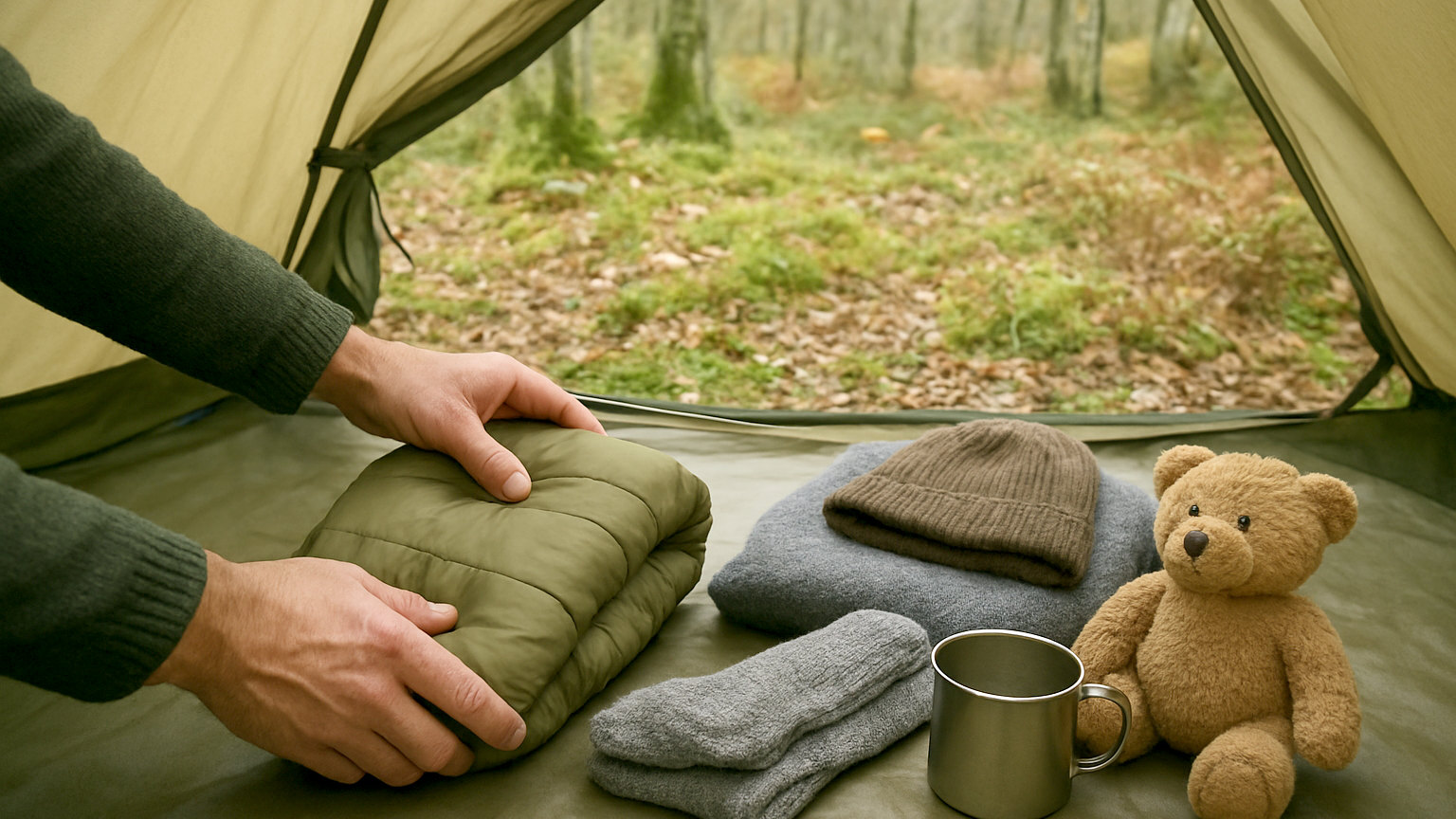
Insulation underneath above everything, since the ground is what takes the heat. Give them a good mat rather than a thin one. Dry base layers, a hat, and thick socks. Feed them something before bed. A hot water bottle at the foot of the bag transforms a cold night. Check on them, since they may be cold and asleep.
- Give children a well insulated mat, not a thin one
- Hat, dry base layers and socks for sleeping
- Something familiar to sleep with matters enormously
- A torch each, which removes most fear of the dark
- Feed them before bed and keep snacks accessible
- Choose a short easy first trip close to home
What about the dark?
It is the most common cause of an unhappy first night. Give every child their own head torch or a small lantern, which restores control and removes most of the fear. Talk about the noises they will hear before bedtime, since sheep, owls and wind against fabric are alarming when unexplained. Leave a low light on if it helps.
What should they bring?
Whatever they sleep with at home. A familiar toy, blanket or pillow does more for a child settling in an unfamiliar tent than any amount of equipment, and it is the thing most often forgotten. Let them help pack it so they know it is coming.
How do you plan the first trip?
Short, close to home and easy. A single night at a campsite half an hour away, with the option of going home, removes all the pressure. Try a night in the garden first, which is genuinely useful and lets everyone find out what the tent is like without any commitment. Build from there rather than starting with a week in Scotland.
What about campsite safety?
Establish boundaries and rules on arrival. Where they can go, that they tell an adult before leaving the pitch, and to stay away from other people guy lines, which are a trip hazard in the dark. Talk about water, roads and any livestock. Give them a whistle and agree what to do if they cannot find you.
What about cooking and stoves?
Keep children well away from stoves and hot pans, which are at exactly head height for a small child when placed on a table. Never cook inside a tent, and be aware that a stove in a porch with children moving in and out is a genuine burn and fire risk. Establish a clear no go zone while cooking.
How do you handle night waking?
Expect it and plan for it. Keep a torch, a drink and a snack within reach, and know where the toilet is or have a container for a small child. A child needing the lavatory at three in the morning in a strange field is much easier if this has been thought about in advance rather than improvised.
What about older children?
Give them responsibility, which is what they want and what builds competence. Their own tent nearby, their own kit to pack and look after, a job at camp and some freedom within agreed boundaries. Teenagers who feel like participants rather than passengers stay interested in camping, and those treated as small children generally do not.
Insulate them from the ground, give each child a torch and something familiar, feed them before bed, start with a short trip, and set boundaries on arrival.