This is the question that shapes what British bushcraft actually looks like, and the answer is more restrictive than most people assume. This is general information rather than legal advice.
What are the access rights?
In England and Wales, a right of way allows passage along a defined route, and access land under countryside legislation allows walking on foot over certain open country and registered common land. Neither confers a right to camp, light fires, cut vegetation or take anything. In Scotland, statutory access rights are considerably broader and are exercised in accordance with the outdoor access code.
Can you light a fire?
Not without permission from the landowner in England and Wales, and byelaws prohibit it on most public land, in national parks, on National Trust property and on nature reserves. In Scotland the access code permits small fires with conditions, discourages them, recommends stoves instead, and rules out fires on peat and during high fire risk periods.
- Access rights allow passage, not camping or fires
- Fires require landowner permission in England and Wales
- Cutting living wood is criminal damage
- Taking wood without permission is theft
- Scotland allows responsible access under a statutory code
- Byelaws vary widely and are enforced on public land
Can you cut wood?
No, not living wood, anywhere, without the owner permission. Cutting or damaging trees is criminal damage, and trees may additionally be protected by preservation orders or by conservation area status which carry substantial fines. Taking wood, including dead wood, without permission is theft. The abundance of a resource has no bearing on ownership.
What about wild camping?
It requires permission in England and Wales, with limited exceptions and a position that has been subject to litigation in some areas, so check the current situation for anywhere specific rather than relying on what you have read previously. Scotland permits responsible wild camping under access legislation, with local byelaw restrictions in some areas. In practice, discreet lightweight camping in remote upland is widely tolerated without being a right.
So where can you actually go?
Land where you have permission. Your own garden, which covers a surprising amount of practice. Land belonging to friends or family. Permissive sites, of which a growing number exist, run by woodland groups, scout associations, private woodland owners and bushcraft schools. Courses, which include the permission. And membership organisations that hold woodland for member use.
How do you get permission?
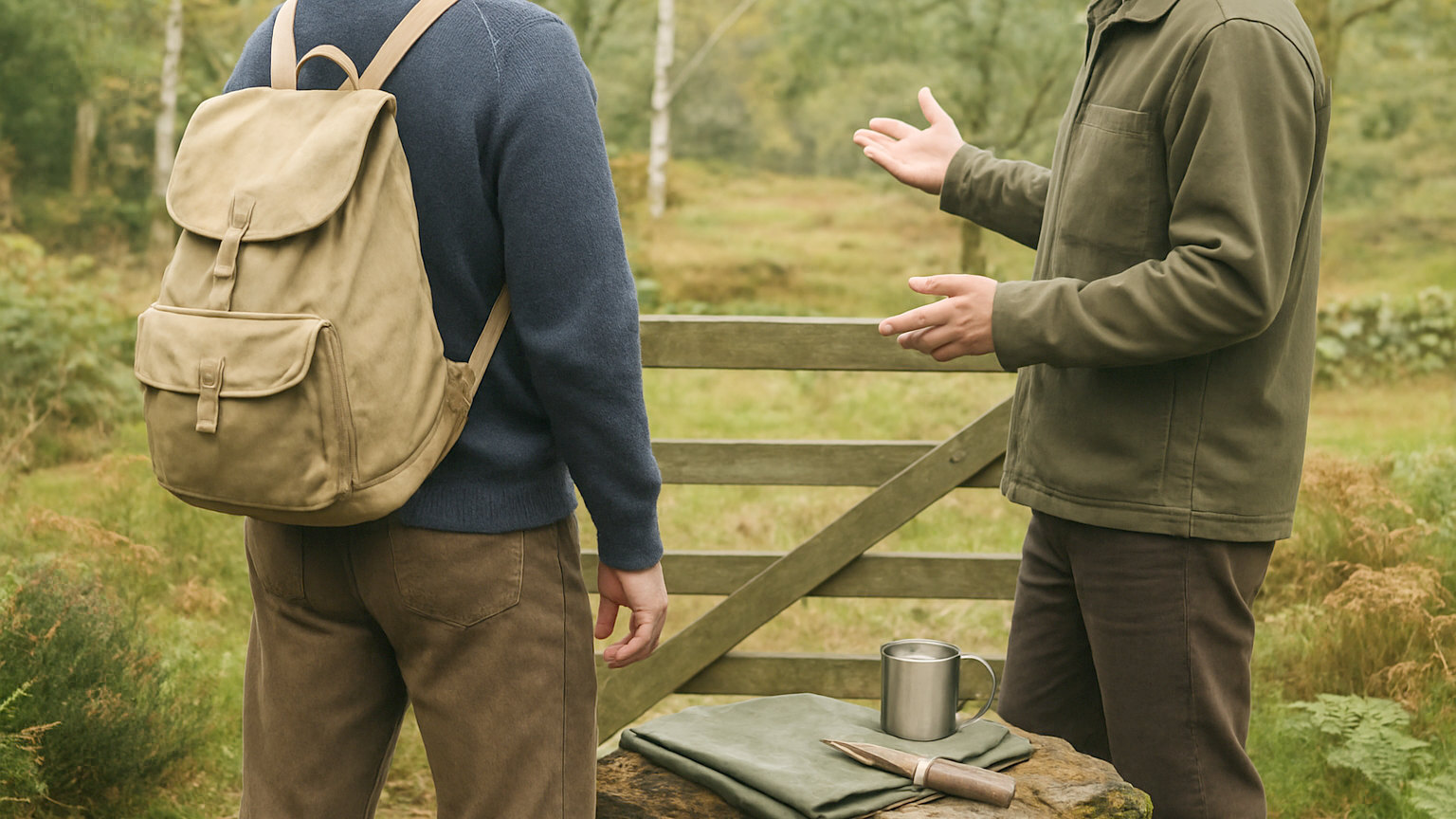
By asking, specifically and politely. Landowners are frequently receptive to a clear request explaining exactly what you want to do, how many people, for how long, what you would cut or burn, and how you would leave it. Vague requests are refused and specific ones frequently are not. Offering to help with practical work is a common and effective approach.
What about buying woodland?
Small woodlands are available and are less expensive than people assume, and they come with responsibilities. Ownership brings management obligations, potential felling licence requirements, public liability considerations and planning restrictions on structures and overnight use. It is a genuine option and worth researching properly rather than treating as a straightforward purchase.
What should you do in the meantime?
Practise everything that does not need land. Sharpening, carving, knots, cordage, tool maintenance and tree identification can all be done at home or on ordinary walks. Fire in a raised bowl in a garden is legitimate. The skills that require woodland are a smaller proportion of bushcraft than the equipment marketing suggests.
What about carrying tools there?
Remember the knife law, which applies on the journey as much as at the site. A fixed blade or a locking knife needs a good reason for being in a public place, and travelling directly to and from land where you have permission, with the knife packed away rather than on a belt and the rest of your equipment with you, is the situation that reason describes. Carrying it around town afterwards is not.
Assume you need permission, ask specifically, use permissive sites and courses, practise the rest at home, and check the current position for anywhere particular.