
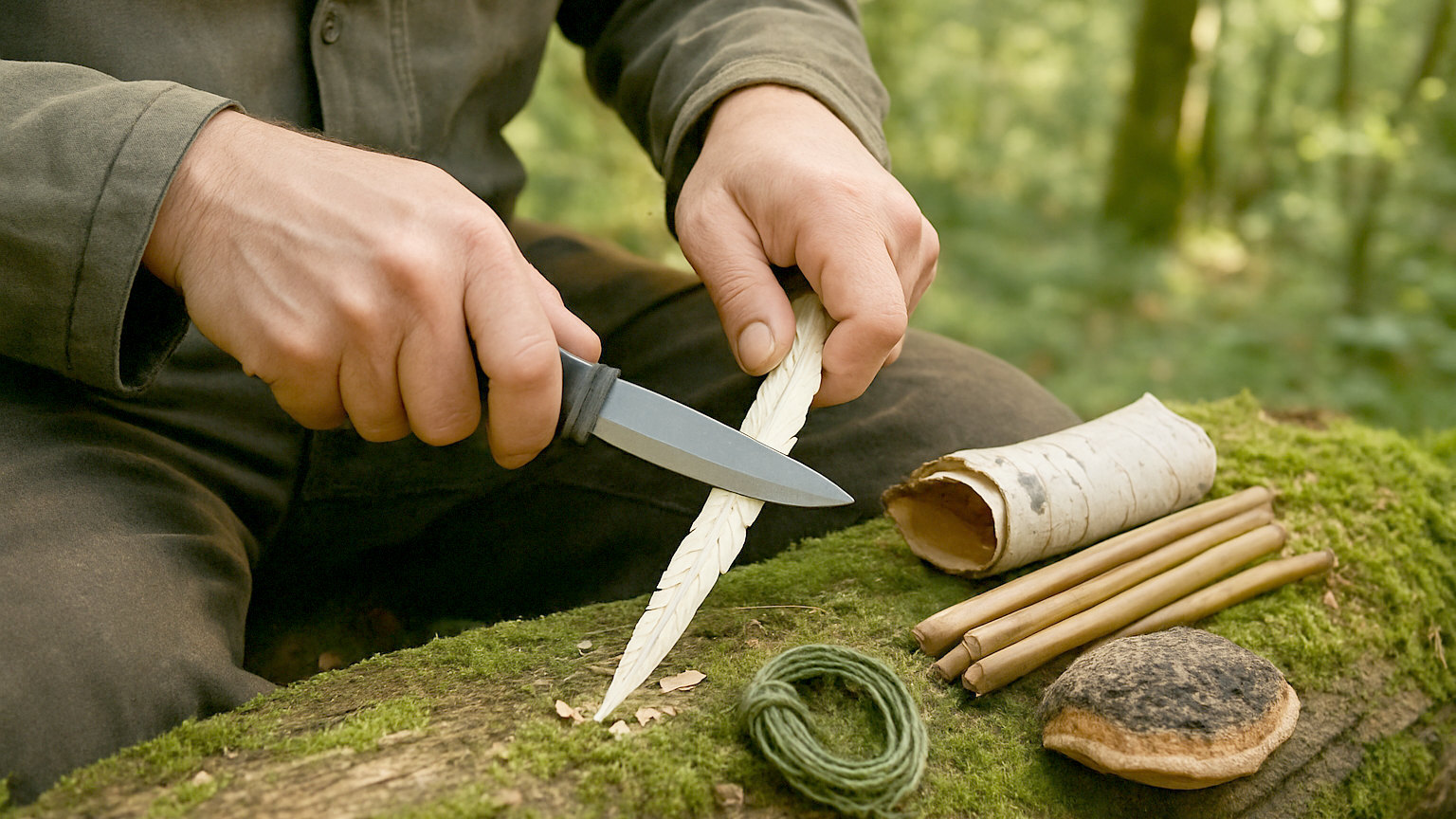
Bushcraft is frequently confused with survival, and the distinction matters for how you approach it. One is a craft practised for its own sake, the other is a response to an emergency you did not choose.
What is the difference?
Survival is what you do when something has gone wrong, with whatever you happen to have, aiming to get out alive. Bushcraft is the deliberate practice of working with natural materials, using knowledge of trees, plants and technique, generally with good tools and plenty of time. The skills overlap considerably and the mindset is entirely different.
What does it actually involve?
Tool use and maintenance, principally knife, axe and saw. Fire lighting and management. Shelter construction. Working wood by carving and splitting. Making cordage. Identifying trees and plants and knowing their properties. Camp craft, meaning setting up somewhere to live comfortably outdoors. And an understanding of the landscape you are working in.
- Tool use and maintenance, safely and competently
- Fire, shelter and camp craft
- Working wood by carving, splitting and shaping
- Cordage, containers and simple useful objects
- Tree and plant knowledge
- Doing all of it without damaging the place
Where should you start?
With a knife, safely used, and with fire. Those two underpin most of the rest, and both reward practice more than equipment. Learn to sharpen properly before learning to carve, since a blunt knife teaches bad technique and is more dangerous. Learn to light a fire reliably in poor conditions before attempting anything elaborate.
What do you need to buy?
Very little. A fixed blade knife of around ten centimetres, a means of sharpening it, a folding saw and a ferrocerium rod cover the great majority of bushcraft activity. Add a tarp and some cord for camping. Axes come later, and the equipment beyond that is preference rather than capability.
Where can you practise?
This is the real constraint in Britain, and it needs sorting out first. There is no general right to light fires, cut wood or camp in England and Wales, so you need land with permission. A garden covers a surprising amount, particularly carving and fire in a raised bowl. Beyond that, courses, woodland groups, permissive sites and asking landowners directly are the routes people use.
How do you learn?
Practise at home, then take instruction. A great deal can be learned from books and video, and tool technique in particular benefits enormously from someone watching you and correcting it. A weekend course with a reputable instructor teaches more about axe and knife use than a year of solo attempts, and it prevents habits that are difficult to unlearn.
What is the common mistake?
Accumulating equipment instead of skills. It is far more satisfying to research knives than to spend ten hours carving badly, and the second is what produces competence. The people who are genuinely good at this own modest tools and have used them a great deal. Buy little, practise a lot, and add equipment when a specific limitation appears.
Is it useful?
Some of it, and that is not really the point. The genuinely transferable skills are fire lighting, shelter, tool use and confidence outdoors. Much of the rest is craft, done because it is absorbing and satisfying, and there is nothing wrong with that. Be honest about which parts are preparation and which are pleasure.
What about the outdoor part?
It is easy to end up with a garage of tools and very little time outside, which is the wrong way round. The skills develop with exposure to weather, terrain and darkness rather than with equipment, so a habit of getting out regularly in indifferent conditions does more than any single course. Start with day walks and progress to nights out.
Is it suitable for children?
Very much, with supervision and staged tool introduction. Children take to fire, carving and camp craft readily, and scouting and forest school programmes have been doing exactly this for a long time. Start with fire safety and a saw before a knife, give them real tools rather than toys, and teach the safety rules as part of the activity rather than as a preamble.
Start with a knife and fire, buy little, sort out somewhere legal to practise, and take instruction on tool use before building bad habits.


