Bushcraft covers a wide range and only part of it transfers to a genuine emergency. Being honest about which is which makes both the craft and the preparation better.
What genuinely transfers?
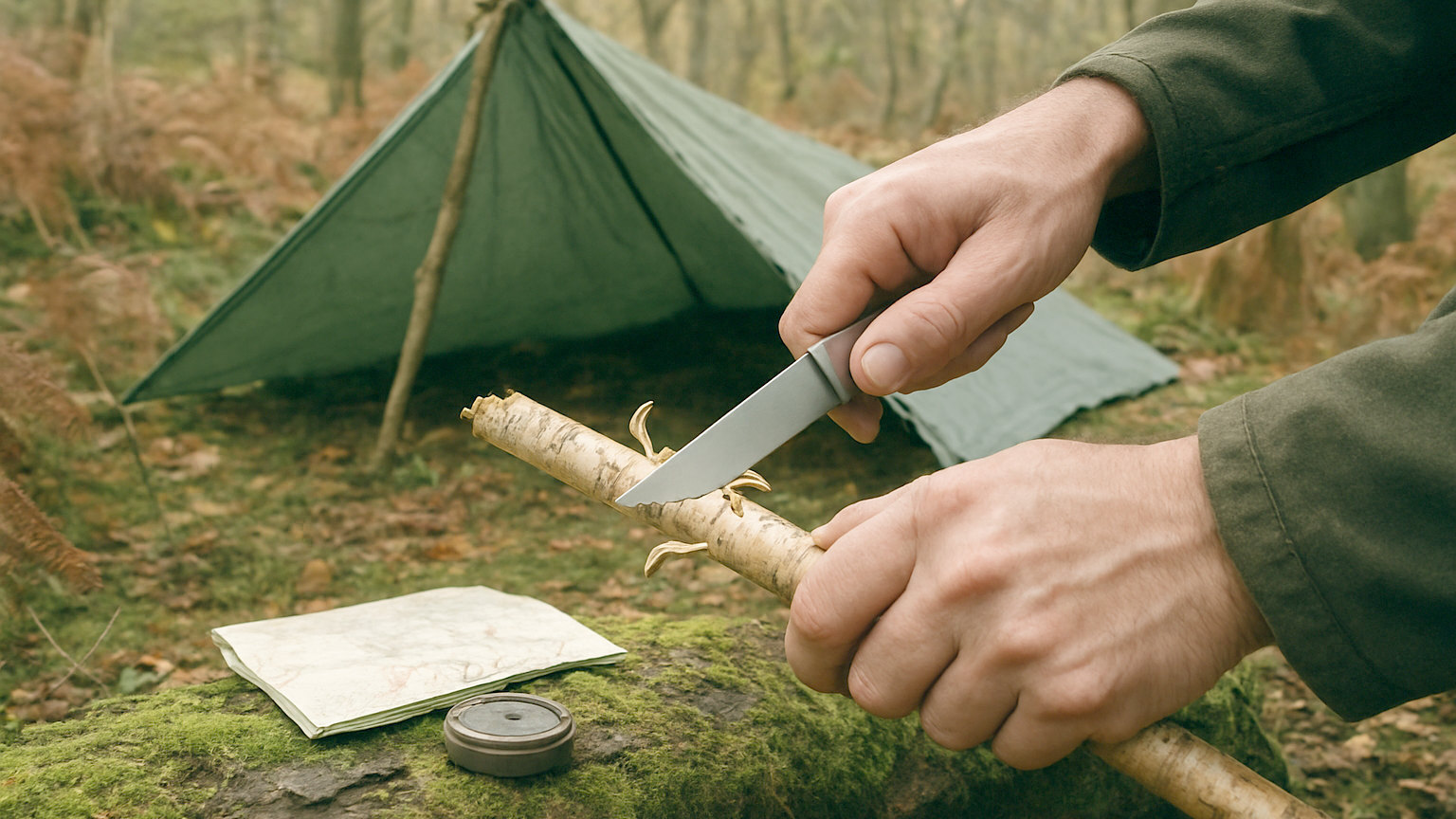
Fire lighting in poor conditions, which is the single most valuable skill and directly applicable. Shelter, particularly rigging a tarp quickly and improvising insulation. Navigation with map and compass. Tool competence, meaning being able to use a knife and saw safely and effectively. And the general confidence that comes from having been cold, wet and uncomfortable and managed.
What is craft rather than preparation?
Friction fire lighting, which is difficult, unreliable and takes far longer than a lighter. Natural cordage, which takes hours to produce what a few grams of line provides. Elaborate shelter construction, which takes a day when a tarp takes five minutes. Primitive trapping, which is heavily restricted by law and produces very little. All of it is interesting and none of it is what you would use.
- Transfers directly: fire in bad conditions, tarp shelter, navigation
- Transfers directly: safe tool use and first aid
- Craft: friction fire, natural cordage, primitive shelters
- Craft: carving, containers, most traditional techniques
- The mindset transfers regardless of which skills you learn
- Being honest about the distinction improves both
Why is friction fire so overrated?
Because it is difficult and the alternative weighs nothing. A skilled practitioner in good conditions with prepared materials can produce an ember reliably, and that describes almost nobody in wet British woodland after a bad day. A lighter and a ferrocerium rod together weigh a few grams and work when you are cold, wet and shaking. Learn friction fire because it is fascinating, not because you might need it.
What about the mindset?
It is arguably the most transferable thing of all. People who camp regularly in poor weather, who have been uncomfortable and dealt with it, and who have solved practical problems outdoors are considerably calmer when something goes wrong. That composure is worth more than most techniques and it is acquired by doing rather than reading.
What should you prioritise?
If preparedness is the aim: fire in bad conditions, rigging a tarp, navigation, first aid, and knowing how to stay warm. Those five cover almost every realistic outdoor emergency in Britain. If enjoyment is the aim, do whatever interests you, since that is a perfectly good reason and produces better practice than obligation does.
What is missing from most bushcraft?
First aid, which is the skill most likely to matter and the one least represented. Also realistic navigation practice in poor visibility, and the unglamorous business of knowing when to turn back. A weekend first aid course probably does more for outdoor safety than any amount of shelter building.
Does any of this apply at home?
Some of it. Fire safety knowledge, tool competence, first aid and the general habit of thinking through what could go wrong all apply domestically. The household preparedness that actually matters in Britain is a torch, stored water, a plan and a radio, and no amount of woodcraft substitutes for those.
What is the honest summary?
Bushcraft is an absorbing craft with a modest overlap with emergency capability. Learn it because you enjoy being outdoors and working with your hands, take the transferable parts seriously, and do not mistake a well made spoon for preparedness. Both are worth having and they are not the same thing.
What do rescue teams actually see?
Not people who needed to make cordage. Callouts involve navigation failures, benightment, injury, exhaustion, inadequate clothing and people caught out by weather. The skills that would have prevented most of them are map reading, checking the forecast, carrying warm layers and a torch, leaving word of a route, and being willing to turn back. That list is worth weighing against how bushcraft practice is usually spent.
Take fire, shelter, navigation, tool use and first aid seriously, enjoy the rest as craft, and do not confuse the two.