
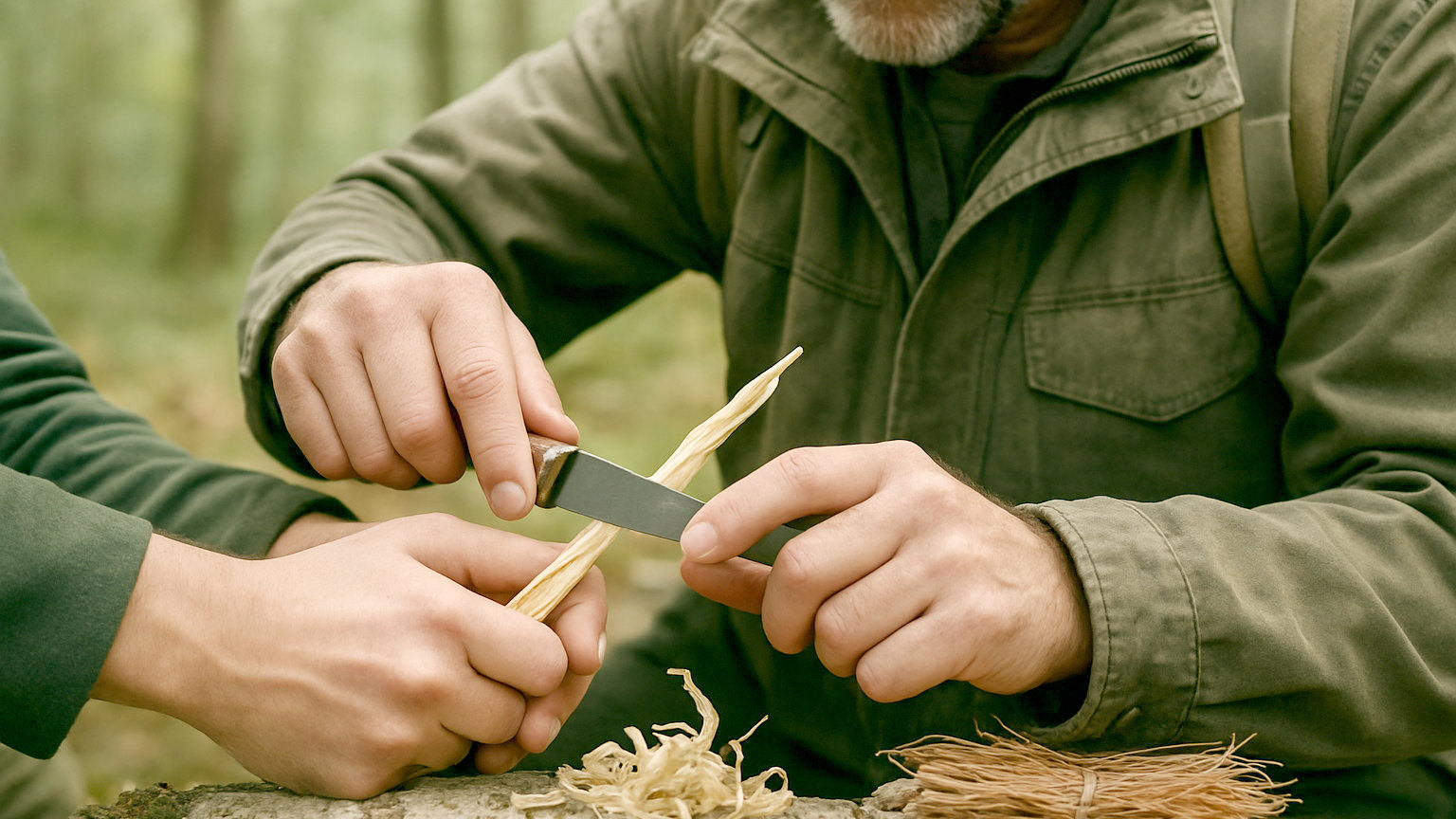
Bushcraft is learned by doing the same things repeatedly rather than by accumulating techniques. The people who are genuinely competent have a small repertoire practised to a high standard.
What should you learn first?
Knife safety and sharpening, then fire. Those three underpin everything else, they can be practised almost anywhere, and they reward repetition more than any equipment. Someone who can sharpen properly, use a knife safely and light a fire reliably in bad conditions has the foundation for everything that follows.
What is worth being taught?
Anything sharp and anything that could go badly wrong. Axe technique above all, since the errors are in body position and are almost impossible to self correct. Knife technique, for the same reason. Tree felling and anything involving height, which most people should not be doing anyway. Everything else can be learned from books and practice.
- Learn knife safety, sharpening and fire first
- Get taught axe and knife technique in person
- Practise the same skills repeatedly rather than collecting new ones
- Practise in bad weather, which is when it matters
- Join a group or find people who know more than you
- Be honest about what you can actually do unaided
How do you choose a course?
By the instructor rather than the marketing. Look for someone with a genuine teaching background, appropriate qualifications and insurance, small group sizes and a clear syllabus. Ask what the ratio is and what you will actually do. Avoid anything promising to make you self sufficient in a weekend, and be wary of courses that are mostly demonstration rather than practice.
What can you practise at home?
Considerably more than people expect. Sharpening. Carving, which needs only a knife, wood and a chair. Knots, practised while doing something else. Cordage from garden nettles. Tree identification on ordinary walks. Fire lighting in a garden bowl. The skills that genuinely need woodland are a minority.
What is deliberate practice here?
Doing a specific thing repeatedly, with attention to what went wrong, rather than doing it once and moving on. Carving twenty spoons teaches more than carving one spoon and one bowl and one spatula. Lighting fifty fires in varied conditions teaches more than reading about fifty methods. Depth is what produces reliability.
Why practise in bad weather?
Because that is when it matters and when everything is different. Lighting a fire in dry summer woodland proves very little. Doing it in February drizzle with cold hands is the actual skill, and people who have only practised in good conditions consistently discover this at the wrong moment. Deliberately going out when the weather is poor is the fastest way to improve.
Who should you learn from?
People who do it regularly rather than people who talk about it. Local woodland groups, conservation volunteers, scout and guide leaders, green woodworking groups and bushcraft clubs all contain people with real experience who are generally glad to share it. Volunteering with a woodland trust or conservation group teaches a great deal and provides access at the same time.
What should you avoid?
Collecting techniques you have read about but never done, buying equipment instead of practising, and the tendency to treat this as preparation for a scenario that will not happen. Be clear about whether you are learning a craft you enjoy or building a capability you need, since both are fine and they lead to different priorities.
How do you know you are improving?
By whether you can do it unaided, in poor conditions, without reference to anything. Watching a demonstration and understanding it is not the same as being able to do it, and the gap between the two is where most people overestimate themselves. Set concrete tests: light a fire in rain with one match, pitch a tarp in wind in three minutes, sharpen to cutting paper.
Master sharpening, knife safety and fire first, get taught the dangerous tools in person, practise the same things repeatedly and in bad weather.


