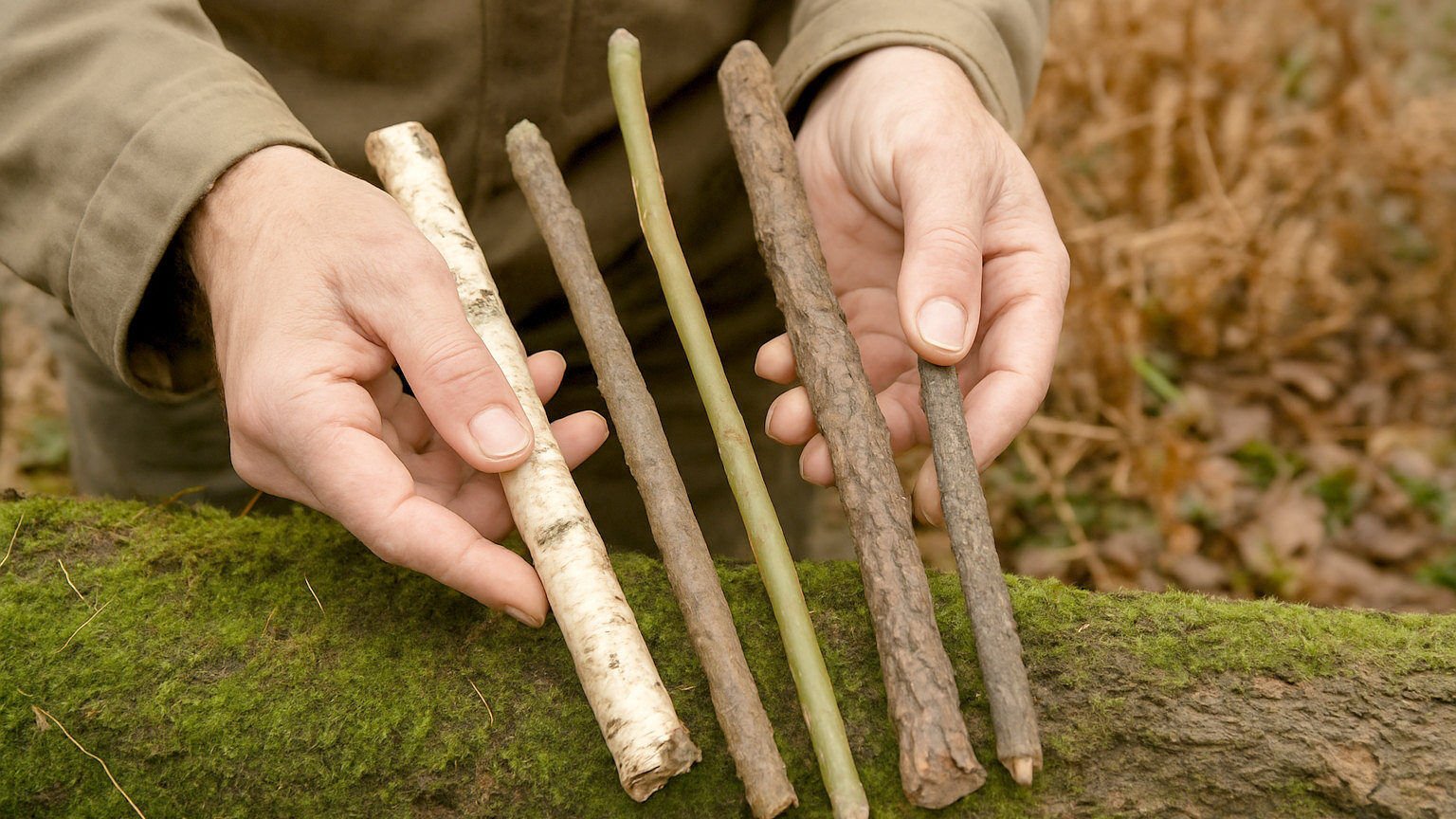
Tree knowledge is the foundation of bushcraft because almost every material comes from one. Ten species learned properly cover the great majority of British woodland use.
Which trees matter most?
Birch, for bark that lights when wet and for sap. Willow, for flexible withies and for weaving. Hazel, for straight poles from coppice regrowth. Ash, which is among the best firewood and traditionally used for tool handles. Pine, for resinous wood and fatwood. Lime, for bast fibre. Oak, for tannin and durable timber. Between them these supply most needs.
What does birch give you?
The single most useful bark in British woodland. The papery outer bark contains oils that light readily even when damp, making it outstanding tinder, and it peels from fallen and dead trees without harming anything living. Birch also produces sap that can be tapped in early spring, and the wood burns well though it does not last long.
- Birch: bark tinder that lights when damp, plus sap
- Willow: flexible withies, weaving, fast growing
- Hazel: straight poles from coppice regrowth
- Ash: excellent firewood and tool handles
- Pine: resin, fatwood and fast hot burning
- Lime: inner bark for the best natural cordage
How do you tell them apart in winter?
By bark, buds, twigs and form, which is a more useful skill than summer leaf identification because it works year round. Ash has distinctive black buds in opposite pairs. Beech buds are long, pointed and coppery. Birch bark is unmistakable. Alder has small cones. Learning winter identification for a handful of species is genuinely valuable and rewards a few walks with a guide.
Which woods burn best?
Dense hardwoods, well seasoned. Ash is the traditional favourite, burning well even relatively green. Oak, beech, hornbeam and hawthorn all burn hot and long once seasoned. Birch burns readily and fast. Softwoods such as pine and spruce light easily, burn hot and quickly, and spit, which makes them good for starting and poor for sustaining.
What should you avoid burning?
Anything painted, treated, painted or salvaged from unknown sources, since preservatives and coatings produce genuinely harmful fumes. Also avoid burning material from rhododendron and other species with irritant smoke. Green wood of any species smokes heavily and produces little heat, which is a practical rather than a safety point.
What is fatwood?
Resin saturated pine, usually found in the stump or heartwood of a dead conifer where resin has concentrated. It is heavy, smells strongly of turpentine and lights readily even when wet, shaving into excellent tinder. Finding a good source is a genuine bushcraft skill, and a small piece lasts a long time since only shavings are needed.
What about coppice?
Coppicing is the traditional practice of cutting broadleaved trees to the base and harvesting the regrowth on a cycle, producing straight uniform poles. Hazel coppice in particular yields excellent material for shelter frames, hurdles and craft. Recognising worked coppice tells you a great deal about the history of a wood, and coppice is managed land where cutting requires permission.
How do you learn?
Slowly, in one place, with a guide. Pick a local wood, take a field guide, and learn what is actually there rather than working through a book systematically. Ten species you can name confidently in any season are worth far more than fifty half remembered. Local wildlife trusts and woodland groups run identification walks, which accelerate it considerably.
What should you be careful of?
A small number of species warrant caution. Yew is toxic in all parts except the aril, and its dust and smoke should be avoided. Laburnum is toxic. Giant hogweed sap causes severe burns on exposure to sunlight and is present along many watercourses. Rhododendron produces irritant smoke. None of these are common problems and all are worth being able to recognise.
How does this connect to the rest?
Almost everything else depends on it. Which wood to burn, which to carve, which bark to take for tinder, which poles to use for a frame and which fibre makes cordage all follow from knowing what the tree is. Tree identification is the least glamorous part of bushcraft and it is the knowledge that makes the practical skills possible.
Learn birch, willow, hazel, ash, pine, lime and oak properly, practise winter identification, and study one local wood rather than a whole book.