The flames affect a small number of people close to the fire. The smoke affects a great many people a long way from it, and it is where nearly all the health harm from wildfire occurs.
What is in wildfire smoke?
Fine particulate matter, principally, along with carbon monoxide, nitrogen oxides and a range of irritant compounds. The particles of most concern are very small, penetrating deep into the lungs and entering the bloodstream. Peat fires in particular produce dense smoke that can persist for weeks and travel considerable distances.
Who is most affected?
People with asthma, chronic obstructive pulmonary disease and other respiratory conditions, who may experience severe exacerbations. People with heart disease, since fine particles are associated with cardiovascular events. Older people, young children and pregnant women. Anyone working outdoors in the affected area. Healthy adults experience irritation rather than serious harm from short exposures.
- Fine particles travel far beyond the fire itself
- Asthma and COPD sufferers are most at risk
- Close windows and doors and use recirculation in vehicles
- Stay indoors and reduce exertion during heavy smoke
- Keep reliever inhalers to hand and use them as prescribed
- Seek medical help for breathing difficulty that does not settle
What are the symptoms?
Sore eyes and throat, coughing, wheezing, chest tightness, breathlessness and headache. In people with existing lung disease it can trigger a significant attack requiring treatment. Symptoms usually improve on moving away from the smoke or getting indoors, and anything that does not settle, or any severe breathlessness, warrants medical attention.
How do you reduce exposure?
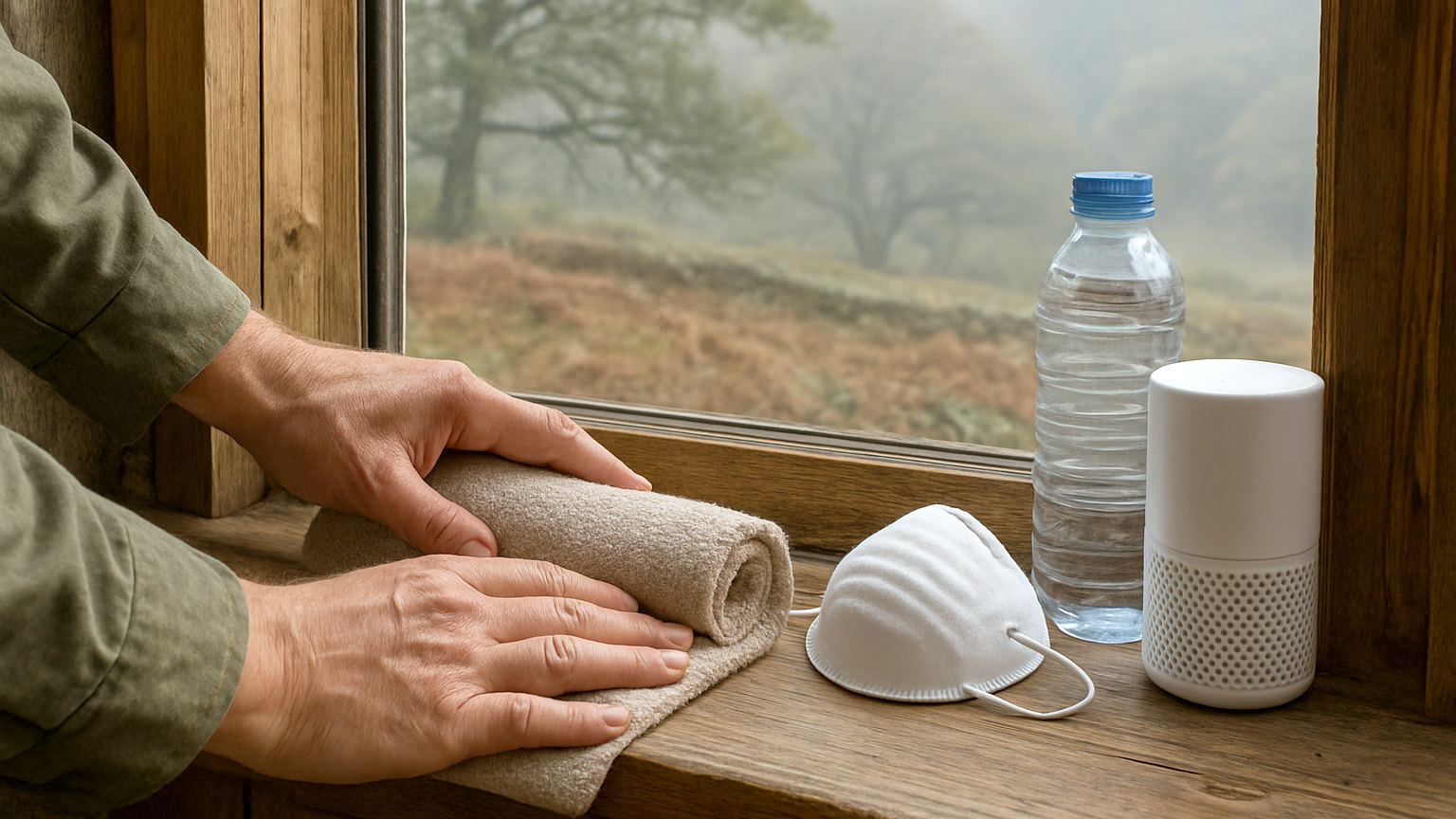
Stay indoors with windows and doors closed, which reduces indoor particle levels substantially. Avoid exertion outdoors, since exercise dramatically increases the volume of air breathed. In a vehicle, close the windows and set ventilation to recirculate. An air purifier with a suitable filter helps in one room, and a well sealed room is more effective than a large open plan space.
Do masks help?
Properly fitted respirators do, and ordinary cloth or surgical masks do very little for fine particles. A fitted FFP2 or FFP3 respirator filters the relevant particle sizes, and the fit matters as much as the rating since leakage around the edges bypasses the filter. They also make breathing harder, which is a consideration for anyone with a lung condition.
How do you know how bad it is?
Air quality information is published by government monitoring services and local authorities, and alerts are issued during significant episodes. During a large wildfire, local authorities and fire services issue advice for affected areas. If you can smell or see smoke, exposure is occurring regardless of what a monitoring station some distance away reports.
What about children and schools?
Keep them indoors and cancel outdoor activity during heavy smoke. Children breathe more air relative to body size and are more affected, and playground activity increases exposure considerably. Schools in affected areas will usually follow local authority advice, and parents of asthmatic children should make sure the school has an up to date plan and medication.
How long does it last?
As long as the fire, and for peat fires that can mean weeks. Smoke drifts with the wind, so conditions vary hour to hour and a shift in wind direction can clear an area or bring smoke somewhere previously unaffected. Health effects generally resolve once exposure ends, and prolonged episodes are associated with more significant outcomes.
What about carbon monoxide?
It is present in smoke and is mainly a concern for firefighters and anyone very close to a burn rather than for people downwind. Headache, dizziness, nausea and confusion in someone who has been near a fire should be treated seriously and assessed medically, since the symptoms overlap with ordinary smoke irritation. Anyone who has been in heavy smoke and feels confused needs help rather than fresh air alone.
Stay indoors with windows shut, avoid exertion, use recirculation in the car, keep inhalers close, and get help for breathing that does not settle.