A small grass fire looks manageable and stops being manageable extremely quickly. The correct response is to report it accurately and move away, and both parts matter.
What should you do first?
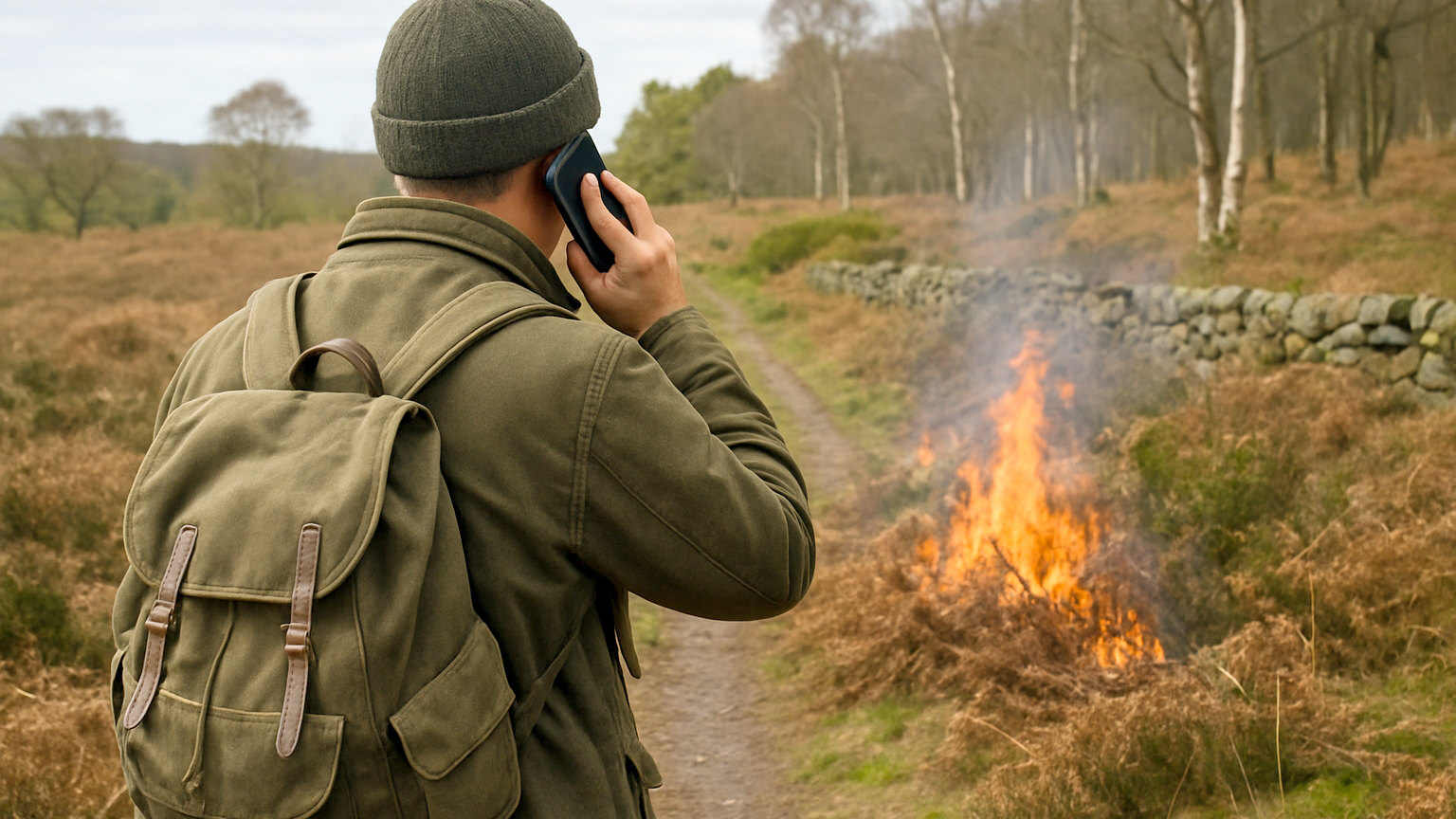
Call 999 and ask for the fire service. Do it immediately rather than watching to see whether it grows, because vegetation fires accelerate rapidly and minutes matter for the response. Give your location as precisely as you can, describe what is burning and how big it is, and say which way the wind is pushing it.
How do you give a location on open land?
With a grid reference or a what3words address, both of which UK emergency services use. Install a grid reference app such as OS Locate, which works from GPS without a signal, and what3words before you need them. Failing that, name the nearest road, path, landmark or car park and describe how far and in which direction you are from it.
- Call 999 immediately rather than waiting to see
- Give a grid reference or what3words location
- Describe what is burning and the wind direction
- Move away from the fire, downhill and upwind if possible
- Do not attempt to tackle anything beyond a very small fire
- Warn others in the area as you leave
Should you try to put it out?
Almost never. A fire smaller than a dustbin lid, in still conditions, on ground you can stand on safely, might be beaten out with a coat or smothered, and that is the limit. Beyond that, vegetation fires spread faster than people can run, particularly uphill and with wind behind them, and members of the public attempting to fight them have been killed and seriously injured.
Why do they spread so fast?
Because cured grass and heather carry fire at speeds that surprise people, and because fire accelerates dramatically uphill as flames preheat the fuel above them. Wind multiplies both effects. A fire that looks like a manageable patch can outrun a person within a minute or two if the wind gets behind it on a slope.
Which way should you move?
Downhill and across the wind rather than directly away from the fire. Fire moves fastest uphill and downwind, so retreating uphill ahead of it is the classic fatal mistake. Move at right angles to the direction of spread toward a road, a track, a large area of bare ground, water, or ground that has already burned.
What should you tell the operator?
Location, what is burning, size, wind direction and access. Fire crews need to know how to reach it, so mention gates, tracks, water sources and whether a vehicle can get close. Say whether people, property or livestock are threatened. Stay on the line if asked and stay contactable, since crews frequently ring back to confirm the location.
What about warning others?
Do it as you move rather than as a separate task. Tell walkers, campers and anyone in property nearby, particularly if they are downwind or above the fire. Do not go toward the fire to warn people. If there is a campsite, farm or house in the likely path, mention it to the emergency operator.
What if it is already large?
Leave the area entirely and report from a safe distance. Large vegetation fires produce dense smoke that reduces visibility and causes breathing difficulty, and they can change direction with the wind. Do not stop to photograph it, do not drive toward it for a better view, and follow any instructions from fire crews or police.
What if you started it accidentally?
Call 999 immediately and say so. The instinct to try to put it out quietly, or to leave, makes everything worse, and an early call is the single most useful thing you can do. Fire services are concerned with getting to it rather than with apportioning blame at that moment. Stay safe, give an accurate location, and be honest about what happened so crews know what they are dealing with.
Call 999 with a grid reference immediately, move downhill and across the wind, warn people as you go, and do not try to fight it.