Disposable barbecues have become the emblem of British wildfire prevention campaigns for good reason. They combine sustained heat, casual use and disposal in places where fire spreads.
Why are they so risky?
Because the foil tray remains extremely hot for hours after the coals look grey and dead, and because people put them directly onto dry grass, heather or peat. Charcoal retains enough heat to ignite tinder dry vegetation long after cooking has finished, and disposal into a bin, a hedge or the ground while still warm has started significant fires.
What have they caused?
Major moorland and grassland fires, several of which required days or weeks of firefighting. Fire services and land managers have attributed a number of large upland fires to them, and they are a recurring cause of incidents on commons, beaches, dunes and country parks during dry spells. They also start bin fires and damage decking, tables and vehicle boots.
- The tray stays dangerously hot for hours after use
- Banned by many retailers and prohibited on much public land
- Never place one on grass, heather, peat, dunes or decking
- Never dispose of one in a bin while warm
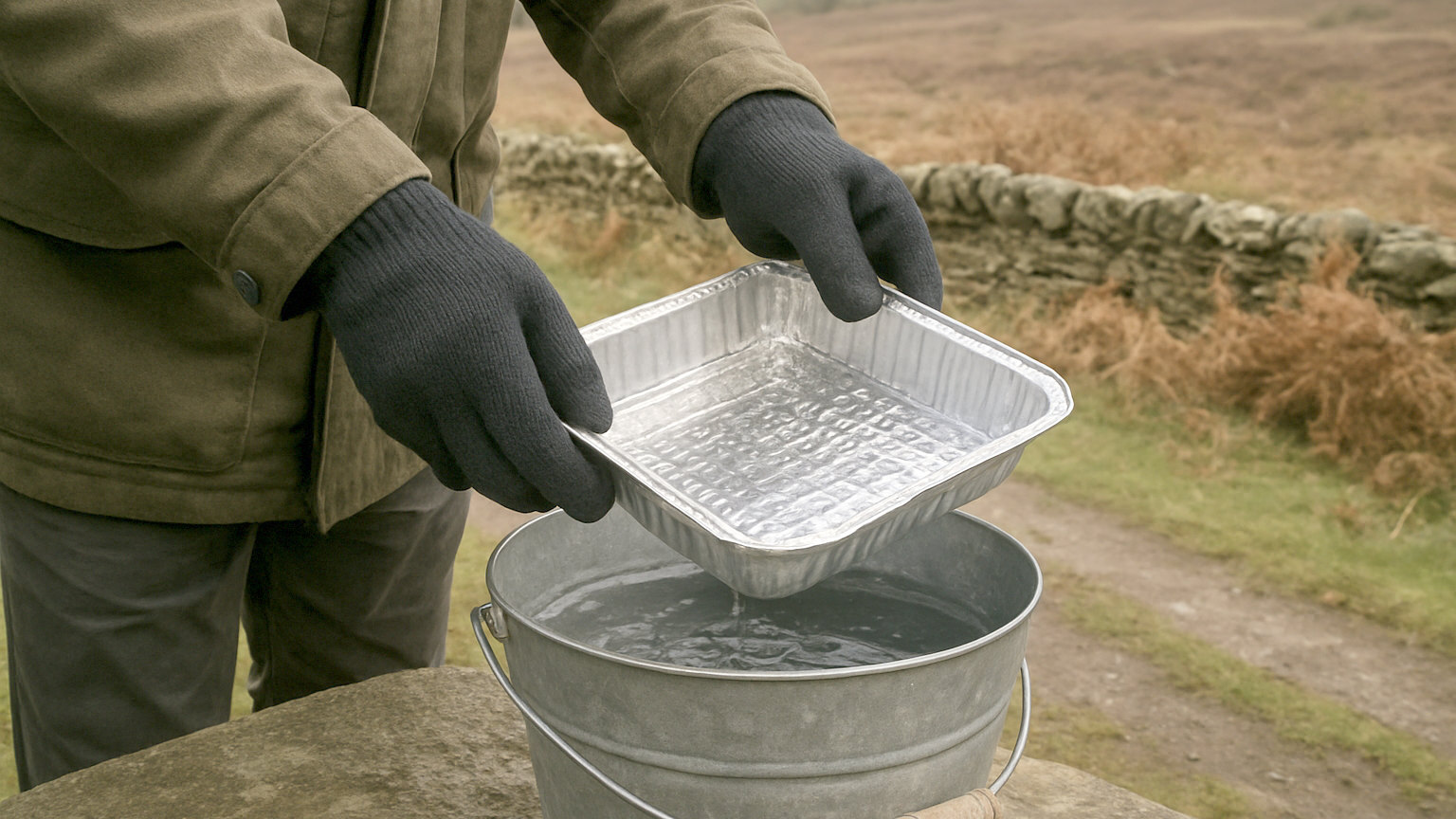
- Drown thoroughly with water until there is no heat or steam
- Consider a small gas stove instead
Where are they banned?
In a growing number of places. Several major retailers have stopped selling them entirely or restrict sales during high risk periods. National parks, National Trust properties, many councils, beaches and country parks prohibit them under byelaws, and fire severity closures suspend access to open land altogether. Check locally, since the position varies and has been changing.
Are they ever acceptable?
In a private garden on a hard non combustible surface with water to hand, they are usable with care. On open land, moorland, heath, dunes, beaches with dry vegetation behind them, and in woodland, they should not be used at all. The distinction is whether an escape would have anywhere to go, and on open ground it always does.
How do you extinguish one properly?
Drown it in water until there is no steam, no hiss and no warmth anywhere in the tray, including the corners. That takes considerably more water than people expect. Do not bury it, which insulates the heat and can ignite peat or roots. Do not tip the coals out. Take it home if there is no proper disposal point, once genuinely cold.
Why is burying it worse?
Because soil insulates rather than extinguishes, and because peat and root systems carry fire underground where it is invisible. Buried hot coals have started fires that surfaced hours or days later, sometimes metres away. This is a particular problem on moorland, where peat can smoulder for weeks and reignite the surface repeatedly.
What are the alternatives?
A small gas stove, which lights and extinguishes instantly, produces no embers, leaves no hot tray and is more controllable. A portable barbecue on legs used on hard standing. Or cold food, which is what most picnics consist of anyway. None of these carry the residual heat problem that makes disposables so troublesome.
What should you do if you see one in use?
A polite word is often effective, since most users have no idea of the risk and respond well to being told. If a fire has started or someone is using one somewhere clearly dangerous during a high risk period, call 999 or report it to the land manager. Do not attempt to confront anyone who reacts badly.
How long do they stay hot?
Several hours, and considerably longer than people assume from appearance. Charcoal that has gone grey and shows no glow can still be well above the ignition temperature of dry grass, and the foil tray conducts that heat straight into whatever it is resting on. The gap between finishing cooking and the thing being genuinely safe is measured in hours rather than minutes, which is why so many are disposed of while still dangerous.
Do not take one onto open land, never place one on vegetation, drown it in water rather than burying it, and use a gas stove instead.