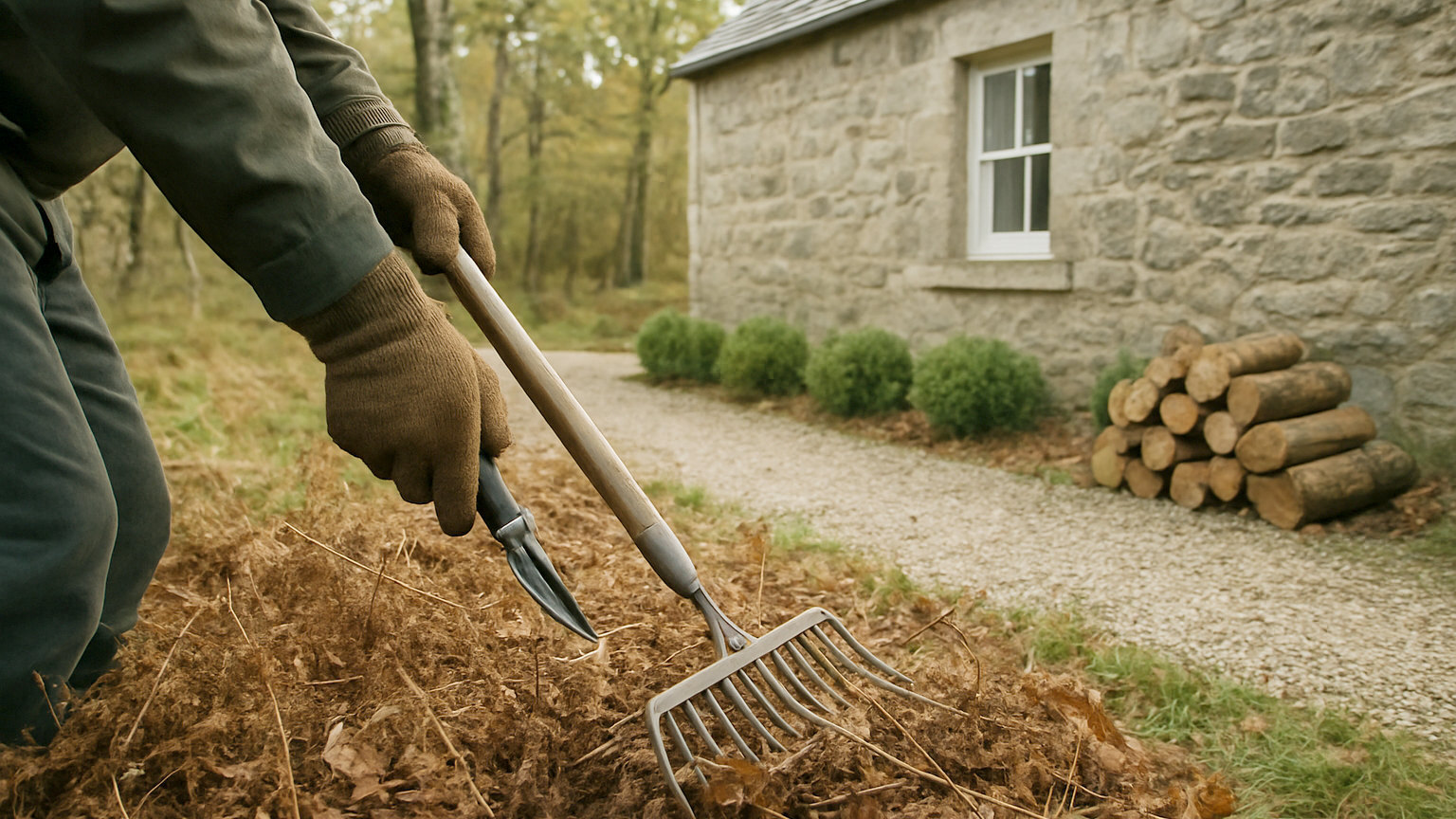
Defensible space is the managed area around a building where the fuel available to a fire is deliberately reduced. It protects the building and, equally importantly, gives fire crews somewhere safe to stand.
What does it actually mean?
Reducing and separating combustible material so that an approaching fire loses intensity, cannot make direct contact with the structure, and produces fewer embers close to it. It does not mean clearing everything to bare earth, and it does not require a garden to look industrial. It is about breaking continuity of fuel rather than eliminating vegetation.
What are the zones?
Conventionally three, working outward. The immediate zone within about five metres of the building, kept as free of combustible material as possible. An intermediate zone out to perhaps thirty metres where vegetation is thinned, spaced and kept low. An extended zone beyond that where the aim is to reduce fire intensity rather than eliminate fuel. Distances vary with slope, since fire runs faster uphill.
- The first five metres matter most and are cheapest to manage
- Remove combustible items from against the walls
- Keep grass short and break up continuous vegetation
- Space shrubs and trees rather than clearing everything
- Increase the distances on slopes, especially below the house
- Maintain access so fire appliances can reach the property
Why does the first five metres do most of the work?
Because that is where embers land and where direct flame contact happens. A building surrounded by short green grass, gravel and hard standing is dramatically less likely to ignite than one with shrubs against the walls, firewood stacked beside the door and a timber deck. This zone is also the cheapest and easiest to manage, requiring tidiness rather than landscaping.
What about slope?
It changes the numbers substantially. Fire accelerates uphill, so a property above a slope needs considerably more cleared distance on the downhill side than on the flat. A house sitting at the top of a gorse covered bank is in one of the worst positions there is, since the slope, the fuel and the prevailing wind all combine.
Does it mean removing all the trees?
No, and doing so is often counterproductive. Spaced broadleaved trees can shelter a building from radiant heat and catch embers, and mature trees with high crowns and clear ground beneath present limited risk. The problem is continuous dense vegetation, ladder fuels that carry fire from ground level into crowns, and conifers close to the building.
What about access?
It is part of the same job and frequently overlooked. Fire appliances need a route in and somewhere to turn, and overhanging branches, narrow gates and blocked tracks prevent that. Where a property is defended, it is defended by crews who have to reach it. Keeping a driveway clear and passable is a genuine contribution.
Are there rules in Britain?
No general legal requirement equivalent to those in parts of Australia and the United States, and this is a matter of good practice rather than regulation. Local fire and rescue services publish wildfire guidance and some will advise on individual properties. Check tree preservation orders and conservation area status before removing anything substantial.
What maintenance does it need?
Annual, before the spring risk period. Clear gutters and roof debris, cut grass close to the building, remove dead material, check that nothing combustible has accumulated against the walls over winter, and prune back growth touching the structure. It is an hour or two once a year rather than a project.
Does it help the neighbours?
Considerably, which is the argument for doing it collectively. A single well managed plot in a row of overgrown ones is far less effective than a whole edge of properties with reduced fuel, since fire spreads between buildings as readily as from open land. Raising it with neighbours, or through a residents association where one exists, turns individual effort into something that genuinely changes the outcome for a street.
Concentrate on the first five metres, break up continuous fuel, allow more distance below a slope, keep the access clear, and review it each spring.