The visible fire going out is not the end of a wildfire, particularly on peat. Burnt ground remains hazardous and unstable for a long period, and the environmental consequences continue for years.
Why do peat fires persist?
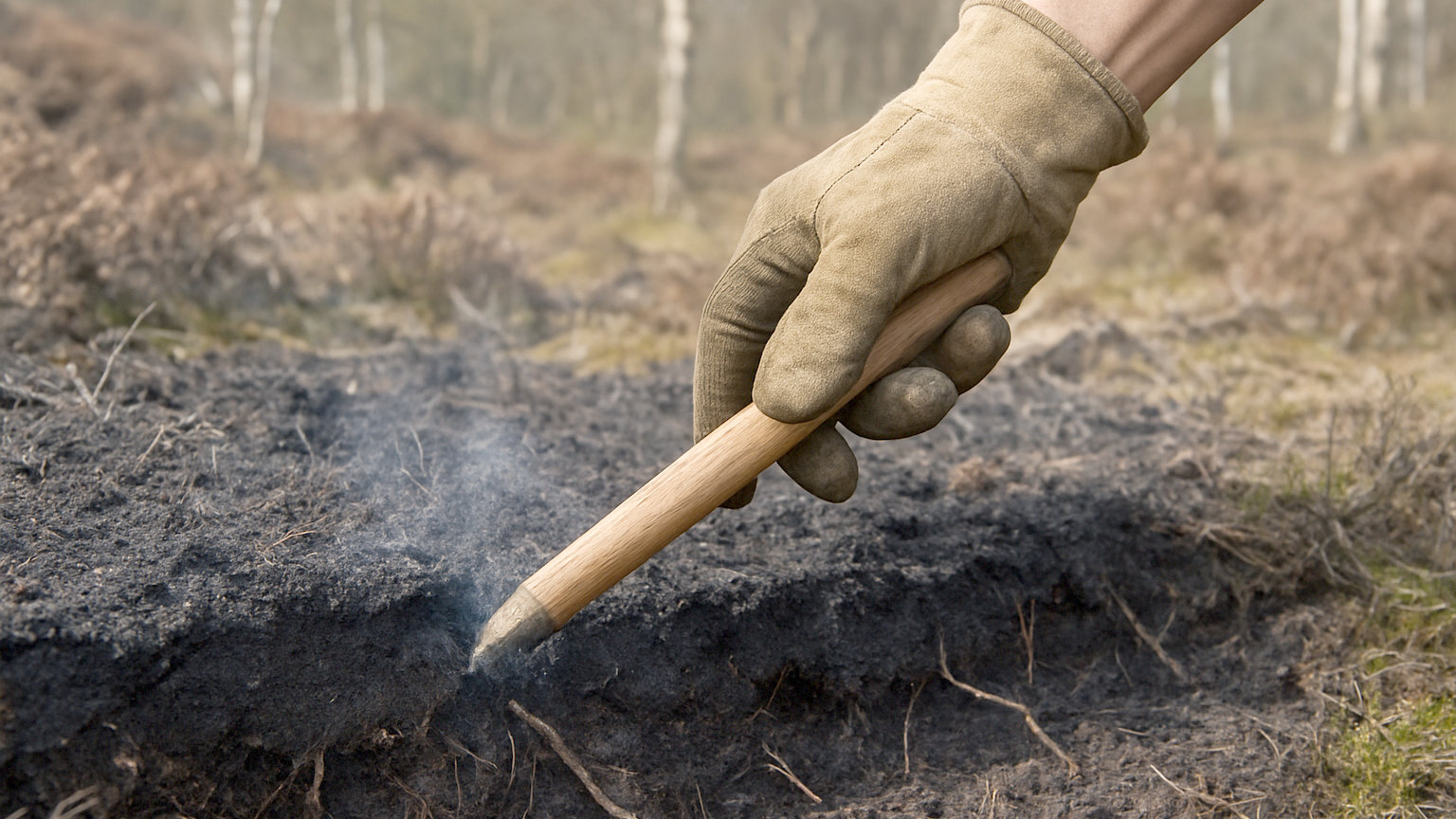
Because peat burns downward rather than across. Once fire enters dry peat it smoulders underground with little visible sign, consuming organic material for weeks or months and reigniting surface vegetation repeatedly. Extinguishing it requires rewetting large volumes of ground rather than suppressing flames, which is why moorland fires take so long to declare out.
What are the ground hazards?
Hidden voids, hot spots and unstable surfaces. Burnt out peat leaves cavities beneath an intact looking crust, and people and animals have fallen through into hot material. Root systems burn out leaving holes. Ash covered ground conceals uneven terrain. Burnt land should be treated as unsafe to walk on until it has been declared clear.
- Peat can smoulder underground for weeks or months
- Burnt ground may conceal hot voids and holes
- Reignition of surface vegetation is common
- Ash and runoff contaminate watercourses
- Erosion increases sharply on bare burnt slopes
- Keep off burnt land until it is declared safe
What happens to the water?
It carries ash and sediment. Rain falling on burnt ground washes ash, nutrients and sediment into streams and reservoirs, discolouring water supplies and affecting aquatic life. Water companies have had to treat significantly discoloured supplies after large moorland fires. Runoff also increases because burnt ground absorbs less, raising flood risk downstream.
What about erosion?
It accelerates markedly. Vegetation and the surface layer that held soil in place have gone, so heavy rain strips exposed peat and soil from slopes. On upland catchments this causes long term degradation, loss of carbon storage and continued sediment problems downstream. Restoration work after major fires focuses heavily on stabilising and revegetating bare ground.
How long does the landscape take to recover?
Depends entirely on what burned. Grassland recovers within a season. Heather takes years to reestablish. Peat, which accumulates at around a millimetre a year, may have lost centuries of material in days, and that is effectively irreversible on human timescales. Restoration projects on burnt moorland run for many years.
What about wildlife?
Significant losses, particularly where fires occur in the breeding season. Ground nesting birds, reptiles, amphibians and invertebrates are killed directly or lose habitat entirely. Spring fires coincide with nesting, which is one reason the spring fire peak is so damaging ecologically. Recovery depends on surrounding habitat providing a source for recolonisation.
What should property owners do?
Check for damage beyond the obvious and be alert to reignition. Inspect the roof, gutters, vents and lofts for embers that may have entered and be smouldering. Check outbuildings and stored materials. Do not assume a property that survived is undamaged, since ember entry can produce a fire hours later. Photograph everything for insurance.
What about returning to the area?
Wait for the authorities to confirm it is safe. Fire services and land managers monitor burnt ground for hot spots and reignition, sometimes for weeks, and access restrictions may remain in force well after the visible fire has ended. Walking on burnt moorland also damages fragile recovering ground and hinders restoration.
Who monitors burnt ground?
Fire and rescue services and land managers between them, sometimes for weeks after the visible fire has gone out. Thermal imaging is used to find subsurface hot spots in peat, and crews return repeatedly to damp down and check for reignition. Large moorland fires are frequently not formally declared out for a considerable period, which is why access restrictions persist long after the smoke has cleared.
What restoration work follows?
Stabilising bare ground and rewetting peat, principally. Restoration on burnt upland involves blocking drainage channels to raise the water table, covering exposed peat to prevent erosion, and replanting sphagnum and other vegetation. It is slow, expensive and runs for years, and it is why prevention receives so much emphasis from land managers and water companies.
Expect peat to smoulder for weeks, treat burnt ground as unsafe, check property for embers that entered, and stay off recovering land.