Unlike parts of the world where lightning starts a substantial share of fires, British wildfires are almost entirely a human problem. That is discouraging and also encouraging, since it means prevention works.
How many are started by people?
The overwhelming majority. Estimates from fire services and researchers consistently put human causation well above ninety percent, split between accidental ignition and deliberate fire setting. Natural ignition from lightning is rare in the British climate, since thunderstorms here usually arrive with rain.
What are the accidental causes?
Disposable barbecues, which are the most publicised and have caused significant moorland and grassland fires. Campfires left unextinguished or lit in unsuitable places. Discarded cigarettes. Sky lanterns. Sparks from machinery, vehicles and railway equipment. Controlled burns escaping. Bonfires and garden waste burning getting out of hand in dry conditions.
- Disposable barbecues, hot for hours after use
- Campfires left burning or lit on peat
- Discarded cigarettes and matches
- Sky lanterns, banned on much public land
- Escaped controlled burning and garden bonfires
- Deliberate ignition, a substantial share of incidents
Why are disposable barbecues so problematic?
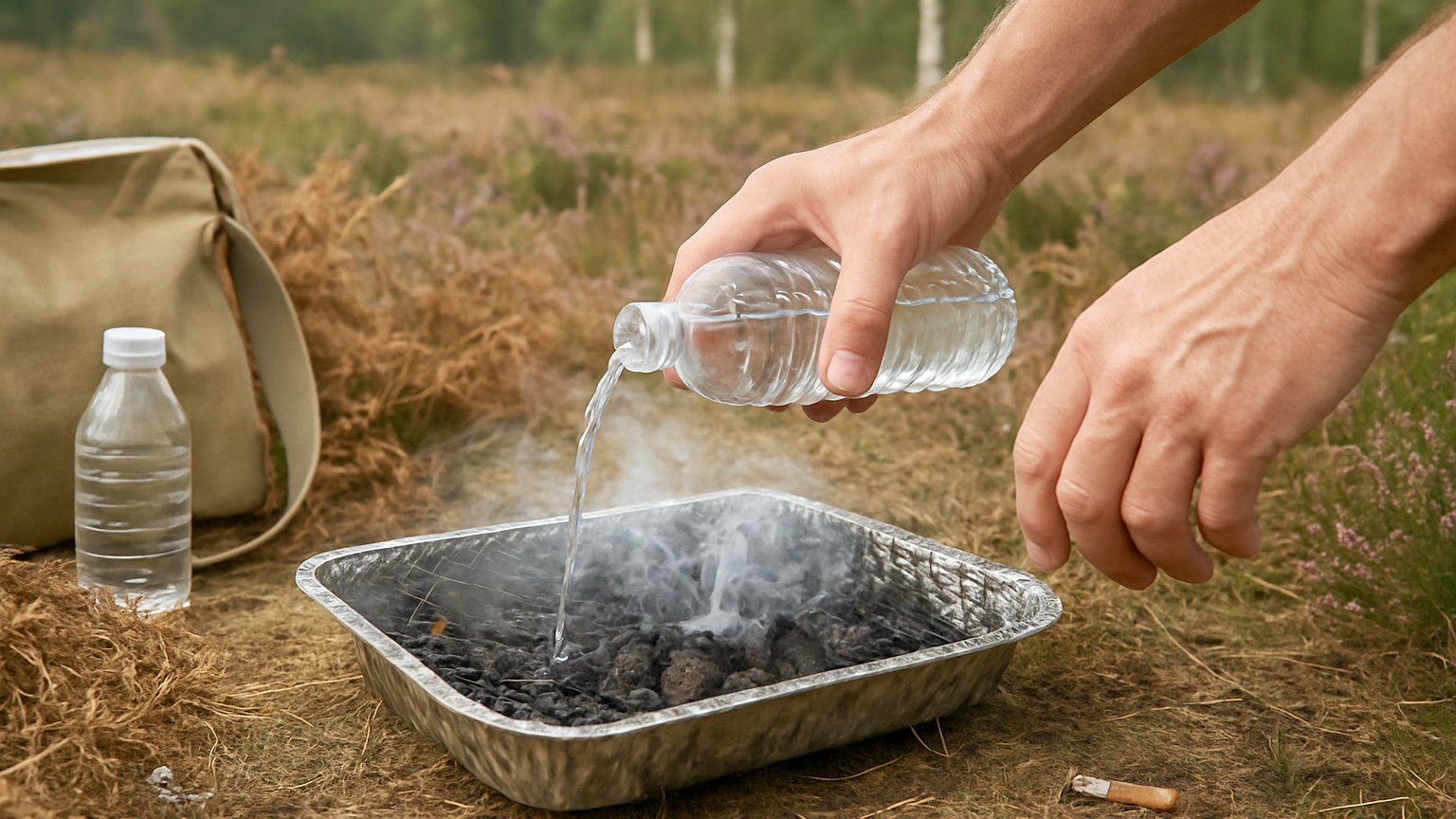
Because the tray stays extremely hot for hours after the coals appear dead, and because people put them down on dry vegetation and later dispose of them while still warm. Charcoal that looks grey and cold retains enough heat to ignite tinder dry grass. Several major British moorland fires have been attributed to them, and many retailers, national parks and councils have banned or restricted their sale and use.
What about deliberate fires?
A significant share, and fire services report substantial numbers of deliberately set grass and moorland fires, particularly around school holidays and in areas close to housing. It is arson, it endangers firefighters and the public, and it diverts resources from other emergencies. Fire services encourage reporting through Crimestoppers where people know something.
What about controlled burning?
It is a legitimate land management practice with a regulated season and conditions, used on moorland to manage heather. Escapes happen when conditions change or burns are conducted outside the permitted period or without adequate control. Regulation has tightened, particularly around burning on deep peat, and legitimate managed burning is a different matter from accidental ignition.
Do glass bottles start fires?
Almost never, despite the persistent claim. Focusing sunlight through a bottle to ignite vegetation requires very specific conditions and is vanishingly rare in practice. Litter remains a genuine problem for other reasons and it is worth being accurate about causation, since attention spent on bottles is attention not spent on barbecues and cigarettes.
Why does the cause matter?
Because it determines what prevention looks like. If fires were mostly natural, the response would be entirely about suppression and defensible space. Because they are mostly human, individual behaviour genuinely changes the number of fires, and the messages about barbecues, cigarettes and campfires are not merely gestural.
What can an individual do?
Not light fires on open land, not use disposable barbecues in the countryside, dispose of cigarettes properly, avoid sky lanterns, and report anything you see. Also observe access restrictions during high fire severity periods, which exist precisely because the ignition risk is people being present.
Does the weather matter more than the ignition?
Both matter and they operate differently. Weather determines whether an ignition becomes a fire, since the same discarded cigarette does nothing in damp conditions and starts a moorland fire in a dry spell with wind. Because we cannot control the weather and can control the ignitions, prevention effort concentrates on the human side even though conditions decide the outcome.
What about railways and power lines?
Both are recognised sources. Sparks from braking, from equipment faults and from track maintenance ignite lineside vegetation, which is why railway operators manage vegetation along embankments. Electrical faults on overhead lines can arc and ignite ground beneath them. Neither accounts for a large share of incidents, and both cause fires in exactly the linear corridors that carry them into open country.
Almost every British wildfire is started by a person, which means prevention works, and disposable barbecues and cigarettes are where to focus.