Houses at the edge of open land are usually ignited by embers rather than by advancing flames, which changes entirely what preparation is worth doing.
Why do embers matter most?
Because they travel ahead of the fire and find gaps. Burning fragments carried on the wind land on roofs, in gutters, against walls, under decking and through vents, where they smoulder in accumulated debris until something catches. Research into house losses at the wildland interface consistently finds ember ignition as the dominant mechanism rather than direct flame contact.
What should you clear first?
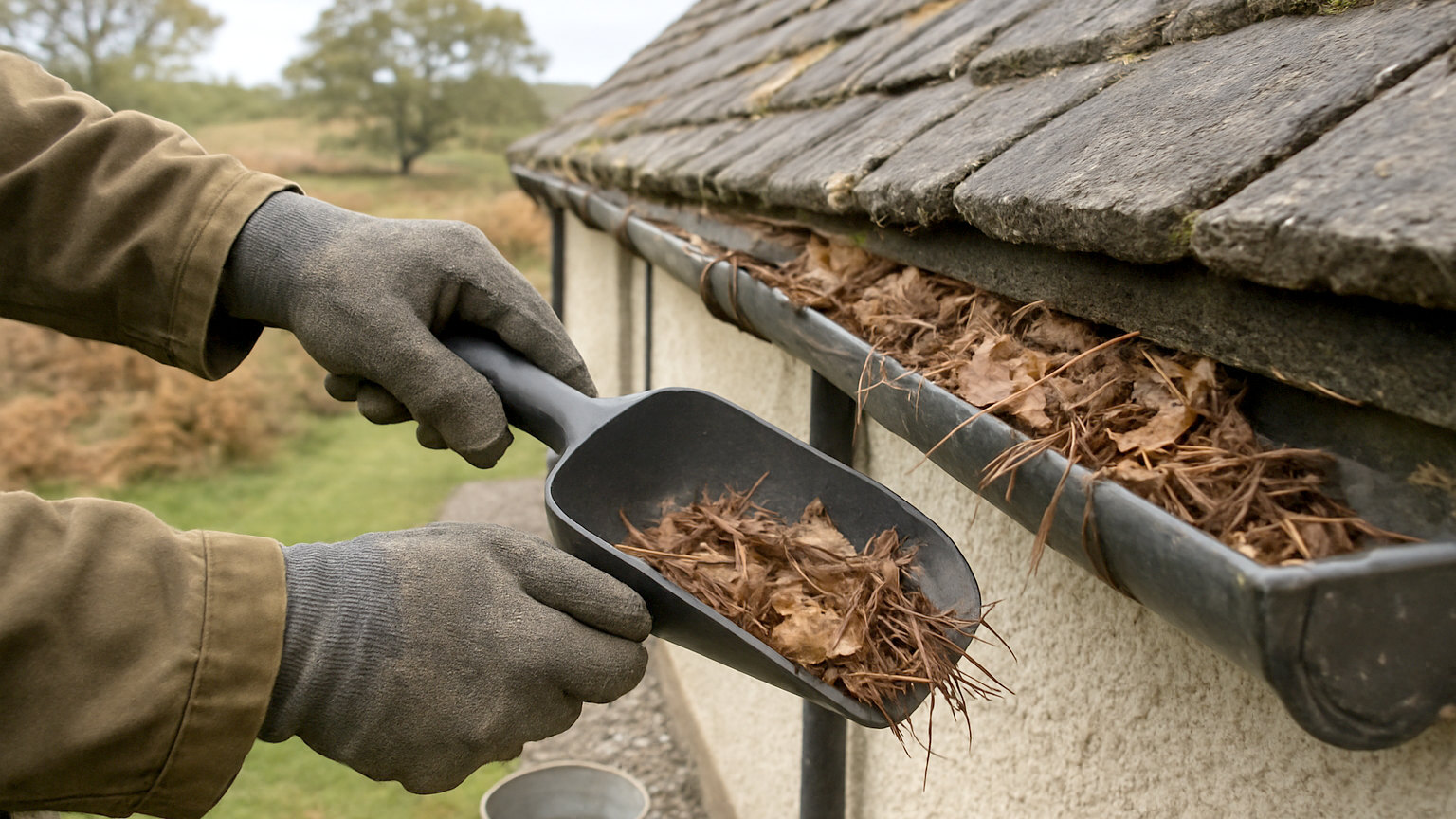
Gutters and roof valleys, which collect dry leaves and needles and sit directly beneath any ember shower. Then anything combustible against the walls: stacked firewood, bins, garden furniture cushions, gas cylinders, fence panels running up to the building, and dry vegetation. Then under decking and in the gaps beneath sheds and outbuildings.
- Clear gutters, roof valleys and flat roof debris
- Move firewood, bins and cylinders away from the walls
- Cut back vegetation touching the building
- Screen or cover air bricks, vents and gaps
- Avoid conifers, gorse and dense shrubs near the house
- Keep grass short and irrigated close to the property
What vegetation is most dangerous?
Conifers, gorse, bracken and dense evergreen shrubs, all of which burn fiercely and carry fire toward a building. Conifer hedges are a particular problem, since a leylandii hedge running to a wall is effectively a fuse. Broadleaved trees and well watered lawn are far less hazardous, and a gap of bare or green ground around the building matters more than the species beyond it.
What about vents and openings?
They are the route embers take inside. Air bricks, soffit vents, roof vents and gaps under tiles can admit burning fragments into a loft or a floor void where nobody sees them. Fine metal mesh screening over vents blocks embers while allowing airflow. Check for gaps under eaves and around service entries, and close windows and doors when a fire is nearby.
What about outbuildings and fences?
Treat them as part of the problem. A wooden shed, a fence running to the house or a timber deck provides a continuous fuel path from open land to the building. Where possible, break that continuity with a gate, a section of masonry or a gap. Sheds should be kept clear of dry vegetation and not used to store fuel cans close to the house.
Does the roof matter?
Considerably. Tile and slate roofs perform far better than thatch or shingle, and gaps beneath tiles can still admit embers. Thatched properties adjoining open land warrant specific advice, since they represent a substantial risk and specialist protection measures exist. Keep roofs clear of moss and debris, which holds embers and dries out.
What should you do when a fire is nearby?
Close everything, remove fuel and prepare to leave. Shut windows, doors and vents. Move garden furniture, cushions and anything combustible away from the building or inside. Fill gutters with water if you have time. Then leave, on the advice of the emergency services, rather than staying to defend, which is not the British approach and is dangerous without training and equipment.
How much of this is worth doing in Britain?
It depends entirely on where you are. A property adjoining moorland, heath, common or forestry should take it seriously, particularly after 2022 demonstrated houses burning at the London urban fringe. A terraced house in a town centre has no meaningful wildfire exposure and should spend the effort on flooding and power cuts instead.
What about insurance?
Check that wildfire and fire spreading from adjoining land are covered, since standard buildings policies generally include fire without distinguishing the source. Photograph the property and its contents annually, keep the policy copy off site, and tell the insurer if you undertake significant clearance work. Households at the edge of open land should also check alternative accommodation cover, as with any total loss risk.
Clear the gutters, keep fuel away from the walls, screen the vents, break the fuel path from open land, and plan to leave rather than defend.