High winds are the most frequent severe weather in Britain and the most frequently underestimated. The danger is almost entirely from things being moved rather than from the wind itself.
What actually causes injuries?
Flying and falling objects. Roof tiles, fence panels, branches, trampolines, scaffolding, bins, signage and garden furniture all become dangerous at gale force. Falling trees cause the most serious incidents. Very few injuries result from wind pressure directly, and almost all result from being outdoors when something moved.
Where is safest indoors?
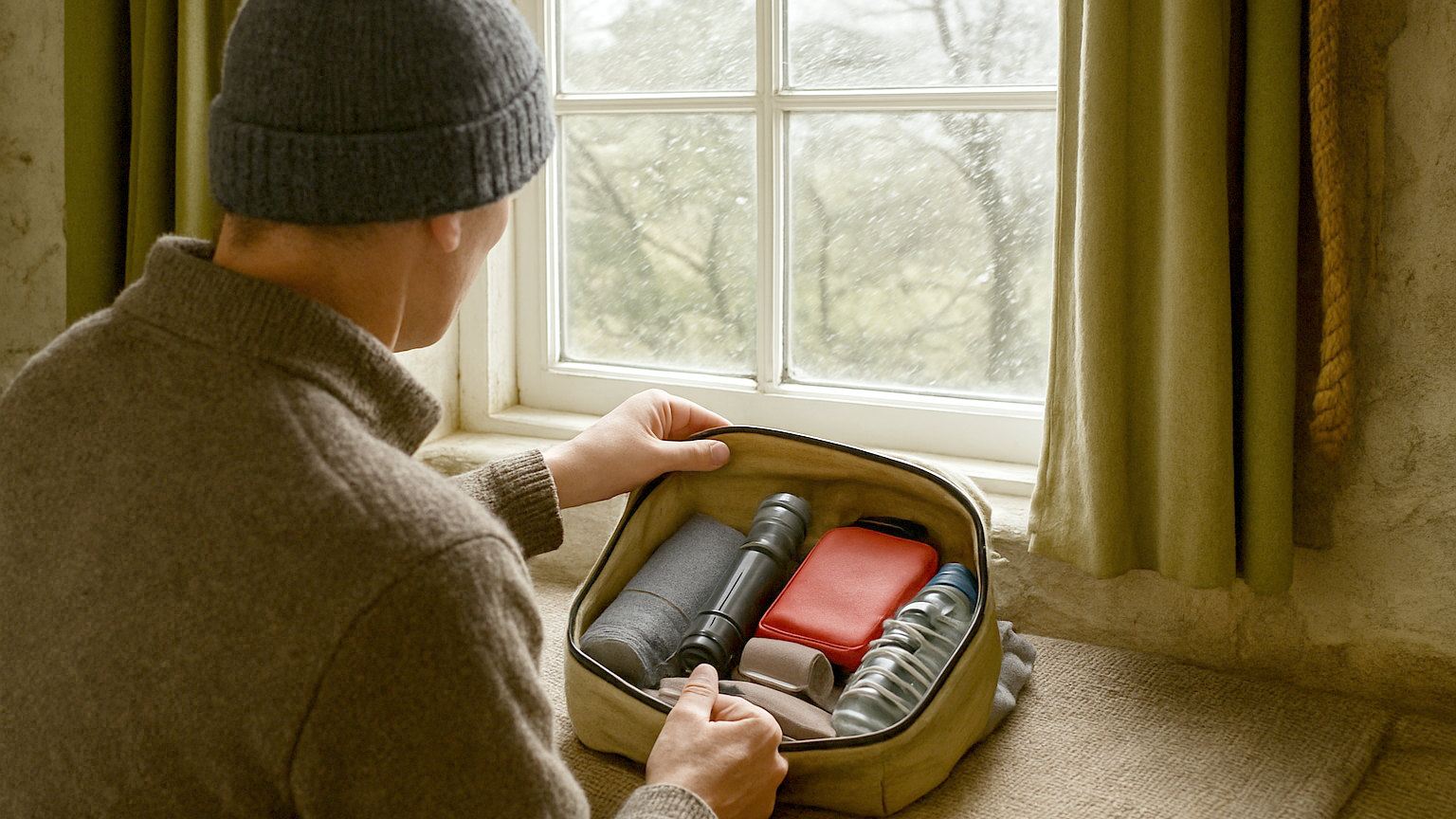
Away from windows and away from the leeward side of large trees. In a severe storm, an internal room or a hallway is the safest place, and upstairs is worse than downstairs if roof damage is a possibility. Close curtains, which contain glass if a window breaks. Keep away from conservatories and glazed extensions during the peak.
- Stay inside and away from windows during the peak
- Do not go out to secure or retrieve anything
- Keep away from coastal paths, piers and seafronts
- Avoid walking or parking near trees and walls
- Close internal doors, which limits damage if a window goes
- Assume any fallen cable is live and stay well clear
Why is going outside so dangerous?
Because the thing you go out to fix is already moving, and the debris that injures you is invisible until it arrives. A significant proportion of storm casualties are people who went out during the peak to secure a trampoline, close a gate, move a bin or check a roof. Whatever it is, it can be dealt with afterwards, and the damage it causes is covered by insurance while your injury is not.
What about coastal areas?
Stay away from the shore entirely. Waves during storms are far larger and more unpredictable than they appear, and people are swept from piers, promenades, harbour walls and rocks every year, frequently while photographing the sea. Spray can knock a person over and the water is cold enough to incapacitate within minutes. Watch from well inland.
What about driving?
Avoid it if you can, and adjust if you cannot. High sided vehicles, caravans and motorcycles are most affected, and bridges and exposed sections are the worst places. Reduce speed, hold the wheel firmly, and expect sudden gusts when passing lorries, emerging from cuttings or crossing bridges. Watch for debris and fallen branches, particularly on rural roads.
What if a tree comes down?
Keep away and assume any cable involved is live. A fallen tree across a road or a garden may be resting on power lines that are energised and invisible against the branches. Do not attempt to move it, do not touch anything in contact with it, and call the electricity network operator on 105, or 999 if there is immediate danger to people.
What about scaffolding and building sites?
Give them a wide berth. Scaffolding, hoardings, sheeting and stacked materials are a common source of storm debris and can fail without warning. Walking past a scaffolded building during high winds is an avoidable risk, and there is usually another route. Report anything that appears loose or damaged to the local authority.
When is it safe to go out?
Once the warning period has ended and the wind has genuinely dropped, not during a lull. Storms produce brief calm periods that tempt people outside just before the next band arrives. Wait for the warning to expire, then inspect from the ground before touching anything, and be aware that damaged structures may fail after the wind has passed.
What about flats and balconies?
They deserve particular attention because objects fall a long way. Anything on a balcony becomes dangerous to people below, so plants, furniture, drying racks and decorations should come inside before a storm. Windows in high buildings experience greater wind pressure than at ground level, so keep away from large panes, and report any loose cladding, aerials or signage to the managing agent promptly.
Stay inside and away from glass, leave outdoor problems until afterwards, avoid the coast, treat every fallen cable as live, and wait for the warning to end.