Falling trees cause the most serious storm injuries and damage, and the great majority of trees are entirely sound. The useful skill is recognising which are not and knowing who is responsible.
Who is responsible for a tree?
The owner of the land it grows on, who has a duty of care to take reasonable steps to ensure it does not cause harm. That means inspecting trees periodically, acting on obvious defects and getting professional advice where there is doubt. Liability generally follows negligence rather than the mere fact of a tree falling, so a healthy tree brought down by exceptional wind is usually nobody fault.
What are the warning signs?
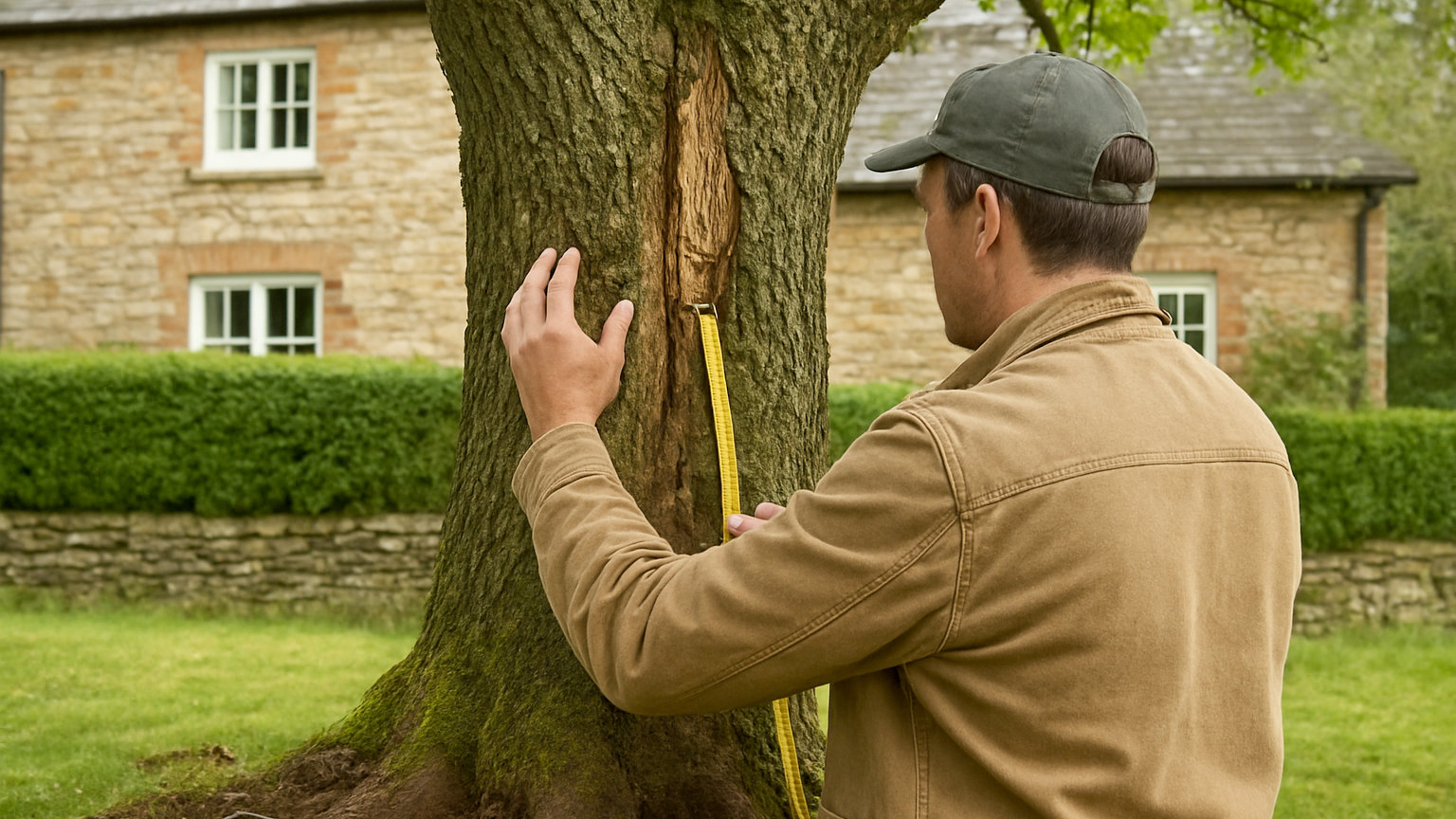
Dead branches in the crown, particularly large ones. Fungal brackets growing on the trunk or at the base, which indicate internal decay. A sudden lean, or soil lifting on one side of the base, suggesting root failure. Cracks in the trunk or major limbs. Bark falling away. A tree that has lost a large limb already. Ivy is not itself a problem and does hide defects.
- Look for deadwood, fungal brackets and cracks
- Watch for a new lean or lifted soil at the base
- Get an arboricultural survey if you are unsure
- Check for a tree preservation order before any work
- Trees in conservation areas need notice to the council
- Report concerns about council or neighbour trees in writing
Do you need permission to cut one down?
Frequently yes. Trees may be protected by a tree preservation order, which makes it an offence to cut down, top, lop, uproot or wilfully damage them without local authority consent, with substantial fines. Trees in conservation areas require six weeks written notice to the council before work. Check with the local authority before touching anything, including on your own land.
What about a dangerous protected tree?
There are exemptions for trees that are dead or present an immediate risk, and the safest course is still to notify the council. Where work is genuinely urgent, keep evidence including photographs and, ideally, a report from an arboriculturist, since you may need to justify it afterwards. Removing a protected tree without evidence of danger is an expensive mistake.
What about a neighbour tree?
You may cut back branches overhanging your boundary to the boundary line, and the cuttings belong to the tree owner and should be offered back. You may not enter their land, cut beyond the boundary, or do work that would kill or destabilise the tree. If you believe a neighbour tree is dangerous, raise it in writing, which both prompts action and establishes that they were on notice.
Who do you tell about a council tree?
The local authority, in writing, describing the specific concern. Councils maintain inspection regimes for their trees and will assess reports. Trees near highways may be the responsibility of the highway authority. If a tree is in immediate danger of falling onto a road or property, call 999 or the council emergency line rather than using the routine reporting route.
When should you get a survey?
If you have a large mature tree within falling distance of the house, if you have noticed any of the warning signs, or if you are buying a property with substantial trees close to it. An arboricultural survey by a qualified professional costs a few hundred pounds and gives you both a condition assessment and evidence that you acted reasonably.
What about during a storm?
Stay away from trees entirely, and do not park under them. Do not attempt to inspect or deal with a tree in high wind. Afterwards, assume any fallen tree in contact with cables is live, keep clear, and call 105. Damaged trees can fail hours or days after a storm as saturated ground and weakened wood give way.
Inspect large trees for deadwood and lean, check for preservation orders before any work, raise concerns in writing, and get a survey if in doubt.