Ventilation moved from an afterthought to a central measure once the airborne route was properly understood. It is cheap, it works, and most households under do it.
What does it actually do?
Replaces air containing exhaled particles with air that does not. Since the main route for respiratory infection is breathing air someone else has breathed out, reducing the concentration of that air reduces the risk. Ventilation dilutes and removes rather than destroying anything, which is why it works against essentially any airborne infection.
How much is enough?
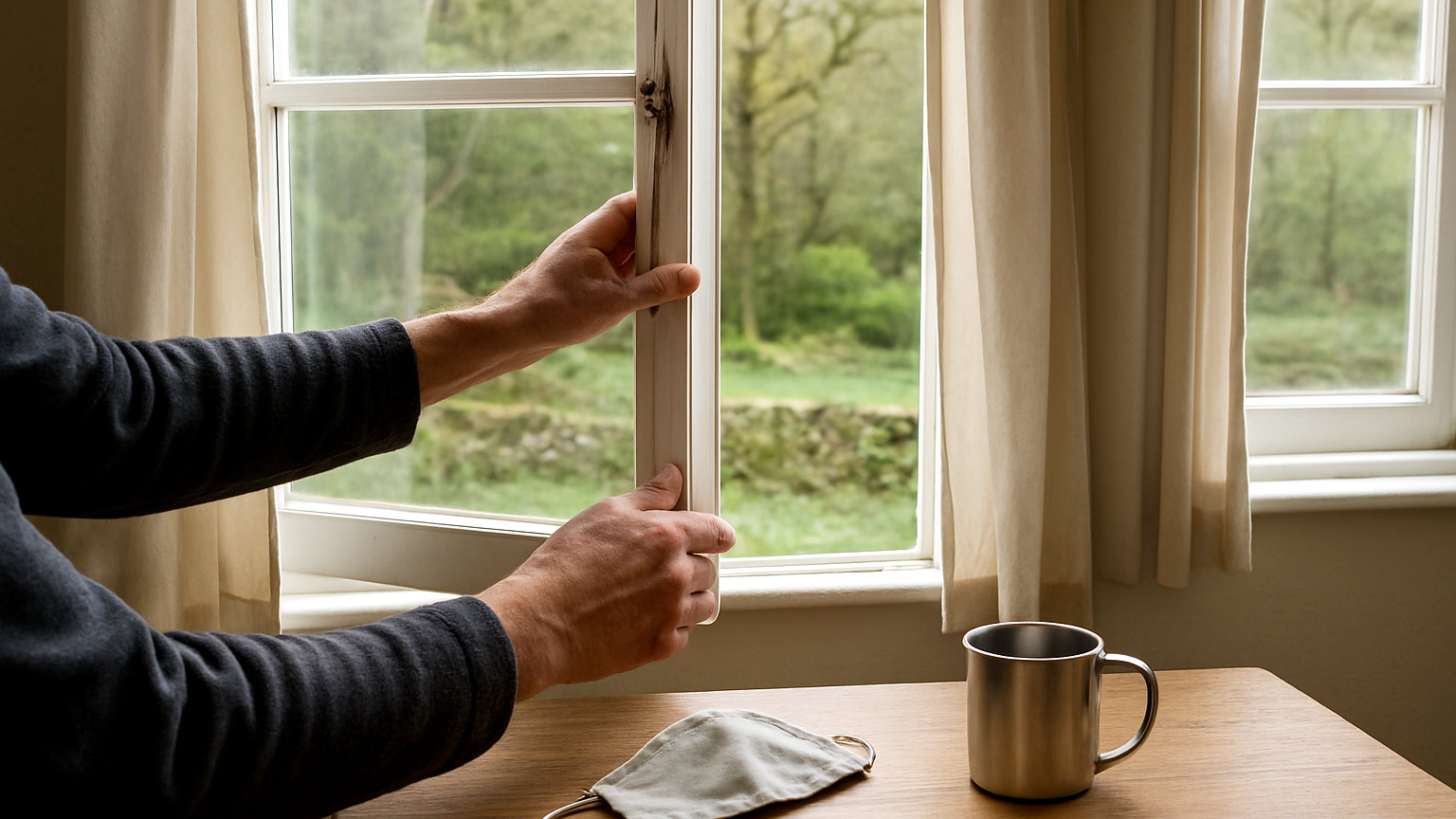
More than most homes get in winter. A common practical suggestion is opening windows fully for around ten minutes every hour, or leaving a window slightly open continuously, in rooms where people are gathered or where someone is unwell. Short bursts of full opening lose less heat than a small gap left open all day, which is the useful trick for cold weather.
- Open windows fully for ten minutes rather than a gap all day
- Cross ventilate by opening on two sides of a room
- Ventilate a room after someone has used it
- Use extractor fans in kitchens and bathrooms
- A CO2 monitor indicates how stale the air is
- Outdoors is always better ventilated than any room
What is cross ventilation?
Opening windows or doors on two sides of a space so air moves through rather than exchanging slowly at one opening. It is dramatically more effective than a single window, and it takes seconds to arrange. Opening a window and the door to a hallway with another window open achieves it in most houses.
What does a carbon dioxide monitor tell you?
How much of the air has already been breathed. Carbon dioxide accumulates from exhaled breath, so its concentration is a proxy for how well a space is ventilated. Outdoor air sits around four hundred parts per million. Readings comfortably below eight hundred suggest reasonable ventilation, and readings above around fifteen hundred suggest the air is stale and the space needs opening up.
How do you ventilate in winter?
In short bursts with the heating turned down first. Opening windows fully for a few minutes exchanges the air without cooling the fabric of the building much, and the room reheats quickly. Leaving a small gap all day cools the walls and costs far more in heating for less air exchange. Do the burst, close the windows, turn the heating back up.
Does an air purifier help?
A well specified one does, in a single room. Units with genuine HEPA filtration and adequate airflow for the room size remove particles from the air and are a reasonable addition where opening windows is impractical. They are not a substitute for ventilation, they need the right capacity for the space, and cheap units with inadequate airflow achieve very little.
What about extractor fans?
Use them and leave them running longer than you think. Kitchen and bathroom extractors remove air from the building, which contributes to overall ventilation, and they are frequently switched off immediately. Running a bathroom extractor for a while after someone unwell has used the room is a simple and effective measure.
Where should you concentrate effort?
Rooms where people gather and rooms an ill person has used. A bedroom being used for isolation should have its window open as much as tolerable. Shared living rooms benefit from regular airing. There is no value in ventilating an empty spare room, and considerable value in airing the kitchen when the household eats together.
What about mechanical ventilation systems?
Homes with heat recovery ventilation or extract systems already exchange air continuously, which helps, and they need to be running and maintained rather than switched off to save electricity. Check that filters have been changed and that the system is not set to a minimal trickle. Recirculating systems that move air around without bringing fresh air in do not provide the same benefit.
Open windows fully for ten minutes an hour, cross ventilate where you can, air rooms after use, and check with a CO2 monitor if you want a number.