The moment someone becomes unwell is the worst time to discover the paracetamol expired in 2019. The list of genuinely useful things is short and checking it takes ten minutes.
What are the essentials?
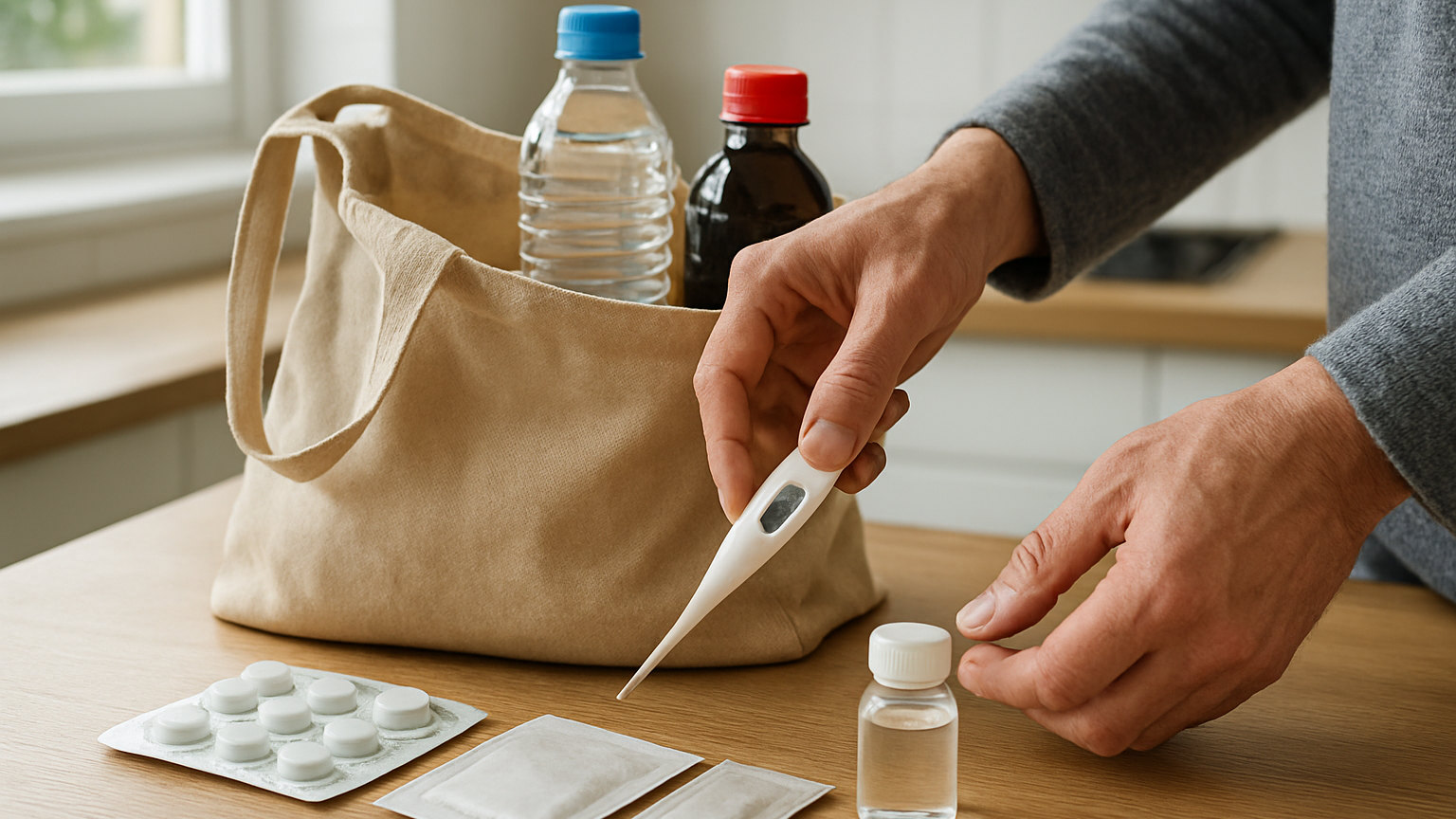
Paracetamol in a form everyone in the house can take, a working thermometer, oral rehydration sachets, and fluids people will actually drink. Those four cover the great majority of household illness. Add a supply of any regular prescription medication and you have addressed most of what a few weeks of illness requires.
Why rehydration sachets?
Because dehydration is what makes people seriously unwell during vomiting and diarrhoea, and the correct balance of salts and sugar helps the gut absorb water far better than plain water alone. They cost very little, keep for years, weigh nothing and are almost never in the cupboard when needed. They matter most for young children and older people, who deteriorate fastest.
- Paracetamol in suitable forms for everyone in the house
- A working digital thermometer
- Oral rehydration sachets
- Fluids people will drink, including squash and soup
- A supply of regular prescription medication
- Tissues, bin bags, soap and hand sanitiser
What about ibuprofen?
Useful for many people and not suitable for everyone, since it is not recommended for people with certain stomach, kidney, heart or asthma conditions, and it interacts with some medicines. Keep it if it suits your household, check with a pharmacist if unsure, and never exceed the stated dose or combine products containing the same ingredient without advice.
How do you handle prescription medicine?
Order repeat prescriptions in good time rather than at the last minute, and do not stockpile, which causes shortages for others and is not what pharmacies are set up for. Ordering a few days earlier than usual builds a small buffer naturally. Electronic repeat dispensing and nominated pharmacies both make it easier during a period when you may not want to go out.
What thermometer should you have?
A digital one that works and that you know how to use. Check the batteries, since a thermometer that has sat in a drawer for three years is frequently dead. Know what the normal range is and be aware that readings vary with the site of measurement. Temperature is one piece of information rather than a diagnosis.
What about a pulse oximeter?
Useful in some circumstances and easy to misinterpret. They came into wide household use recently, and readings can be affected by cold hands, nail varnish, movement and, importantly, skin pigmentation, with regulators noting reduced accuracy on darker skin. Treat any reading as one piece of information, and rely on how the person looks and breathes alongside it rather than on the number alone.
What else is worth having?
Tissues, bin bags for a bedside bin, soap, hand sanitiser, a bowl in case of vomiting, spare bedding, and food that is easy to eat when appetite is poor such as soup, toast, plain biscuits and ice lollies. None of it is expensive and all of it is difficult to obtain at two in the morning.
When should you check it?
Twice a year, alongside the rest of the household review. Medicines expire, thermometer batteries die, and rehydration sachets get used and not replaced. Ten minutes with the cupboard when the clocks change keeps everything current, and it is the single most useful maintenance task in this whole subject.
What should you not keep?
Leftover antibiotics, other people prescribed medication, and anything past its date. Taking antibiotics without a prescription is both ineffective against viral illness and a contributor to resistance, and courses saved from a previous illness are never the right thing for a new one. Return unused medicines to a pharmacy, which accepts them for safe disposal, rather than keeping them in case.
What about children specifically?
Keep age appropriate paracetamol in liquid form, since tablets are unsuitable for young children and the concentration differs between infant and older child preparations. Check the dosing on the bottle rather than from memory, never give two products containing paracetamol at once, and note that aspirin should not be given to under sixteens. A syringe or spoon supplied with the medicine measures far more accurately than a kitchen spoon.
Keep paracetamol, a thermometer, rehydration sachets and drinkable fluids, order repeats early rather than stockpiling, and check it twice a year.